
Did you just walk into your bathroom and spotted a small puddle near your pipes? It’s natural to feel a wave of concern, maybe even panic. A dripping pipe can seem like a serious problem at first glance, but not every leak requires a professional plumber right away. With a little guidance and the right approach, you can manage small leaks around PPR pipe yourself. In many cases, a simple home PPR pipe repair can even last for weeks, sometimes even months. But you need the right guidance in order to achieve that!
This guide aims to offer just the guidance that can help you perform basic PPR pipe repair at home without any first-hand experience. By the end, you’ll have learned how to identify the problem, gather the right tools, and fix small leaks or cracks without using welding equipment.
Table of Contents
ToggleWhat Are PPR Pipes, And When Might They Need Repairs?
PPR pipes are a popular range of products that are widely used in residential and commercial plumbing. They are known for their durability, corrosion resistance, and ability to handle both hot and cold water systems. Homeowners often install PPR pipes in kitchen and bathroom plumbing, HVAC systems, and water supply lines because they are lightweight, long-lasting, and eco-friendly.
Despite their reliability, PPR pipes and fittings are not entirely immune to wear and tear. Over time, several factors can lead to leaks or damage. These include:
- Cracks or leaks due to aging or impact: Pipes may develop small cracks with years of use. This is especially true if pipes are exposed to repeated pressure changes or accidental hits during cleaning or renovation.
- Faulty installation: Incorrectly joined fittings or uneven pipe cuts can create weak spots that start leaking over time.
- Thermal stress: PPR pipes expand and contract slightly with temperature changes. Hence, frequent cycles of hot and cold water can cause stress on joints.
- Pressure variations: Sudden pressure surges in the water line may strain fittings and joints, leading to small leaks.
- Environmental factors: Exposure to direct sunlight, harsh chemicals, or physical stress can also weaken pipe integrity.
A leaking or cracked pipe can be inconvenient and messy. However, not all leaks require immediate professional repair. With basic tools and a bit of patience, you can handle small issues at home confidently. So, if you’re dealing with a minor leak, follow along to learn an easy and effective method for PPR pipe repair.
Tools and Supplies You Will Need To Perform PPR Pipe Repair
The first step before any repair is the “preparation”! Are you ready and have the time to perform the repair? Most importantly, do you think you have all the tools you will need?
Most items required to perform basic PPR pipe repair are simple and may already be lying around your home. However, ensuring everything is ready beforehand will save time and make the process smoother. Here are all the tools you’ll need:
- PPR pipe cutter or fine-tooth hacksaw
- Deburring tool or utility knife
- Adjustable wrench
- Measuring tape and marker
However, that’s not all. You’ll also need some additional materials that might not be part of your everyday toolkit. You can easily order these online or pick them up from a local hardware store. Here’s what you should have beforehand:
- Replacement piece of PPR pipe
- PPR compression fittings (mechanical couplers)
- Pipe sleeves or inserts (depending on fitting type)
- Safety gloves and towel or rags
Having everything as mentioned here ready ensures your repair process is safe, efficient, and frustration-free.
Step-By-Step PPR Pipe Repair For Homeowners
Now that you have gathered the necessary tools and materials, it’s time to begin the actual repair process. Don’t worry! This step-by-step guide will simplify things and help you complete PPR pipe repair confidently, even if you’ve never handled plumbing work before.
Step 1: You’ll Need to First Turn Off the Water Supply
Before doing anything, locate your home’s main or branch water valve and shut it off. This prevents water from flowing through the damaged section while you work. You can usually find the valve near your water meter or where the pipe enters your home.
Once the water is off, open a few nearby faucets to release any remaining water from the line. This helps drain the system and ensures you can work on dry pipes, reducing mess and improving repair quality. Note that draining all the water is not “always” a necessity but just an added step for better convenience.
Step 2: Find the Problem Area
Next, inspect the exposed pipes carefully. Trace along the visible sections and look for any signs of dripping, moisture, or discoloration. Even tiny cracks within piping can cause noticeable leaks, so be very diligent in inspection.
A useful tip is to use a dry tissue or cloth to run along the pipe surface. If the tissue gets damp, you’ve likely found the leak. Now, mark the damaged section using a marker so you don’t lose track of it later.
Step 3: Cut Out the Damaged Section
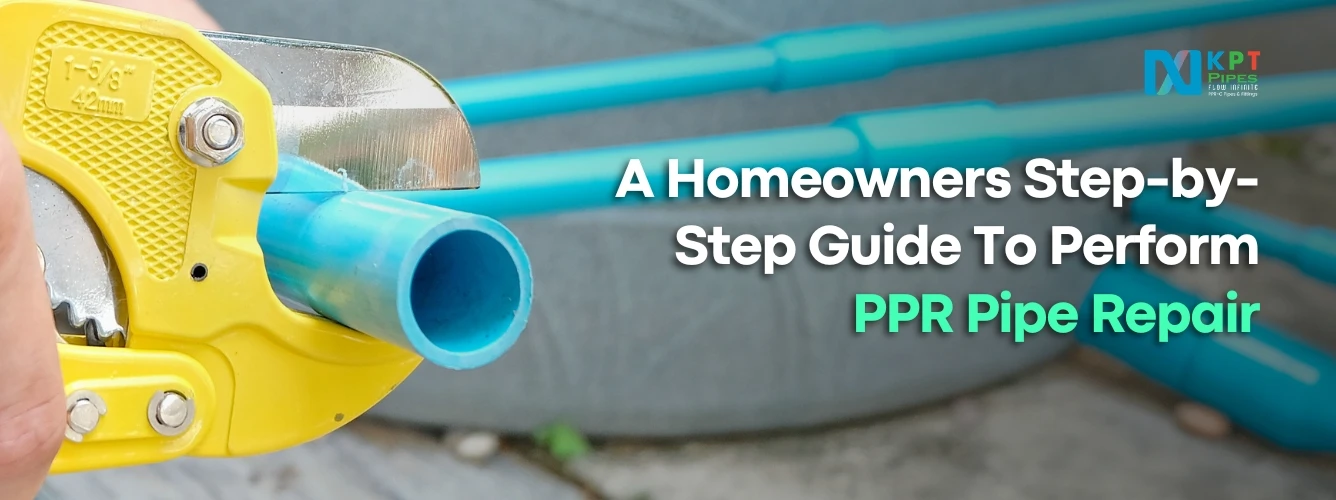
Use a PPR pipe cutter or a fine-tooth hacksaw to carefully remove the damaged portion. Try to make both cuts clean and square. This ensures that the new section will fit snugly and prevent future leaks.
Try to avoid jagged edges or angled cuts at all times. These can weaken the joint, causing leaks within weeks, if not days. If the damaged section is close to a fitting, you may need to remove a slightly longer portion to ensure a proper connection.
Step 4: Clean and Prepare the Pipe Ends
Once the damaged part is removed, wipe the surrounding area with a dry cloth to ensure it’s completely dry. You will have to now use a deburring tool or utility knife to smooth the inner and outer edges of the remaining pipe. This step is crucial because rough edges can prevent proper sealing.
Now, measure the gap left by the removed section carefully and precisely. Following this, cut a replacement pipe piece that matches the exact same length. Precision is of utmost important during this step for better results. Dry-fit the replacement piece and fittings before assembling to confirm proper alignment.
You should perform a quick test fitting. This small step helps minimize chances of mistakes later on.
Step 5: Join the Pipes Using Compression Fittings
Compression fittings are a simple! Compression fittings are in fact ideal and safe for homeowners. During the process, you create a tight seal between the ends of pipes mechanically. Here’s how to use them correctly:
- Slide the compression nut and ring onto both pipe ends: Slide the nut and the compression ring onto each side of the cut pipe. Make sure the nuts face the correct direction. The threaded side should face the fitting body.
- Insert support sleeves into the pipe ends: Insert a sleeve (if your fitting type requires one) into both pipe ends.
- Push the compression fitting body firmly into place: Align the central fitting body between the two pipe ends. Push both pipe ends into the fitting until they meet the internal stops. It’s important to ensure both sides are inserted evenly, as uneven placement can lead to leaks later.
- Tighten the nuts to secure the connection: First, hand-tighten the nuts on both sides. This helps you feel the fitting settle correctly. Then, using an adjustable wrench, tighten the nuts gradually, alternating between sides to apply even pressure. The goal is to make the connection snug, not excessively tight. Over-tightening may crack the nut or distort the fitting, reducing its lifespan.
Once the assembly feels firm, gently tug the pipe to ensure it doesn’t move. The joint should feel stable, straight, and aligned with the existing pipeline.
Tip: Always use PPR-rated compression fittings for compatibility and durability. Using mismatched materials (such as PVC or CPVC fittings) can lead to leaks or failure under pressure.
Alternative Method: Socket Fusion Welding (For Professionals only)
While compression fittings are perfect for DIY use, socket fusion welding is the most durable and long-lasting method for PPR pipe repair. This process permanently joins the pipe and fitting by melting their ends and fusing them together.
However, it’s important to understand why this method is not recommended for untrained homeowners. Socket fusion welding involves high heat (usually between 260°C and 280°C), applied using a fusion welding machine. Handling this equipment without experience can cause severe burns, pipe deformation, or poor bonding if the temperature or timing is off.
In a professional setting, the process follows these steps:
- The pipe and fitting are cut and cleaned to remove any dust or residue.
- Both ends are heated simultaneously using special nozzles on the welding machine.
- Once softened, the pipe is immediately inserted into the fitting socket and held still for a few seconds to bond.
- The joint is then allowed to cool naturally, forming a single, solid piece of plastic.
Due to the technical skill and equipment involved, it’s safer to let trained professionals handle this method of PPR pipe repair.
Step 6: Let the Assembly Set and Settle
After completing the connection, wait for a few minutes before turning the water back on. This allows the joint to stabilize and ensures that any pressure inside the line won’t disrupt the fitting.
Use this short pause to double-check the alignment of your new section and make sure the fittings are evenly tightened.
Step 7: Turn the Water Back On and Check for Leaks
Slowly reopen the main valve to allow water back into the system. Watch the repaired area closely for any drips or moisture.
If you notice a small leak, gently tighten the compression nuts a little more, but never force them. Over-tightening can strip the threads or distort the fitting, leading to further damage.
When You Should Call a Professional
You can perform minor PPR pipe repair at home. However, not all plumbing problems are suited for DIY repair. Some situations require professional expertise to avoid long-term damage.
Here are a few signs that it’s time to call a plumber:
- The leak is inside a wall, floor, or other hard-to-reach space.
- Pipes are extensively damaged or have failed multiple times.
- You are unsure of your pipe type, water pressure, or fitting compatibility.
- You don’t feel confident completing the PPR pipe repair after inspection.
Conclusion
Minor leaks and cracks can often be managed temporarily through simple DIY PPR pipe repair. They can help you save both time and money. However, these fixes should be seen as short-term solutions. Over time, professional intervention becomes necessary to ensure lasting safety, performance, and reliability of your plumbing system. But are you always calling a professional for PPR pipe repair, leaving you seeking these DIYs?
Repeated leaks and damages might actually signal that your attention is needed elsewhere! This is often a sign of poor quality piping infrastructure. So, invest in high quality piping system instead of spending repeatedly on repairs. Choosing durable, tested, and precision-engineered materials can significantly reduce maintenance needs and enhance system efficiency.
At KPT Piping System Private Limited, we focus on delivering such top-quality pipes and fittings. Our piping infrastructure combines strength, durability, and superior design, leaving you without headaches of constant repairs.