
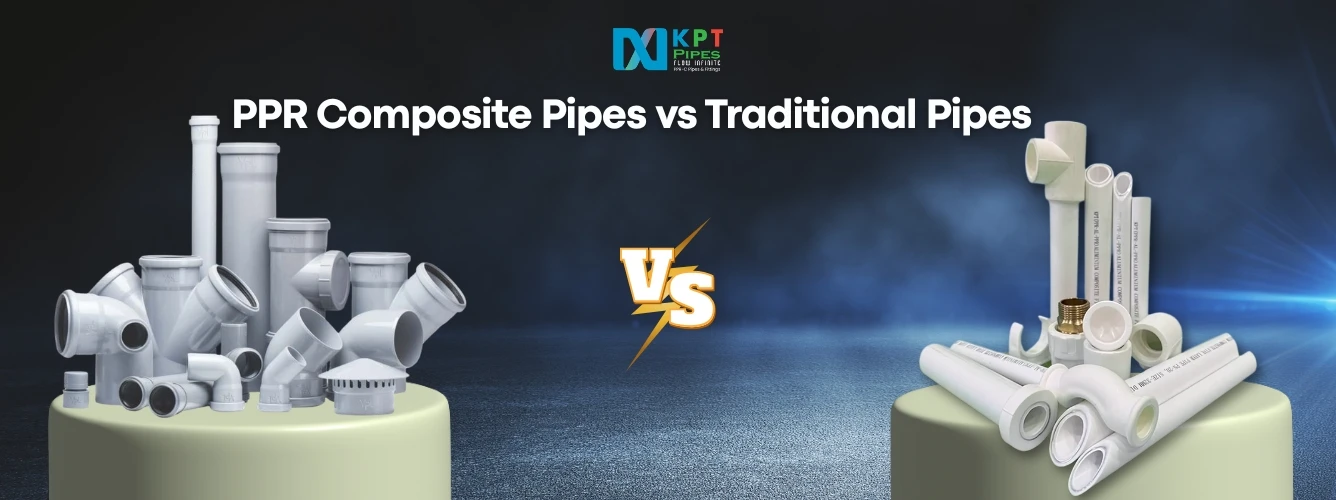
In today’s fast-growing construction and infrastructure landscape, selecting the right piping system is more important than ever. From residential homes to large-scale industrial setups, the performance of a plumbing system directly depends on the quality and type of pipes used. Over the years, the industry has evolved from conventional materials to more advanced and efficient solutions like PPR composite pipes.
While traditional pipes such as PVC, CPVC, GI, and copper have been widely used for decades, modern projects increasingly demand durability, efficiency, and sustainability—areas where PPR composite pipes excel. This comprehensive guide explores a detailed comparison between PPR composite pipes and traditional pipes, helping you understand which option is best suited for your needs.
Table of Contents
ToggleWhat Are PPR Composite Pipes? A Modern Engineering Solution
PPR composite pipes are an advanced type of piping system made using Polypropylene Random Copolymer combined with reinforcing materials like aluminium or fibreglass. These pipes typically feature a three-layer or multi-layer structure:
- Inner layer: PPR for smooth water flow and hygiene
- Middle layer: Aluminium or fibreglass for strength and stability
- Outer layer: PPR for protection and durability
This unique construction enhances the pipe’s ability to withstand high pressure, temperature variations, and mechanical stress. Unlike conventional pipes, PPR composite pipes are engineered to deliver long-term performance with minimal maintenance.
Traditional Pipes: The Conventional Approach
Traditional pipes have been the backbone of plumbing systems for many years. The most commonly used types include:
- PVC Pipes – Lightweight and cost-effective, mainly used for cold water and drainage
- CPVC Pipes – Suitable for hot water applications, but limited in durability
- GI Pipes (Galvanised Iron) – Strong but prone to rust and corrosion
- Copper Pipes – Durable and heat-resistant, but expensive
While these pipes have served their purpose, they come with limitations, especially when compared to modern composite piping solutions.
In-Depth Comparison: PPR Composite Pipes vs Traditional Pipes
- Structural Strength and Build Quality
PPR composite pipes are designed with reinforced layers that significantly improve their strength and resistance to external stress. The aluminium or fibreglass core prevents bending, cracking, and deformation.
In contrast, traditional pipes are generally single-layered, making them more vulnerable to damage under high pressure or physical impact. Metal pipes may be strong initially, but they degrade over time due to environmental factors.
- Lifespan and Durability
Durability is one of the most critical factors in choosing a piping system. PPR composite pipes are known for their long lifespan, often exceeding 50 years under normal conditions. Their resistance to corrosion, scaling, and chemical reactions ensures consistent performance.
Traditional pipes, especially GI pipes, are prone to rust and internal scaling, which can reduce water flow and contaminate water quality. Even plastic pipes like PVC and CPVC may become brittle over time, especially when exposed to sunlight or fluctuating temperatures.
- Temperature Handling and Thermal Stability
PPR composite pipes are specifically designed to handle both high and low temperatures efficiently. They can withstand hot water systems without losing shape or strength, making them ideal for modern plumbing needs.
Traditional pipes have limitations in this area. PVC pipes are not suitable for hot water, while CPVC pipes can handle moderate temperatures but may degrade over time. Metal pipes can handle heat but are affected by corrosion and scaling.
- Thermal Expansion and Dimensional Stability
One of the standout features of PPR composite pipes is their low thermal expansion rate. The reinforced middle layer minimises expansion and contraction, ensuring stability in varying temperatures.
Traditional plastic pipes tend to expand significantly when exposed to heat, which can lead to joint failures, leakage, and structural issues in the long run.
- Corrosion Resistance and Water Quality
PPR composite pipes are completely resistant to corrosion and chemical reactions. They do not rust, scale, or react with water, ensuring a clean and safe water supply.
On the other hand, GI and metal pipes are highly prone to corrosion, which can lead to rusty water and health concerns. Over time, scaling inside these pipes reduces efficiency and increases maintenance requirements.
- Installation Process and Efficiency
Installation plays a crucial role in the overall cost and performance of a piping system. PPR composite pipes use heat fusion welding, which creates seamless, leak-proof joints. This method is quick, reliable, and reduces the chances of human error.
Traditional pipes require threading, glueing, or welding, depending on the material. These methods are more time-consuming and can lead to weak joints if not executed properly.
- Maintenance and Repair Costs
PPR composite pipes require minimal maintenance due to their durable and corrosion-resistant nature. Once installed, they offer long-term reliability with fewer chances of leakage or damage.
Traditional pipes often require regular maintenance, especially metal pipes that are prone to rust and scaling. Repairs can be frequent and costly, making them less economical over time.
- Cost Comparison: Short-Term vs Long-Term
At first glance, traditional pipes may appear more affordable due to their lower initial cost. However, when considering long-term expenses such as maintenance, repairs, and replacements, they become more expensive.
PPR composite pipes, although slightly higher in upfront cost, provide better value for money due to their durability, efficiency, and low maintenance needs.
- Environmental Impact and Sustainability
Modern construction emphasises eco-friendly materials, and PPR composite pipes align perfectly with this goal. They are recyclable, non-toxic, and energy-efficient in production.
Traditional pipes, particularly metal ones, require more energy for manufacturing and may not be as environmentally sustainable. Corrosion and leakage also contribute to water wastage.
Applications: Where PPR Composite Pipes Excel
PPR composite pipes are widely used across various sectors due to their versatility, durability, and superior performance under challenging conditions. Their multi-layered construction ensures reliability in both residential and commercial applications. Some common applications include:
- Residential plumbing systems for hot and cold water
Ideal for homes and apartments, these pipes efficiently carry both hot and cold water while preventing leaks and scaling. - Commercial buildings such as offices, malls, and hotels
Their durability and temperature resistance make them perfect for large-scale commercial water distribution networks. - Industrial pipelines for chemical and fluid transport
Resistant to chemical reactions, these pipes are suitable for carrying industrial fluids safely and reliably. - HVAC systems for heating and cooling
PPR composite pipes can handle high temperatures and pressures in heating, ventilation, and air conditioning systems. - Agricultural irrigation systems
Their corrosion-resistant properties ensure consistent water flow for farms, gardens, and large-scale irrigation projects. - Fire fighting and high-pressure systems
These pipes are capable of handling high-pressure water flow, making them suitable for fire suppression and safety systems.
Their adaptability and robust construction make them suitable for both small-scale residential projects and large industrial or commercial pipelines.
Limitations of Traditional Pipes in Modern Infrastructure
While traditional pipes are still widely used, they face multiple challenges when applied to modern construction and high-demand applications. Some of the major limitations include:
- Susceptibility to corrosion and scaling
Metal pipes rust over time, while plastic pipes can develop internal scale, reducing efficiency and water quality. - Limited temperature resistance
PVC pipes cannot handle hot water, and CPVC pipes may degrade under prolonged heat exposure. - Higher maintenance requirements
Frequent repairs, replacements, and cleaning are often required to maintain proper performance. - Shorter lifespan compared to composite pipes
Traditional pipes generally last far less than PPR composite pipes, leading to increased long-term costs. - Risk of leakage due to weak joints
Threaded or glued connections can fail, causing water damage and inefficiencies in the system.
Due to these limitations, traditional pipes are less reliable and often unsuitable for advanced infrastructure projects that require durability, safety, and long-term efficiency.
Why KPT Pipes is a Trusted Choice for PPR Composite Pipes
KPT Pipes is a leading manufacturer of high-quality PPR composite pipes, providing reliable solutions for modern plumbing and industrial applications. Their focus on advanced technology and quality control ensures exceptional performance. Benefits include:
- High strength and durability
PPR composite pipes from KPT are reinforced for long-lasting performance under both residential and industrial conditions. - Resistance to temperature and pressure variations
These pipes maintain integrity under high-heat and high-pressure water systems without risk of deformation. - Leak-proof and reliable performance
Advanced heat-fusion technology ensures strong joints and minimal maintenance over the pipe’s lifespan. - Compliance with industry standards
KPT Pipes are manufactured following strict quality guidelines, meeting both national and international standards. - Long-lasting and cost-effective solutions
Though slightly higher in initial cost, these pipes reduce maintenance and replacement expenses, making them a wise investment.
By choosing KPT Pipes, you gain a product that combines modern technology, efficiency, and reliability for both short-term and long-term infrastructure needs.
Final Verdict: Which One Should You Choose?
When comparing PPR composite pipes vs traditional pipes, it is clear that PPR composite pipes provide superior durability, efficiency, and reliability for modern applications. Their multi-layered construction, corrosion resistance, and ability to handle high temperatures make them ideal for long-term use in residential, commercial, and industrial settings.
Traditional pipes may still have a place in low-budget or low-demand projects, but they lack the performance and longevity required for advanced infrastructure. Frequent maintenance, shorter lifespan, and susceptibility to corrosion make them less efficient in the long run.
For anyone looking to create a future-ready, safe, and reliable plumbing system, PPR composite pipes from KPT Pipes are undoubtedly the smarter choice, offering both peace of mind and long-term cost savings.
Frequently Asked Questions (FAQs)
Q1. What is the main difference between PPR composite pipes and traditional pipes?
Ans: The main difference lies in their structure and performance. PPR composite pipes have a multi-layer design with reinforcement, making them stronger, more durable, and resistant to temperature and pressure. Traditional pipes are usually single-layered and less efficient in demanding conditions.
Q2. Are PPR composite pipes suitable for industrial use?
Ans: Yes, PPR composite pipes are highly suitable for industrial applications due to their resistance to chemicals, high pressure, and temperature variations. They are widely used in industries for fluid and chemical transport.
Q3. How long do PPR composite pipes last compared to traditional pipes?
Ans: PPR composite pipes can last over 50 years with minimal maintenance, while traditional pipes generally have a shorter lifespan due to corrosion, scaling, and wear over time.
Q4. Is the installation of PPR composite pipes complicated?
Ans: No, installation is relatively simple and efficient. Heat fusion technology ensures strong, leak-proof joints, making the process faster and more reliable than traditional methods.
Q5. Are PPR composite pipes cost-effective in the long run?
Ans: Absolutely. Although the initial cost may be slightly higher, their durability, low maintenance, and long lifespan make them a more economical choice over time.