
Are you experiencing recurring drainage blockages, unpleasant odours, slow wastewater flow, or unexpected pipe leakages? If so, the problem may not always be with your SWR pipes and fittings. The real issue, in many cases, lies in the way the drainage system was installed.
In fact, did you know even small installation mistakes can affect drainage performance, increase maintenance costs, and lead to expensive repairs over time? The good news is that most of these drainage-related problems are completely preventable with the right practices.
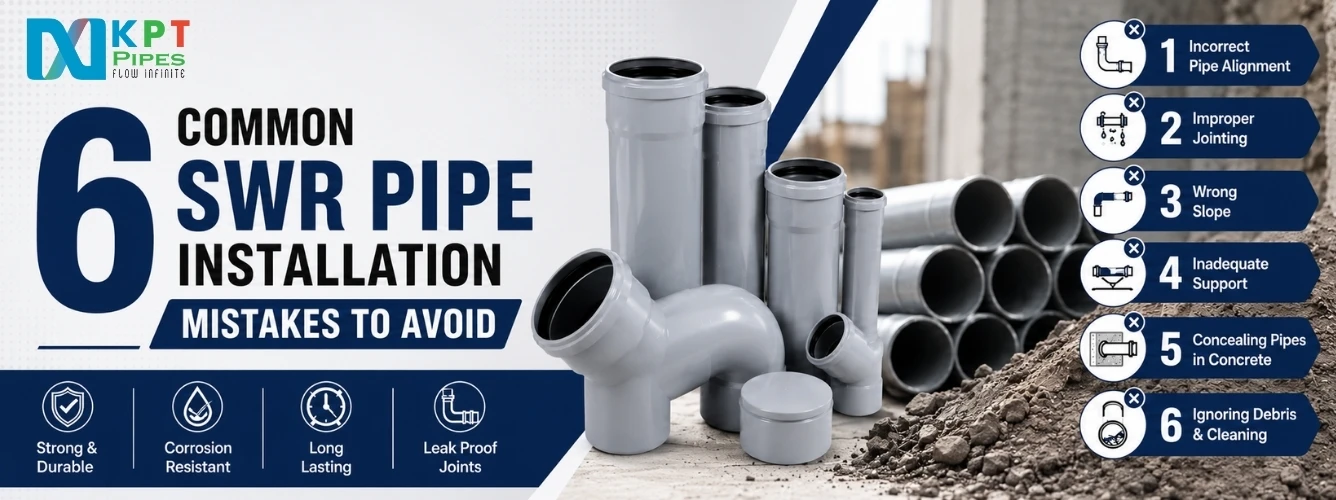
Understanding the most common SWR pipe installation mistakes can help you build a drainage system that remains efficient, reliable, and trouble-free for years. Let’s look at the six mistakes you should avoid.
Table of Contents
Toggle1. Installing Pipes with the Wrong Slope
SWR drainage systems rely on gravity to move wastewater from one point to another. Since gravity does all the work, the pipe slope plays a major role in determining how efficiently wastewater flows through the system.
Many installers make a common mistake of thinking that “more slope is better.” In reality, both insufficient and excessive slope can affect drainage performance. A wrongly installed pipe slope can create two different problems:
- If the slope is too flat, wastewater moves slowly through the drainage pipeline. Solid waste begins to settle inside the pipe, increasing the chances of recurring blockages.
- If the slope is too steep, water flows away faster than the solid waste. Over time, the remaining solids accumulate inside the pipe, restricting wastewater flow and increasing the risk of clogging.
Following the recommended drainage pipe slope however helps maintain the correct flow velocity throughout the system. It allows wastewater and solid waste to move together, improving drainage performance while reducing future maintenance requirements.
2. Poor Pipe Jointing and Sealing
Every joint in a drainage system is a potential leakage point if it is not installed correctly. That is why proper jointing and sealing are just as important as selecting high-quality SWR pipes and fittings.
In fact, did you know that many drainage problems begin during the jointing process itself? Something as simple as an unclean pipe end, an incompatible joining material, or a poorly aligned joint can leave small gaps between the connections. These gaps often become the starting point for water seepage and long-term drainage issues.
For instance, poor jointing and sealing can lead to continuous water seepage and unpleasant odours. It can often lead to costly repairs if the leakage goes unnoticed. But you can prevent most of these problems by getting the basics right before the pipes are connected. For instance:
- Clean SWR pipe ends create stronger and more secure joints.
- Choose compatible jointing materials to produce a reliable, leak-proof seal.
- Ensure proper joint alignment as it reduces stress on the connection after installation.
These simple installation practices create stronger joints and support reliable drainage performance for years.
3. Choosing the Wrong Pipe Diameter
Every drainage line is designed to carry a specific volume of wastewater. That is why selecting the correct pipe diameter is just as important as choosing the right pipe material.
Many people assume that installing a larger SWR pipe will improve drainage performance. In reality, both undersized and oversized pipes can create problems if they are not matched to the expected wastewater load.
The wrong pipe diameter can affect your drainage system in two ways:
- A pipe that is too small restricts wastewater flow during peak usage. This increases the chances of slow drainage, recurring blockages, and wastewater backup.
- A pipe that is too large allows wastewater to spread out and lose the flow velocity needed to carry solid waste efficiently. Over time, the solids begin to settle inside the pipe, increasing the risk of clogging.
Choosing the right pipe diameter starts with understanding how much wastewater the drainage line is expected to carry. For example:
- A 75 mm SWR pipe is commonly used for floor traps, bathrooms, kitchen waste lines, and other branch drainage lines.
- A 110 mm SWR pipe is generally preferred for soil stacks, toilet discharge lines, and the main drainage line because it is designed to carry a much higher wastewater load.
Selecting a pipe simply because it is larger or more readily available can reduce drainage efficiency just as easily as choosing one that is too small. Matching the SWR pipe diameter to the expected drainage load helps maintain balanced flow, reduces maintenance, and supports reliable long-term performance.
4. Ignoring Proper Ventilation
Most people associate drainage systems with wastewater. However, did you know they are also designed to move air? Proper ventilation maintains balanced air pressure inside the drainage network, allowing wastewater to flow smoothly.
That balance is disturbed when vent pipes are missing or installed incorrectly. In such situations, pressure begins to build inside the system and can empty the water seal inside traps. Once that happens, sewer gases find their way into bathrooms, kitchens, and other indoor spaces.
Poor ventilation is also one of the most overlooked causes of foul odours. It may even cause slow drainage or gurgling sounds as air struggles to move through the pipeline. A properly vented home drainage system, however, helps:
- Maintains stable air pressure
- Protects trap seals
- Supports efficient wastewater flow throughout the network
5. Inadequate Pipe Support
SWR pipes and fittings are designed to carry wastewater efficiently, not support their own weight over long distances. Hence, the pipes gradually begin to sag between the fixing points when adequate support is not provided.
That slight sagging may not seem like a serious problem at first. However, it changes the way wastewater moves through the drainage line. It causes water and solid waste to collect at the low points instead of flowing smoothly through the system. Over time, this increases the chances of recurring blockages.
The added movement also places continuous stress on the joints of SWR pipes and fittings. If left unaddressed, the joints may begin to leak or even crack.
Supporting the pipes at the recommended intervals helps maintain proper alignment. It also reduces unnecessary stress on the joints. As a result, the drainage system continues to perform efficiently for years.
6. Using Incompatible Pipes and Fittings
Two pipes or fittings may look perfectly compatible at first glance. However, appearances can often be misleading. In fact, even small differences in size, dimensions, or jointing design can affect how well your entire drainage system performs.
The real problem is that these differences often go unnoticed during installation. The consequences usually become visible only after the drainage system starts carrying wastewater. You may eventually notice:
- Leakage around the joints as the connection fails to seal properly.
- Pipe joints gradually becoming loose under regular wastewater flow.
- Frequent maintenance and unexpected repairs as the connections begin to fail.
The good news is that these problems are easy to avoid. It starts with choosing compatible SWR pipes and fittings that are designed to work together. A properly matched system creates stronger joints and more reliable connections from the beginning. As a result, the drainage system remains leak-free, requires less maintenance, and performs reliably for years.
Conclusion
Most drainage problems do not develop overnight. They often begin with small installation mistakes that go unnoticed until the system starts showing signs of failure. Understanding the six installation mistakes discussed in this guide can help you make better installation decisions and build a drainage system that performs reliably for years.
But remember, even the best installation practices cannot compensate for poor-quality products. That is why choosing the right manufacturer is just as important as installing the system correctly. At KPT Pipes, we manufacture high-quality SWR pipes and fittings that combine durability, consistent quality, and reliable drainage performance for a wide range of applications.
Explore our range of products today!
FAQs
Q1. What are SWR pipe fittings?
Ans: SWR pipe fittings are components used to connect, redirect, or branch SWR drainage pipelines. Common pipe fittings for SWR include bends, tees, couplers, reducers, traps, and junctions, all designed to ensure smooth and leak-free wastewater flow.
Q2. What is the difference between SWR and uPVC pipe?
Ans: SWR pipes are designed specifically for soil, waste, and rainwater drainage systems. uPVC pipes are commonly used for pressure applications such as water supply and plumbing. Their design, pressure rating, and intended applications are different.
Q3. Which SWR pipe is best?
Ans: The best SWR pipe is one that complies with recognised quality standards, matches your drainage requirements, and comes from a trusted manufacturer. Choosing compatible SWR pipes and fittings is equally important for reliable, leak-free performance.
Q4. What are Type A and Type B in SWR pipes?
Ans: Type A SWR pipes have a thicker wall and are generally used for rainwater and ventilation systems. Type B SWR pipes are designed for soil and waste discharge applications where higher load-bearing capacity is required.
Q5. What is the correct slope for SWR pipe installation?
Ans: SWR pipes should be installed with the recommended slope to maintain a balanced wastewater flow. A slope that is too steep or too flat can increase the risk of blockages, slow drainage, and long-term maintenance issues.