
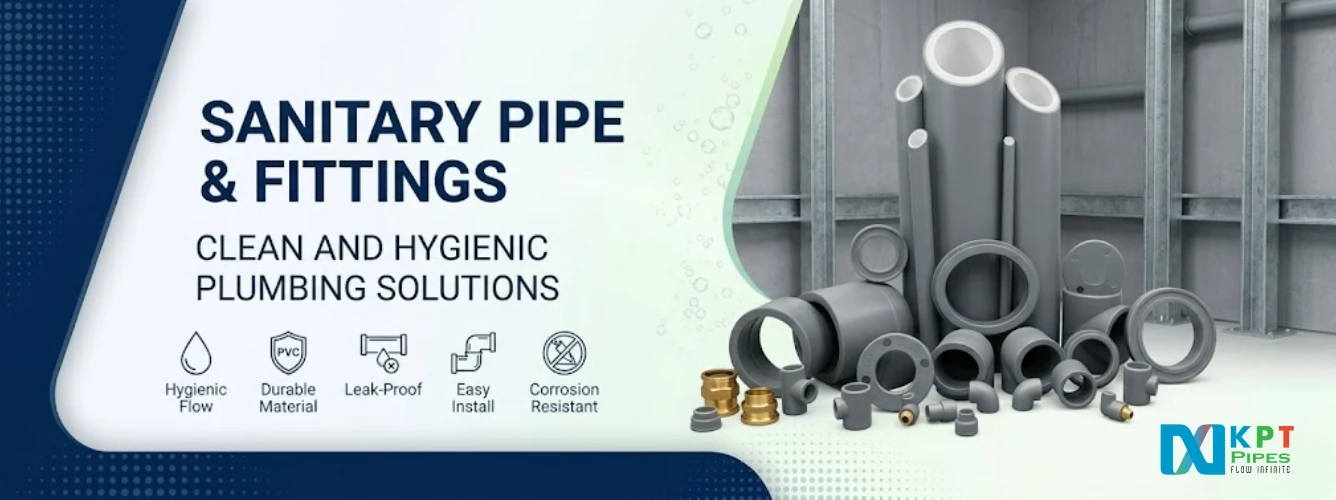
Sanitary pipe systems form the backbone of every safe, hygienic, and well-functioning building—whether residential, commercial, or industrial. From carrying wastewater away efficiently to ensuring odor-free and leak-proof drainage, sanitary pipe and fittings play a critical role in maintaining cleanliness and public health.
In modern construction, the demand for durable, corrosion-resistant, and low-maintenance piping systems has increased significantly. Among the most widely used solutions today are SWR Pipes and Fittings (Soil, Waste, and Rainwater systems), especially those made from high-quality PVC (Polyvinyl Chloride) material.
This article explores everything you need to know about sanitary pipe systems, their importance, applications, and why PVC-based SWR pipes are considered one of the most reliable solutions in plumbing infrastructure.
Table of Contents
ToggleWhat Are Sanitary Pipes and Fittings?
Sanitary pipes and fittings are specialized plumbing components designed to carry wastewater and sewage safely away from buildings. Unlike regular water supply pipes, these systems are engineered to handle non-pressurized flow, ensuring smooth discharge of waste without leakage or contamination.
These systems typically include:
- Pipes for vertical and horizontal drainage
- Elbows, bends, and couplers
- Tees and junction fittings
- Floor traps and vent pipes
Their main purpose is to ensure a hygienic environment by preventing backflow, leakage, and foul odor issues.
Importance of Hygienic Plumbing Systems
A well-designed sanitary piping system is not just a construction requirement—it is essential for health and hygiene. Poor drainage can lead to water contamination, foul smells, structural damage, and even the spread of diseases.
Key benefits of hygienic plumbing systems include:
- Prevents contamination of clean water sources
- Ensures smooth disposal of wastewater
- Reduces risk of bacterial and fungal growth
- Maintains odor-free surroundings
- Enhances the durability of buildings
In short, sanitary pipes directly impact the safety and comfort of living and working environments.
SWR Pipes and Fittings: A Modern Drainage Solution
SWR Pipes and Fittings are specifically designed for Soil, Waste, and Rainwater drainage applications. They are widely used in residential buildings, commercial complexes, hospitals, schools, and industrial units.
These systems are known for their efficiency in handling non-pressurized flow systems such as:
- Bathroom and kitchen waste discharge
- Soil drainage from toilets
- Rainwater harvesting systems
- Building waste disposal networks
Why SWR Systems Are Preferred
SWR piping systems have replaced traditional materials like cast iron and cement pipes due to their superior performance and ease of installation.
Key advantages include:
- Lightweight and easy to install
- Leak-proof joint system
- Smooth inner surface for better flow
- Resistant to rust and corrosion
- Long service life with minimal maintenance
PVC Material: The Backbone of Modern Sanitary Pipes
Most modern SWR pipes and sanitary fittings are made from PVC (Polyvinyl Chloride), a highly durable thermoplastic material known for its strength and versatility.
Benefits of PVC Pipes in Sanitary Systems
PVC has become the industry standard for drainage systems due to several advantages:
- Corrosion Resistance: Unlike metal pipes, PVC does not rust or corrode when exposed to moisture or chemicals.
- Smooth Flow Surface: Reduces friction and prevents clogging in drainage systems.
- Lightweight Material: Easy to transport, handle, and install.
- Cost-Effective: More affordable than traditional materials like cast iron or copper.
- Durability: Can last for decades without significant wear and tear.
- Chemical Resistance: Ideal for handling household and industrial wastewater.
Because of these features, PVC-based SWR pipes are widely used in modern plumbing infrastructure.
Applications of Sanitary Pipe & Fittings
Sanitary piping systems are used in a wide range of applications across different sectors:
1. Residential Buildings
Used in bathrooms, kitchens, and roof drainage systems to ensure proper wastewater disposal.
2. Commercial Complexes
Offices, malls, and hotels rely on SWR systems for efficient sanitation management.
3. Industrial Facilities
Factories and plants use heavy-duty sanitary pipes for waste management systems.
4. Hospitals and Healthcare Centres
Critical for maintaining strict hygiene and preventing contamination.
5. Public Infrastructure
Used in schools, airports, and public buildings for reliable drainage systems.
Key Features of High-Quality SWR Pipe Systems
When selecting sanitary pipe and fittings, quality plays a crucial role. Premium SWR systems offer:
- Strong impact resistance
- UV stability for outdoor applications
- Easy socket and ring-fit joint system
- High flow capacity
- Zero leakage performance
- Smooth internal bore for clog-free drainage
These features ensure long-term reliability and efficient wastewater management.
Installation Benefits of PVC SWR Systems
One of the major reasons for the popularity of PVC-based sanitary pipes is their easy installation process.
Advantages include:
- No need for heavy machinery during installation
- Quick assembly using rubber ring joints or solvent cement
- Reduced labor cost and installation time
- Flexibility in design and layout adjustments
- Suitable for both vertical and horizontal installations
This makes them highly preferred by plumbers and construction professionals.
Maintenance Advantages
Unlike traditional piping systems, SWR PVC pipes require very little maintenance. Their smooth interior surface prevents sludge buildup, while their corrosion-free nature ensures long-term performance.
Maintenance benefits include:
- Minimal cleaning requirements
- Reduced blockage issues
- No rust or scaling formation
- Long operational life without replacement
Why Choose Modern Sanitary Pipe Systems?
Modern construction demands systems that are not only functional but also sustainable and cost-efficient. PVC-based SWR sanitary pipe systems fulfil all these requirements by offering:
- Better hygiene and safety
- Long-lasting performance
- Environment-friendly material usage
- Lower lifecycle cost
- Improved water flow efficiency
These advantages make them an essential part of today’s plumbing infrastructure.
Conclusion
Sanitary pipe and fittings systems are an essential part of modern infrastructure, ensuring clean, safe, and efficient wastewater management. With the increasing shift toward advanced materials, PVC-based SWR Pipes and Fittings have become the preferred choice for architects, builders, and engineers.
Their durability, hygiene benefits, easy installation, and low maintenance make them a smart investment for long-term plumbing solutions. Whether for residential or commercial use, adopting high-quality sanitary piping systems ensures a cleaner, healthier, and more sustainable environment.
Frequently Asked Questions (FAQs)
Q1. What are SWR pipes used for?
Ans: SWR pipes are used for Soil, Waste, and Rainwater drainage systems in residential and commercial buildings.
Q2. What material are sanitary pipes made of?
Ans: Most modern sanitary pipes are made of PVC (Polyvinyl Chloride) for its durability and corrosion resistance.
Q3. Are PVC SWR pipes durable
Ans: Yes, PVC SWR pipes are highly durable and can last for several decades with minimal maintenance.
Q4. Can SWR pipes handle hot water?
Ans: No, SWR pipes are designed for drainage systems and are not suitable for high-temperature water flow.
Q5. Why are PVC pipes better than metal pipes for drainage?
Ans: PVC pipes are lighter, corrosion-free, cost-effective, and easier to install compared to metal pipes.