

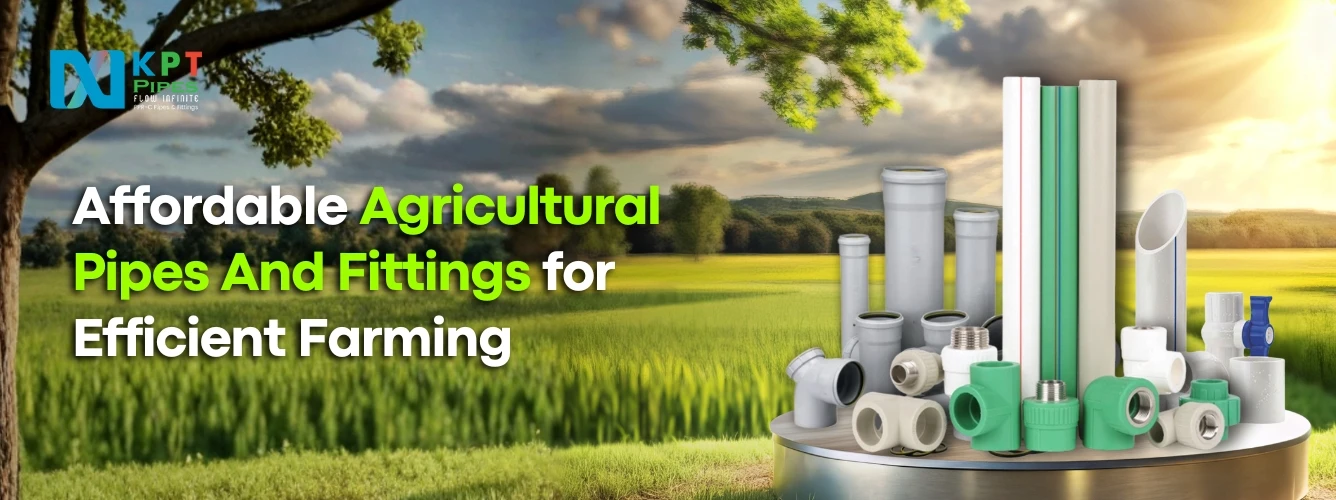
Agriculture in India is rapidly evolving, and farmers today need reliable, durable, and affordable solutions to enhance productivity. One of the most important components of any farming setup is the water supply system. Whether it’s irrigation, fertilization, water transport, or crop protection, the right agricultural pipes and fittings ensure smooth and consistent operations. With rising demand for sustainable and cost-friendly solutions, the focus has shifted to affordable agricultural pipes and fittings designed for long-term performance without burdening the farmer’s budget.
Among the wide range of piping options available, PPR Pipes, UPVC Pipes, and PVC Pipes stand out for their strength, cost-efficiency, corrosion resistance, and suitability for various irrigation methods. These options have made it easier for farmers across the country to find the right agri pipe in India that fits their soil type, weather conditions, and water requirements.
Table of Contents
ToggleWhy Agricultural Pipes and Fittings Are Essential in Farming
A reliable irrigation system is the backbone of productive agriculture. Farmers depend heavily on pipes to transport water from the source to fields efficiently and without wastage. Proper agricultural pipes and fittings ensure:
- Uniform water distribution
- Reduced water loss and leakage
- Improved soil moisture control
- Enhanced crop yield and quality
- Long-term cost savings
Whether you cultivate cereals, vegetables, fruits, or cash crops, choosing the right irrigation infrastructure determines how well your farming operations function throughout the year.
Why Affordability Matters in Agricultural Piping Systems
While quality is important, affordability plays a major role for farmers looking to upgrade their irrigation networks. Affordable agricultural pipes and fittings offer the perfect balance of durability, strength, and cost-effectiveness. They help farmers access modern irrigation systems without large financial burdens.
Key reasons affordability matters:
- Helps small and marginal farmers adopt irrigation technology
- Reduces maintenance and repair costs
- Offers long-term value with minimum replacement
- Enables installation of larger networks within a limited budget
With cost-efficient options such as PPR Pipes, UPVC Pipes, and PVC Pipes, farmers can now build highly effective systems for open fields, plantations, greenhouses, and even underground irrigation pipes.
Types of Agricultural Pipes for Irrigation
Several types of pipes dominate the Indian agricultural irrigation market, each with distinct features suited to specific applications:
- PPR Pipes: Known for their robustness and heat resistance, PPR (Polypropylene Random Copolymer) pipes are widely used in agricultural water supply and irrigation systems. They offer excellent resistance against corrosion and chemical reactions, making them durable and maintenance-free.
- UPVC Pipes: UPVC (Unplasticized Polyvinyl Chloride) pipes are favored for their high strength and rigidity. Suitable for various irrigation methods, UPVC pipes resist deformation, provide superior flow rates, and are highly durable under different climatic conditions.
- PVC Pipes: PVC pipes are the most commonly used agricultural pipes in India due to their affordability, lightweight nature, and ease of installation. They are versatile and compatible with drip, sprinkler, and flood irrigation methods. PVC pipes prevent corrosion and have a long service life, ideal for efficient water distribution.
- HDPE Pipes: High-Density Polyethylene pipes are favored for underground irrigation due to their flexibility, high tensile strength, and resistance to chemicals and abrasion. HDPE pipes reduce leakage rates significantly and are easy to install for large-scale irrigation projects requiring underground piping networks.
Applications of Agricultural Pipes in Modern Farming
- Drip Irrigation Systems: Drip systems deliver water directly to plant roots, ensuring minimal wastage. Both PVC and UPVC pipes are used extensively in these systems because they maintain consistent pressure and flow.
- Sprinkler Irrigation: For large fields, sprinkler systems are ideal. PPR, PVC, and UPVC pipes can be used to create high-pressure networks for uniform water spread.
- Water Transportation: Agricultural pipes transport water from wells, storage tanks, and borewells to farms. PVC and UPVC are best suited for long-distance water movement.
- Underground Irrigation Pipes: For concealed installations, underground irrigation pipes made from PPR or UPVC offer higher durability, leak resistance, and protection against external damage.
- Fertilizer and Chemical Distribution: PPR pipes and fittings are highly resistant to chemicals, making them ideal for fertigation and pesticide distribution through irrigation systems.
Advantages of Using Affordable Agricultural Pipes and Fittings
Choosing affordable agricultural pipes like PVC, UPVC, PPR, and HDPE offers numerous benefits to farmers:
- Cost Efficiency: These pipes balance quality and cost, helping farmers invest in long-lasting irrigation infrastructure without high upfront costs.
- Durability: Withstanding adverse weather, chemicals, and mechanical stress, these pipes ensure reliable operation with minimal maintenance.
- Ease of Installation: Lightweight materials make transportation and installation simpler, even for small-scale farmers.
- Water Conservation: Precision irrigation supported by quality pipes reduces water wastage and enhances crop productivity.
- Versatility: Suitable for various irrigation methods, these pipes adapt to specific farming requirements effectively.
Key Benefits of Using Modern Agricultural Pipes and Fittings
- Higher Durability: PPR, PVC, and UPVC pipes are engineered to withstand harsh outdoor conditions for years. Their long service life reduces the need for frequent replacements and saves overall maintenance costs.
- Corrosion and Chemical Resistance: These pipes do not rust, decay, or weaken when exposed to soil, fertilizers, or agricultural chemicals. This ensures consistent water quality and reliable performance across all irrigation cycles.
- Leak-Proof Performance: Modern fittings create strong, secure joints that maintain steady water flow without leakage. This helps farmers avoid wastage and ensures maximum water reaches the crops.
- Lightweight and Easy Installation: Their lightweight structure allows farmers to transport, handle, and install them easily on the field. This reduces labor effort and makes setup quick even in large farms.
- Cost-Effective Irrigation: Affordable piping options provide high-quality performance at minimal investment, making them ideal for budget-conscious farmers. They reduce long-term operational costs and improve irrigation efficiency.
- Energy Efficiency: The smooth internal surfaces of these pipes reduce friction and improve water flow. This allows pumps to work efficiently, lowering electricity consumption and operational expenses.
How to Choose the Right Agricultural Pipes for Your Farm
- Consider water pressure needs: PPR pipes are best suited for high-pressure systems used in sprinkler or long-distance water supply. They maintain structural integrity even under varying flow conditions.
- Check soil type and terrain: For rocky or moisture-heavy soils, underground installations require stronger pipes like UPVC or PPR. These options resist external pressure and offer long-lasting stability.
- Evaluate long-term costs, not just initial price: PVC pipes are economical upfront, while PPR pipes deliver longer lifespan and durability. Balancing initial cost and expected performance helps make a smarter choice.
- Match pipe diameter with irrigation method: Drip irrigation requires smaller diameters for controlled flow, while sprinklers need larger pipes to maintain pressure. The right size ensures uniform and efficient water distribution.
- Choose pipes with good UV-resistance: Pipes installed above ground must withstand extreme sun exposure. UV-resistant materials prevent cracks, degradation, and early wear, ensuring long-lasting performance.
Conclusion
Affordable agricultural pipes and fittings, including PPR pipes, UPVC pipes, PVC pipes, and HDPE pipes, are indispensable for modern farming in India. Their cost-effectiveness, durability, and efficiency make them ideal for irrigation practices, including in-demand underground irrigation pipes. By investing in these quality piping solutions, Indian farmers can optimise water usage, improve crop yields, and move toward sustainable agriculture.
FAQs
Q1: What types of pipes are commonly used for agriculture irrigation in India?
Ans: The most common pipes for agricultural irrigation include PVC, UPVC, PPR, and HDPE pipes due to their affordability, durability, and suitability for various irrigation systems.
Q2: Why are underground irrigation pipes important?
Ans: Underground irrigation pipes reduce water loss, protect pipelines from physical damage, and support efficient water distribution directly to crop roots, enhancing conservation.
Q3: Are PVC pipes suitable for drip irrigation?
Ans: Yes, PVC pipes are widely used for drip irrigation because they are lightweight, cost-effective, and easy to install, offering efficient water delivery.
Q4: How do HDPE pipes benefit agricultural irrigation?
Ans: HDPE pipes are flexible, resistant to chemicals and abrasion, ideal for underground irrigation, and help minimize leakage and maintenance costs.
Q5: Can farmers install these agricultural pipes on their own?
Ans: Many affordable types like PVC and UPVC pipes are designed for easy installation, allowing farmers to set up irrigation systems with basic tools and minimal professional help.