
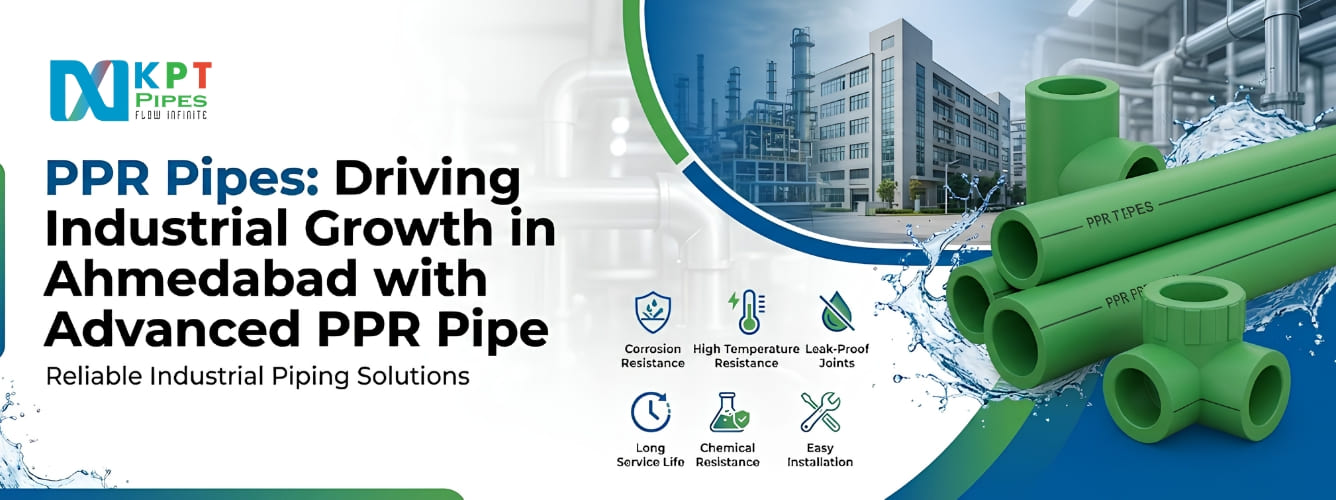
Ahmedabad has emerged as one of India’s most dynamic manufacturing hubs, housing industries ranging from textiles and chemicals to pharmaceuticals, food processing, engineering, and infrastructure development. As industrial facilities continue to modernize their operations, the demand for durable, efficient, and cost-effective piping systems has increased significantly. Among the most trusted piping solutions today, PPR (Polypropylene Random Copolymer) pipes have become a preferred choice for industrial applications due to their reliability, longevity, and superior performance.
Modern industries require piping systems that can withstand varying temperatures, high pressure, chemical exposure, and continuous operation. Traditional metal piping systems often face challenges such as corrosion, scaling, leakage, and frequent maintenance. PPR pipes address these concerns while providing excellent operational efficiency, making them an ideal solution for Ahmedabad’s growing industrial sector.
Table of Contents
ToggleWhy Industries Prefer PPR Pipes
PPR pipes are manufactured using advanced polypropylene random copolymer material that offers excellent mechanical strength and thermal stability. Their smooth internal surface ensures efficient fluid flow while minimizing pressure losses.
Some major advantages of PPR pipes include:
- Corrosion-free performance
- High resistance to chemicals
- Long service life of over 50 years
- Low maintenance requirements
- Lightweight and easy installation
- Excellent thermal insulation
- Leak-proof fusion welding joints
- Environmentally friendly construction
These qualities make PPR pipes suitable for diverse industrial applications throughout Ahmedabad.
Key Industrial Applications of PPR Pipes in Ahmedabad
1. Chemical Manufacturing Facilities
Ahmedabad is home to numerous chemical production units that handle aggressive substances, acids, alkalis, and industrial chemicals. Transporting these materials safely requires piping systems that can resist chemical reactions and deterioration.
PPR pipes offer outstanding resistance to many industrial chemicals, helping manufacturers maintain safe and uninterrupted operations. Their non-corrosive properties reduce the risk of contamination and pipe damage, resulting in lower maintenance expenses and increased production efficiency.
Industries benefit from:
- Reliable chemical transportation
- Reduced downtime
- Enhanced workplace safety
- Long-term durability
- Lower repair costs
2. Water Treatment and Distribution Systems
Water plays a critical role in manufacturing operations. Many industrial facilities require purified water for production processes, cooling systems, and equipment cleaning.
PPR pipes and fittings are widely used in water treatment plants because they resist corrosion, scale formation, and sediment buildup. Their smooth interior surface allows consistent water flow while maintaining water quality.
Benefits include:
- Improved water purity
- Reduced clogging risks
- Efficient flow rates
- Minimal maintenance
- Longer system lifespan
As Ahmedabad continues expanding its industrial infrastructure, dependable water management systems remain essential for sustainable growth.
3. Heating and Cooling Networks
Industrial heating and cooling systems operate under demanding conditions involving continuous temperature fluctuations and pressure variations. PPR pipes perform exceptionally well in such environments due to their thermal resistance and structural strength.
These pipes are commonly installed in:
- Industrial HVAC systems
- Process cooling units
- Chilled water networks
- Boiler connections
- Temperature control systems
Their excellent insulation properties help reduce energy loss, contributing to improved efficiency and lower operational costs.
4. Food and Beverage Processing Plants
The food processing industry requires hygienic piping systems that prevent contamination and maintain product quality. PPR pipes meet these requirements because they are non-toxic, odorless, and resistant to bacterial growth.
Manufacturers use PPR pipes for:
- Water supply systems
- Beverage transportation
- Cleaning processes
- Food production utilities
- Temperature-controlled applications
The smooth inner surface minimizes particle accumulation and supports strict hygiene standards, helping facilities comply with quality regulations.
5. Pharmaceutical Manufacturing Units
Ahmedabad’s pharmaceutical sector is among the largest in India. Pharmaceutical production demands highly reliable piping systems capable of maintaining purity and preventing contamination.
PPR pipes offer several advantages for pharmaceutical facilities:
- Clean fluid transportation
- Corrosion resistance
- High durability
- Easy maintenance
- Reliable long-term performance
Their ability to preserve water quality and process integrity makes them suitable for various pharmaceutical applications.
6. Compressed Air Distribution Systems
Many manufacturing plants rely heavily on compressed air for machinery, automation equipment, and pneumatic tools. PPR pipes have become a practical alternative to conventional metal pipelines in compressed air networks.
Their lightweight construction and leak-proof joints ensure efficient air delivery throughout industrial facilities.
Advantages include:
- Consistent air pressure
- Reduced energy losses
- Corrosion-free operation
- Easy installation
- Lower maintenance costs
Efficient compressed air distribution directly contributes to improved productivity and operational performance.
7. Textile and Dyeing Industries
Ahmedabad has long been recognized as a major textile manufacturing center. Textile processing facilities require extensive piping networks for water supply, dye transportation, steam systems, and wastewater management.
PPR pipes perform effectively in textile environments due to their resistance to chemicals and elevated temperatures.
Applications include:
- Dyeing units
- Washing systems
- Water distribution networks
- Chemical handling systems
- Utility pipelines
Their durability helps textile manufacturers maintain continuous production with minimal interruptions.
Comparison Table: PPR Pipes vs Traditional Metal Pipes
| Feature | PPR Pipes | Traditional Metal Pipes |
|---|---|---|
| Corrosion Resistance | Excellent | Prone to rust and corrosion |
| Service Life | 50+ Years | 15–30 Years |
| Chemical Resistance | High | Moderate |
| Installation | Easy and quick | Complex and labor-intensive |
| Maintenance Cost | Low | High |
| Weight | Lightweight | Heavy |
| Leak Protection | Fusion welded joints | Mechanical joints may leak |
| Energy Efficiency | Excellent insulation | Higher heat loss |
| Water Quality Preservation | Excellent | Risk of contamination |
| Operating Cost | Lower over time | Higher maintenance expenses |
How PPR Pipes Improve Industrial Efficiency
Industrial efficiency depends heavily on infrastructure reliability. Frequent pipe failures, leakages, and maintenance activities can disrupt production schedules and increase costs.
PPR pipes improve efficiency by:
- Minimizing operational downtime
- Reducing maintenance requirements
- Enhancing system reliability
- Improving fluid flow performance
- Supporting energy-efficient operations
- Lowering overall lifecycle costs
- Providing long-term operational stability
For manufacturers seeking sustainable and cost-effective infrastructure solutions, PPR piping systems offer significant advantages.
The Future of Industrial Piping in Ahmedabad
As Ahmedabad continues attracting investments in manufacturing, pharmaceuticals, chemicals, engineering, and food processing, industries are increasingly focusing on durable and environmentally responsible infrastructure. Modern piping systems are expected to play a critical role in supporting future industrial growth.
PPR pipes align perfectly with these requirements by offering long service life, low environmental impact, and excellent operational performance. Their adaptability across multiple industries ensures they will remain an important component of Ahmedabad’s industrial development in the coming years.
Conclusion
Industrial success depends on efficient infrastructure, and piping systems form the backbone of numerous manufacturing processes. PPR pipes have transformed industrial fluid transportation by delivering superior durability, chemical resistance, thermal performance, and long-term reliability.
From chemical plants and pharmaceutical facilities to food processing units and textile industries, Ahmedabad’s manufacturers are increasingly adopting PPR piping systems to improve productivity and reduce operational costs. As industries continue to modernize and expand, PPR pipes will remain a trusted solution for building efficient, sustainable, and future-ready industrial operations.
FAQs
Q1. What are PPR pipes used for in industries?
Ans: PPR pipes are used for water supply, chemical transport, heating and cooling systems, compressed air lines, and industrial fluid distribution.
Q2. Why are PPR pipes better than metal pipes?
Ans: PPR pipes are corrosion-resistant, lightweight, leak-proof, and require less maintenance compared to traditional metal pipes.
Q3. Can PPR pipes handle high temperatures?
Ans: Yes, PPR pipes can withstand high temperatures and pressure, making them suitable for industrial heating systems.
Q4. Are PPR pipes safe for food processing industries?
Ans: Yes, PPR pipes are non-toxic, hygienic, and resistant to bacterial growth, making them ideal for food and beverage applications.
Q5. How long do PPR pipes typically last?
Ans: Under normal operating conditions, high-quality PPR pipes can last more than 50 years with minimal maintenance.