
Underground piping systems play a major role in residential, commercial, industrial, and agricultural infrastructure. Whether it is water transportation, irrigation supply, drainage management, or industrial fluid movement, the durability of underground pipelines directly impacts overall system performance. However, even high-quality pipelines can face leakage issues if proper planning, installation, and maintenance are ignored.
Today, modern piping solutions like PPR Pipes, Agriculture Pipes and Fittings, HDPE pipes, and other advanced piping systems are designed to provide long-term reliability. Still, underground leakage remains one of the most common and costly problems across industries. Water wastage, soil damage, reduced water pressure, and expensive repairs are some of the major consequences of pipe leakage.
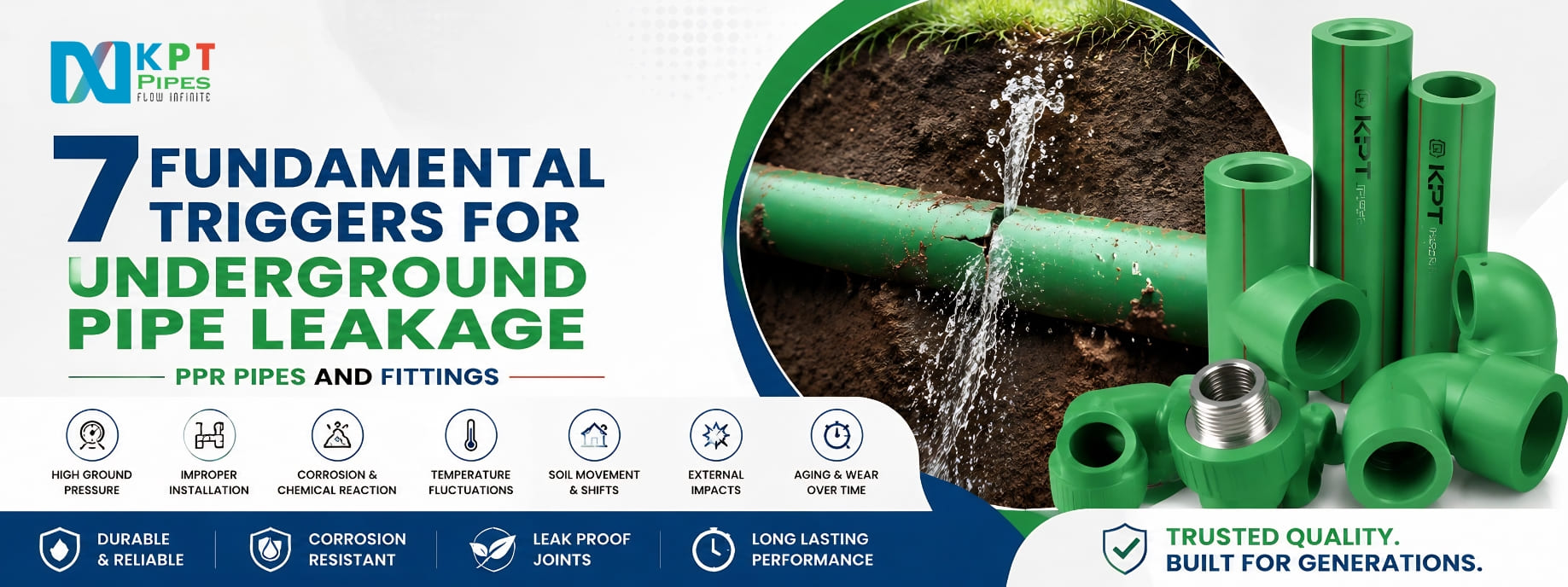
Understanding the main triggers behind underground pipe failures can help property owners, contractors, and industries prevent future damage and improve pipeline life. Here are the 7 most fundamental causes of underground pipe leakage and how modern piping systems help reduce these risks.
Table of Contents
Toggle1. Poor Installation Practices
One of the leading reasons behind underground pipe leakage is improper installation. Even premium-quality pipes can fail if the installation process is not performed correctly. Incorrect pipe alignment, weak jointing methods, improper trench preparation, and inadequate fitting connections can create vulnerable points within the pipeline.
During underground installation, pipes must be laid at proper depths with sufficient support and correct pressure handling capacity. If the pipe is forced into uneven positioning or excessive bending, stress begins to build over time. This stress eventually leads to cracks, joint failures, or leakages.
Modern piping systems are manufactured for easy installation, but professional handling remains essential. Proper welding, fusion, and fitting techniques significantly improve underground pipeline durability.
2. Soil Movement and Ground Pressure
Underground pipelines constantly face external pressure from surrounding soil and ground movement. Natural soil shifting, construction activity, earthquakes, heavy traffic, or seasonal expansion and contraction can place enormous stress on buried pipes.
When soil movement becomes excessive, pipelines may bend, crack, or separate at joints. This issue becomes more severe in areas with loose soil or unstable terrain. In agricultural lands, repeated tractor movement and irrigation activities can also increase underground stress.
Advanced piping systems are designed with flexibility and pressure resistance to handle underground conditions more efficiently. Flexible pipe materials help absorb minor ground movement and reduce the chances of sudden leakage.
3. Corrosion and Chemical Exposure
Corrosion is another major reason behind underground pipe damage, especially in older metallic pipelines. Underground moisture, chemicals, salts, and acidic soil conditions gradually weaken pipe surfaces. Over time, corrosion creates holes and weak points that eventually start leaking.
Industrial waste, fertilizers, pesticides, and contaminated groundwater can accelerate chemical reactions around underground pipelines. Agricultural zones are particularly vulnerable because of continuous exposure to chemical-rich soil and water.
Modern non-metallic piping systems offer superior resistance against rust, corrosion, and chemical reactions. This makes them highly suitable for underground plumbing, industrial applications, and irrigation systems where long-term durability is required.
4. Excessive Water Pressure
High internal water pressure is another common trigger for underground pipe leakage. Every pipeline system is designed to handle a specific pressure range. When pressure exceeds the pipe’s capacity, stress develops within the walls and joints.
Sudden pressure surges, commonly known as water hammer effects, can severely damage underground pipes. These pressure fluctuations often occur due to rapid valve closure, pump failures, or inconsistent water supply systems.
Continuous high pressure gradually weakens the pipeline structure and causes cracks or joint separation. Over time, even small stress points can develop into serious underground leaks that remain unnoticed until major damage occurs.
Pressure management systems, high-quality fittings, and correct pipe sizing help maintain smooth water flow and reduce leakage risks.
5. Inferior Pipe Quality and Low-Grade Materials
Using low-quality piping materials may reduce initial project costs, but it often results in expensive repairs later. Inferior pipes usually lack proper thickness, pressure resistance, and durability required for underground applications.
Low-grade materials become brittle over time and may fail under soil pressure, environmental conditions, or temperature fluctuations. Poor-quality fittings and weak joints also increase the risk of leakage.
High-performance piping systems are manufactured with advanced technology to ensure better strength, flexibility, and long service life. Choosing reliable piping materials helps improve system efficiency while reducing maintenance expenses in the future.
For underground infrastructure, investing in durable and certified piping solutions is always more economical in the long run.
6. Temperature Variations and Environmental Conditions
Extreme temperature changes can significantly affect underground piping systems. Expansion and contraction caused by temperature fluctuations place additional stress on pipes and joints.
In hot climates, pipelines may expand due to rising temperatures, while colder conditions can cause contraction and increased brittleness in certain materials. Repeated expansion and contraction cycles weaken pipe integrity over time.
Environmental factors like flooding, excessive moisture, tree root intrusion, and underground vibrations also contribute to leakage problems. Tree roots are particularly dangerous because they naturally grow toward water sources and may penetrate weak joints or cracks.
Modern piping technologies are developed to withstand varying environmental conditions while maintaining structural stability underground.
7. Lack of Regular Inspection and Maintenance
Underground pipelines are often ignored because they remain hidden beneath the surface. Small leaks can continue for months without detection, eventually leading to severe water loss and structural damage.
Without routine inspections, early warning signs like pressure drops, damp soil patches, or reduced water flow often go unnoticed. Minor cracks gradually expand and result in costly repairs or complete pipeline replacement.
Preventive maintenance plays a major role in increasing the lifespan of underground piping systems. Regular pressure testing, leak detection, and pipeline inspections help identify potential issues before they become major failures.
Advanced leak detection technologies and proper maintenance schedules can save significant repair costs while improving overall system performance.
Importance of Choosing Reliable Underground Piping Systems
Modern infrastructure projects require durable and long-lasting underground piping solutions. High-quality piping systems provide better resistance against pressure, corrosion, environmental stress, and leakage issues.
Today’s advanced piping technologies are widely used in residential plumbing, industrial applications, water supply systems, and agricultural irrigation because of their:
- High durability and long service life
- Leak-resistant jointing systems
- Corrosion and chemical resistance
- Smooth water flow performance
- Low maintenance requirements
- Better pressure handling capability
- Efficient underground performance
Reliable underground piping not only improves operational efficiency but also helps conserve water and reduce maintenance expenses over time.
Final Thoughts
Underground pipe leakage can lead to major operational problems, financial losses, and water wastage if ignored for long periods. While modern piping systems are designed for durability and performance, proper installation, pressure management, soil analysis, and regular maintenance remain equally important.
Understanding the root causes of underground leakage helps industries, homeowners, and agricultural sectors take preventive measures before damage becomes severe. From soil movement and corrosion to poor installation and excessive pressure, every factor plays a crucial role in pipeline health.
Investing in high-quality underground piping systems and following proper maintenance practices ensures long-term efficiency, reliable performance, and reduced repair costs for years to come.
FAQs
Q1. What is the most common cause of underground pipe leakage?
Ans: Poor installation and excessive pressure are among the most common causes of underground pipeline leakage.
Q2. How can underground pipe leakage be detected?
Ans: Signs include low water pressure, wet soil patches, unusually high water bills, and continuous water flow sounds underground.
Q3. Why are modern piping systems preferred for underground use?
Ans: Modern pipes offer better durability, corrosion resistance, pressure handling, and leak-proof performance.
Q4. Can soil movement damage underground pipes?
Ans: Yes, shifting soil and heavy ground pressure can bend, crack, or separate underground pipelines.
Q5. How often should underground pipelines be inspected?
Ans: Regular inspections should be conducted periodically to detect early signs of leakage and maintain system efficiency.