
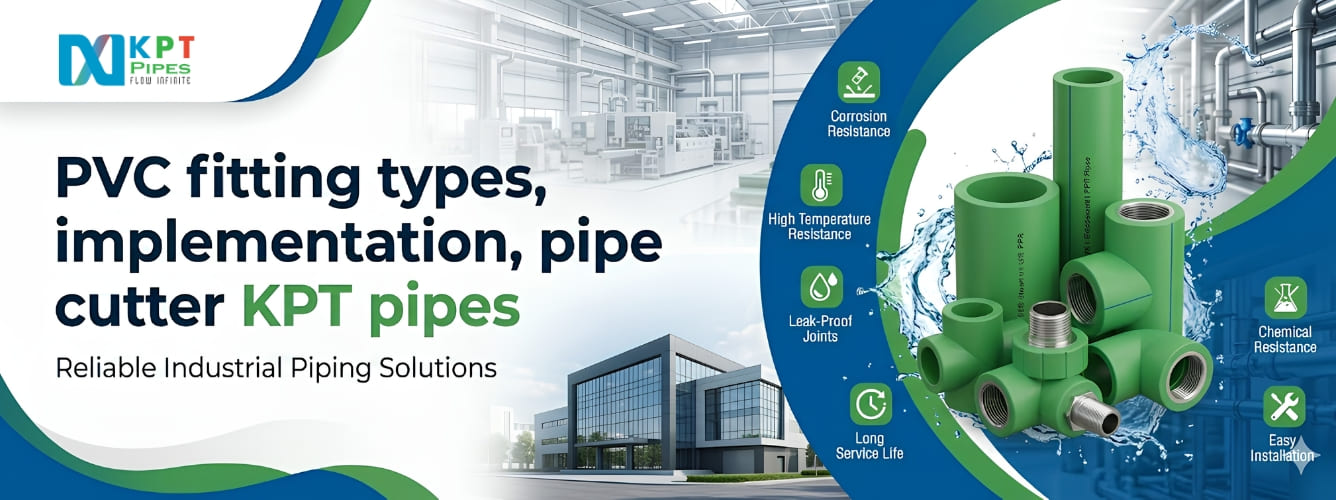
Modern plumbing and pipeline systems rely heavily on high-quality pipes and fittings to ensure smooth water transportation, durability, and long-term performance. Among the various materials available in the market, PVC and PPR fittings have become the preferred choice for residential, commercial, industrial, and agricultural applications.
Whether you are constructing a new building, upgrading an existing plumbing system, or developing a large-scale irrigation network, selecting the right fittings and installation tools plays a crucial role in the success of the project. KPT Pipes offers a comprehensive range of premium-quality fittings and pipe accessories designed to meet diverse requirements while ensuring reliability and cost-effectiveness.
Table of Contents
ToggleUnderstanding PVC and PPR Fittings
PVC (Polyvinyl Chloride) and PPR (Polypropylene Random Copolymer) fittings are essential components used to connect, redirect, control, or terminate pipelines. These fittings help create a secure and leak-resistant piping network for water supply, drainage systems, industrial fluid transportation, and agricultural irrigation.
Due to their excellent strength, corrosion resistance, lightweight construction, and easy installation, PVC and PPR fittings have become an integral part of modern infrastructure projects. Their ability to withstand varying temperatures and environmental conditions makes them suitable for both indoor and outdoor installations.
Why PVC and PPR Fittings Are Widely Preferred
The growing popularity of PVC and PPR fittings can be attributed to several practical advantages. These fittings provide dependable performance while reducing maintenance and installation costs.
Key Benefits:
- High resistance to corrosion and chemical reactions.
- Lightweight structure for easy transportation and installation.
- Long service life with minimal maintenance requirements.
- Smooth inner surface that supports efficient water flow.
- Leak-resistant joints when installed correctly.
- Suitable for residential, commercial, industrial, and agricultural projects.
- Cost-effective compared to many traditional piping materials.
- Environmentally responsible and recyclable.
These features help property owners and contractors achieve durable and efficient piping systems without compromising on quality.
Common Types of PVC and PPR Fittings
Different projects require different fitting configurations. KPT Pipes offers a wide range of fittings designed to accommodate various pipeline layouts and flow requirements.
1. Couplers
Couplers are used to join two pipes of the same diameter. They provide a strong and reliable connection, making pipeline extensions simple and efficient.
2. Elbows
Elbows help change the direction of water flow. Available in different angles such as 45° and 90°, they are commonly used in plumbing and industrial installations.
3. Tees
Tee fittings allow pipelines to branch into multiple directions. They are frequently used in water distribution systems and irrigation networks.
4. Reducers
Reducers connect pipes of different sizes and help regulate flow capacity within the system.
5. Unions
Unions make it easier to disconnect and reconnect pipeline sections during maintenance or repairs without disturbing the entire system.
6. Flanges
Flanges provide strong and detachable pipe connections, especially in industrial applications where periodic inspection is required.
7. Valves
Valves regulate, stop, or control fluid movement within the pipeline. They are critical for maintaining efficient system operation.
8. End Caps
End caps are used to seal the end of a pipeline and prevent leakage or contamination.
9. Cross Fittings
Cross fittings connect four pipeline sections at a single junction and are commonly used in complex distribution systems.
10. Reducing Tees
These fittings combine branching and size reduction functions, making them ideal for advanced plumbing networks.
Comparison of Common PVC and PPR Fittings
| Fitting Type | Primary Function | Common Application |
|---|---|---|
| Coupler | Joins two pipes | Pipeline extension |
| Elbow | Changes flow direction | Residential plumbing |
| Tee | Creates branch connections | Water distribution |
| Reducer | Connects different pipe sizes | Flow management |
| Union | Easy disconnection and maintenance | Repair work |
| Flange | Strong detachable connection | Industrial systems |
| Valve | Controls water flow | Water supply systems |
| End Cap | Closes pipe ends | Pipeline termination |
| Cross | Connects four directions | Complex networks |
| Reducing Tee | Branches and reduces size | Commercial installations |
Applications of PVC and PPR Fittings
One of the biggest advantages of PVC and PPR fittings is their versatility. They can be found in numerous industries and infrastructure projects across the country.
Residential Plumbing Systems
Homes require reliable water supply and drainage systems. PVC and PPR fittings help create leak-free plumbing networks that deliver clean water efficiently.
Commercial Buildings
Office complexes, hotels, shopping centers, and hospitals use these fittings for water distribution, wastewater management, and HVAC systems.
Agricultural Irrigation
Farmers rely on efficient irrigation systems to maximize crop productivity. PVC fittings support water transportation over long distances with minimal loss.
Industrial Facilities
Many industries use PVC and PPR fittings to transport water, chemicals, and process fluids safely throughout production facilities.
Swimming Pools and Recreational Areas
These fittings are widely used in filtration systems, water circulation networks, and pool maintenance infrastructure.
Water Treatment Plants
Water treatment facilities depend on durable piping systems that can withstand continuous operation and varying environmental conditions.
Advantages of Easy Installation
Contractors and installers often prefer PVC and PPR fittings because of their straightforward installation process. Unlike some traditional materials, these fittings require less labour and installation time.
The lightweight design simplifies transportation and handling on-site. Properly installed fittings create secure joints that minimize the chances of leakage and reduce maintenance costs over time.
This ease of installation contributes significantly to project efficiency, especially for large-scale developments where time and labour costs are important considerations.
Quality and Performance Standards
At KPT Pipes, quality remains a top priority. Every fitting undergoes stringent quality checks to ensure reliability, durability, and compliance with industry standards.
Quality-tested fittings help prevent common pipeline issues such as:
- Water leakage
- Joint failure
- Corrosion damage
- Flow restrictions
- Premature wear and tear
By maintaining strict quality control processes, KPT Pipes delivers products that meet the performance expectations of modern infrastructure projects.
Pipe Cutter: An Essential Tool for Installation
Along with quality fittings, having the right installation tools is equally important. A pipe cutter is one of the most valuable tools used during pipeline installation and maintenance.
Pipe cutters are designed to create clean, precise, and smooth cuts without damaging the pipe structure. Accurate cutting ensures proper fitting alignment and helps create secure joints.
Benefits of Using a Pipe Cutter
- Produces smooth and accurate pipe cuts.
- Reduces installation time.
- Improves fitting accuracy.
- Enhances overall workmanship.
- Increases installation efficiency.
- Suitable for maintenance and repair work.
A high-quality pipe cutter helps professionals achieve professional-grade results while reducing material wastage.
Choosing the Right PVC and PPR Fittings
Selecting suitable fittings depends on several factors:
Consider Pipe Size
Ensure the fitting matches the pipe diameter for proper installation.
Evaluate Pressure Requirements
Different applications require varying pressure ratings. Choose fittings designed for the intended operating conditions.
Check Material Compatibility
Verify compatibility between fittings and the type of pipe being used.
Consider Environmental Conditions
Outdoor and industrial environments may require fittings with enhanced durability and resistance.
Prioritize Quality
Investing in high-quality fittings reduces long-term maintenance expenses and improves system performance.
Conclusion
PVC and PPR fittings play a vital role in creating reliable and efficient piping systems across residential, commercial, industrial, and agricultural sectors. Their durability, affordability, ease of installation, and resistance to corrosion make them one of the most trusted solutions for modern infrastructure projects.
From couplers and elbows to valves and reducers, each fitting serves a specific purpose in maintaining smooth water flow and secure pipeline connections. When combined with professional installation tools such as pipe cutters, these fittings contribute to long-lasting and trouble-free pipeline systems.
KPT Pipes continues to provide high-quality piping solutions designed to meet evolving industry requirements while ensuring performance, reliability, and value for customers.
Frequently Asked Questions (FAQs)
Q1. What are PVC fittings used for?
Ans: PVC fittings are used to connect, redirect, control, and terminate pipelines in plumbing, irrigation, and industrial systems.
Q2. What is the difference between PVC and PPR fittings?
Ans: PVC fittings are commonly used for drainage and water supply systems, while PPR fittings are often preferred for hot and cold water applications.
Q3. Why are pipe cutters important?
Ans: Pipe cutters provide clean and precise cuts, ensuring proper fitting installation and reducing the risk of leakage.
Q4. Are PVC fittings suitable for agricultural use?
Ans: Yes, PVC fittings are widely used in irrigation and agricultural water distribution systems because of their durability and affordability.
Q5. How long do PVC and PPR fittings last?
Ans: When properly installed and maintained, high-quality PVC and PPR fittings can provide reliable performance for several decades.