
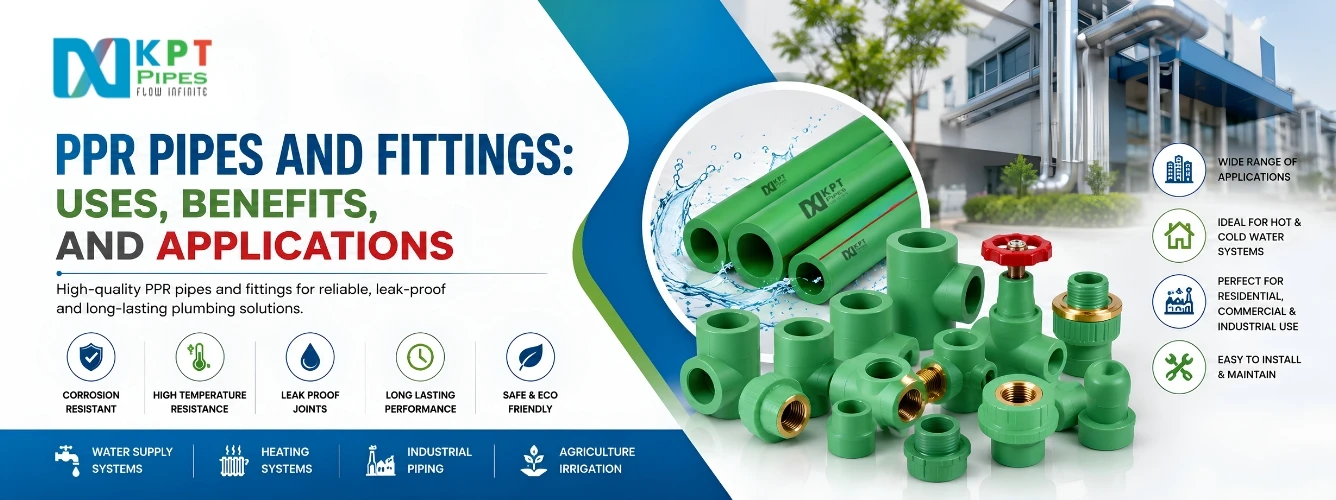
In today’s fast-paced construction world, choosing the right piping system can make or break a project’s success. Enter PPR pipes and fittings—the durable, versatile solution revolutionising plumbing for homes, industries, and beyond. Made from polypropylene random copolymer, these pipes excel in hot and cold water systems, outperforming traditional materials like PVC or metal. At KPT Pipes, we specialise in high-quality PPR solutions tailored for India’s demanding climates and infrastructure needs.
Why are PPR pipes used for surging? They resist corrosion, handle high temperatures, and install quickly, saving time and money. Whether you’re a homeowner upgrading plumbing or a contractor tackling commercial builds, understanding the benefits of PPR pipes and fittings unlocks reliable, long-lasting performance. Dive in as we explore types, advantages, applications, and why KPT Pipes leads the market.
Table of Contents
ToggleWhat Are PPR Pipes and Fittings?
PPR Pipes and Fittings are manufactured from Polypropylene Random Copolymer, a high-performance thermoplastic material known for its excellent resistance to heat, pressure, and chemicals. These pipes are widely used for transporting hot and cold water across residential, commercial, and industrial applications. Unlike traditional materials such as galvanized steel or CPVC, PPR pipes do not rust, corrode, or scale, ensuring hygienic water flow and long-lasting performance. The pipes are heat-fused during installation, creating a single, continuous pipeline with leak-proof joints that can withstand extreme operating conditions for decades.
PPR Fittings are specially designed connectors that complement PPR pipes, enabling secure and flexible piping layouts. Available in multiple shapes and sizes—including elbows, tees, couplers, reducers, end caps, and valves—these fittings allow seamless system customization without compromising strength. Manufactured in compliance with international standards such as DIN 8077/8078, high-quality PPR systems, including KPT Pipes’ PPR range, offer pressure ratings up to PN25, making them suitable for varying pressure and temperature requirements. Together, PPR Pipes and Fittings create a durable, efficient, and maintenance-free piping solution ideal for modern plumbing and industrial infrastructure.
Key Benefits of PPR Pipes and Fittings
Why choose PPR pipes and fittings over alternatives? Their advantages make them a smart investment for any plumbing project.
- Exceptional Durability and Longevity: PPR pipes resist scaling, corrosion, and chemical damage, boasting a 50-year service life in normal conditions. No rusting or pitting means fewer repairs and lower maintenance costs.
- High Thermal Resistance: Handle hot water up to 95°C without deforming, perfect for solar heaters and boilers. This outperforms PVC, which softens above 60°C.
- Hygienic and Safe: Non-toxic, odorless, and food-grade approved, PPR pipes prevent bacterial growth and leaching—crucial for potable water systems.
- Eco-Friendly and Lightweight: 100% recyclable, with one-eighth the weight of metal pipes, reducing transportation costs and installation time by up to 40%.
- Superior Hydraulic Performance: Smooth inner walls minimize friction, ensuring optimal flow rates and energy savings in pumping systems.
- Cost-Effective Over Time: Initial costs are competitive, but zero maintenance and longevity slash lifecycle expenses by 30-50% compared to copper.
These benefits of PPR pipes position them as the go-to choice for modern plumbing, from homes to heavy industries.
Uses of PPR Pipes and Fittings
- Residential Plumbing Systems
PPR pipes are widely used in homes for hot and cold water supply due to their leak-proof joints and hygienic properties. They are perfect for kitchens, bathrooms, and overhead water tanks, ensuring safe and clean water for daily household use while requiring minimal maintenance. - Commercial Buildings
In offices, hotels, malls, and hospitals, PPR piping systems provide reliable water distribution and maintain consistent water quality. Their corrosion resistance and durability make them ideal for high-traffic buildings, reducing maintenance costs and ensuring long-term performance. - Industrial Applications
Industries rely on PPR pipes for transporting chemicals, compressed air, and various process fluids. Their high-pressure tolerance and chemical resistance make them suitable for demanding environments, ensuring leak-free operation and operational safety in industrial setups. - HVAC and Heating Systems
Thanks to their excellent thermal stability, PPR pipes are widely used in heating lines, chilled water systems, and air-conditioning pipelines. They handle both high and low temperatures efficiently and provide a long-lasting, reliable solution for complex HVAC systems. - Agricultural and Irrigation Systems
PPR pipes are ideal for agricultural irrigation and greenhouse setups, providing efficient water distribution while resisting corrosion and chemical damage. Their durability and consistent water flow help farmers maintain healthy crops and optimize water usage in modern farming practices.
Applications of PPR Pipes and Fittings Across Sectors
Residential Sector
- Hot and cold water distribution: Efficiently delivers water at desired temperatures throughout the household without leaks or corrosion.
- Bathroom and kitchen plumbing: Ensures hygienic, durable, and maintenance-free piping for sinks, showers, and taps.
- Concealed piping systems: Perfect for hidden installations behind walls or under floors due to its corrosion resistance and long lifespan.
Commercial Sector
- Hotels and resorts: Provides reliable water supply for guest rooms, kitchens, and spa facilities with minimal maintenance.
- Educational institutions: Ensures safe and hygienic water distribution across schools, colleges, and campus facilities.
- Hospitals and healthcare facilities: Maintains strict hygiene standards, delivering clean water to critical areas without contamination risks.
Industrial Sector
- Chemical processing plants: Resistant to most chemicals, PPR pipes safely transport liquids used in industrial processes.
- Food and beverage industries: Maintains purity and hygiene, making them ideal for water and liquid transport in production lines.
- Pharmaceutical manufacturing units: Safe and reliable for transporting water and other fluids without contaminating sensitive products.
Infrastructure and Utilities
- Water supply networks: Supports urban and municipal water distribution systems with durability and leak-free performance.
- Solar water heating systems: Can handle high temperatures, making them ideal for piping in solar water heaters.
- Industrial cooling lines: Efficiently transports chilled water in industrial cooling systems without corrosion or scaling issues.
Agriculture
- Irrigation and greenhouse systems: PPR pipes efficiently deliver water across fields and greenhouses, ensuring uniform water distribution while being resistant to chemicals, fertilizers, and pesticides.
- Underground irrigation systems: Ideal for drip and subsurface irrigation networks, PPR pipes withstand soil pressure, prevent leakage, and provide long-term durability for efficient water management.
- Agricultural water supply: Supports livestock watering systems, hydroponics, and other farm water needs while maintaining water quality.
Key Characteristics of PPR Pipes and Fittings
Understanding the core characteristics of PPR systems helps explain why they are widely used across multiple sectors.
Advanced Material Composition
PPR pipes are made from high-grade polypropylene random copolymer, offering excellent mechanical strength combined with flexibility. This makes them resistant to cracking, stress, and external pressure.
Wide Temperature Tolerance
One of the most significant advantages of PPR pipes is their ability to withstand extreme temperatures ranging from -20°C to 95°C, making them perfect for hot water distribution systems and heating applications.
Hygienic and Safe for Drinking Water
PPR pipes do not react with water or release harmful substances, ensuring that water quality remains pure and safe. This makes them ideal for potable water supply systems.
Exceptional Durability
With strong resistance to corrosion, scaling, and chemical damage, PPR pipes offer a service life of over 50 years, even under demanding conditions.
Leak-Proof Installation
PPR pipes and fittings are joined using poly-fusion welding, which melts the pipe and fitting together to form a homogeneous joint. This eliminates leakage points entirely.
Clean and Modern Appearance
Commonly available in white and green colours, PPR pipes offer a neat, professional look suitable for concealed as well as exposed installations.
Types of PPR Pipes and Fittings
Understanding types of PPR pipes helps select the perfect fit. KPT Pipes offers a full range categorised by pressure ratings and wall thickness.
PN10 PPR Pipes
- Standard rating: 10 bar pressure at 20°C.
- Best for: Cold water supply in residential buildings.
- Thickness: Thin walls for cost-effectiveness.
PN16 PPR Pipes
- Pressure handling: Up to 16 bar, suitable for moderately hot water.
- Applications: Apartments and small offices.
- Durability: Balances strength and flexibility.
PN20 and PN25 PPR Pipes
- Heavy-duty: PN20 (20 bar) for high-pressure systems; PN25 for industrial extremes.
- Features: Thicker walls resist bursts up to 95°C.
- KPT Advantage: Reinforced for seismic zones.
Fittings mirror these types—socket fusion, threaded, or compression styles. Our PN20 elbow fittings, for instance, ensure seamless transitions in complex layouts.
| Type | Pressure Rating | Ideal Temperature | Common Use |
| PN10 | 10 bar | Up to 60°C | Cold water homes |
| PN16 | 16 bar | Up to 70°C | Hot/cold apartments |
| PN20 | 20 bar | Up to 85°C | Commercial buildings |
| PN25 | 25 bar | Up to 95°C | Industrial/heating |
Installation Tips for PPR Pipes
To ensure long-lasting performance, proper installation is crucial:
- Use thermal fusion welding for joining pipes and fittings.
- Avoid bending the pipes excessively; use fittings for turns and angles.
- Maintain proper alignment to prevent stress on joints.
- Ensure pressure testing after installation to check for leaks.
- Keep pipes away from direct sunlight for prolonged durability.
Why Choose KPT Pipes for PPR Solutions?
As a leading Pipes Manufacturing Company in India, KPT Pipes offers high-quality PPR Pipes and Fittings that combine reliability, durability, and efficiency.
- Certified quality products with long service life.
- Wide range of sizes and fittings for all types of applications.
- Affordable pricing without compromising on quality.
- Excellent customer support and technical guidance for installation.
Choosing KPT Pipes ensures you get the best PPR Pipes in India that meet international standards and perform efficiently in residential, commercial, and industrial setups.
Conclusion
PPR Pipes and Fittings have revolutionized the plumbing and industrial piping industry with their superior durability, high-temperature resistance, and eco-friendly properties. Their wide range of applications—from residential water supply to industrial chemical transport and fire fighting systems—makes them an ideal choice for modern infrastructure.
By choosing KPT Pipes, you invest in high-quality PPR Pipes and Fittings that guarantee safety, reliability, and performance. Whether it is for home plumbing, commercial projects, or industrial applications, KPT Pipes provides durable solutions designed to last for decades, ensuring peace of mind and efficiency for all your piping needs.
Upgrade your piping system today with Best PPR Pipes in India and experience the long-term benefits of innovation, safety, and efficiency.
FAQs About PPR Pipes and Fittings
Q1. What are PPR pipes?
Ans: PPR (Polypropylene Random Copolymer) pipes are high-quality thermoplastic pipes widely used for plumbing and water supply systems. They are known for their excellent heat, pressure, and chemical resistance, making them ideal for both hot and cold water applications. PPR pipes are durable, corrosion-resistant, and have a long lifespan, often exceeding 50 years under normal usage conditions.
Q2. How are PPR pipes joined?
Ans: PPR pipes are typically joined using a heat fusion process. This involves heating the ends of the pipes and fittings with a special welding machine and then pressing them together. The result is a seamless, leak-proof connection that is as strong as the pipe itself. This method ensures durability, prevents leakage, and maintains the integrity of the piping system over time.
Q3. Can PPR pipes be buried underground?
Ans: Yes, PPR pipes can be safely installed underground. However, it is important to follow proper guidelines, such as using protective sleeves, avoiding sharp stones, and maintaining adequate soil compaction around the pipes. These precautions prevent damage from external pressure or shifting soil and help ensure long-term performance.
Q4. Can PPR pipes be used outdoors?
Ans: While PPR pipes are primarily designed for indoor plumbing, they can be used outdoors with caution. Prolonged exposure to direct sunlight may cause degradation, so using UV-protective coatings or burying the pipes underground is recommended for outdoor installations.
Q5. What is the difference between PPR and other pipes?
Ans: Compared to materials like PVC, CPVC, or metal pipes, PPR pipes offer superior chemical resistance, high-temperature tolerance, and minimal scaling or corrosion. They are lightweight, easy to install, and provide long-term cost savings due to their durability and low maintenance requirements.