

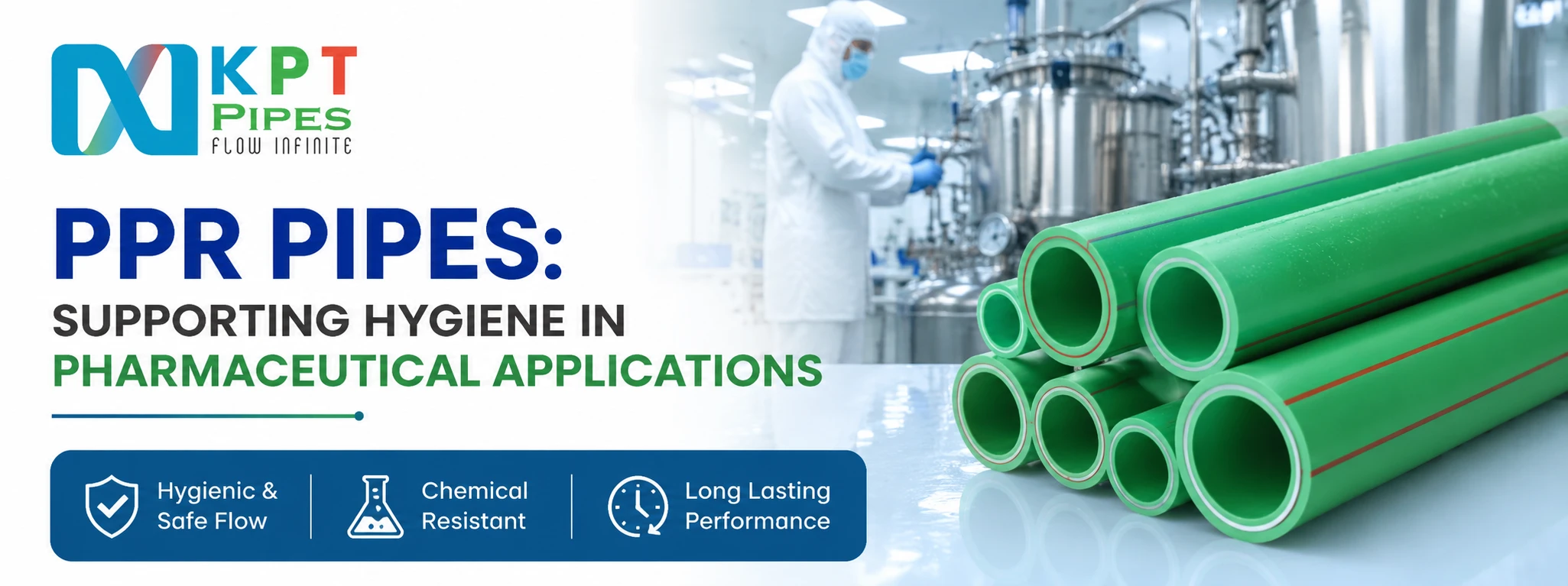
In the pharmaceutical industry, maintaining hygiene, safety, and operational efficiency is of paramount importance. Every element of production—from water supply to chemical transport—must adhere to strict regulatory standards to ensure that medicines remain safe for consumption. Among the critical components supporting these standards, PPR (Polypropylene Random Copolymer) pipes stand out. Known for their durability, chemical resistance, and high hygiene standards, PPR pipes have become an indispensable choice for pharmaceutical piping systems across the globe, providing a reliable conduit for clean water, chemicals, and gases without compromising purity.
Table of Contents
ToggleUnderstanding PPR Pipes and Their Benefits
PPR pipes are engineered to deliver unmatched versatility, strength, and resistance to extreme temperatures and high-pressure systems. Manufactured from premium-grade raw materials using advanced production technologies, they ensure consistent performance and long-term reliability. In pharmaceutical environments, even minor contamination can result in costly production losses or pose serious health risks, and PPR pipes help mitigate these issues by providing a completely hygienic and non-reactive flow path for liquids, chemicals, and gases.
Key benefits of PPR pipes include:
- High Hygiene Standards: The smooth inner surface of PPR pipes prevents biofilm accumulation and bacterial growth, making them perfect for transporting purified water, chemicals, and sterile solutions. Their non-porous structure ensures that contamination risks are minimised throughout the piping system.
- Corrosion Resistance: Unlike metal pipes, PPR pipes do not rust or corrode, which ensures the integrity and purity of water and chemicals. This property is particularly essential in pharmaceutical systems where even minor contamination can compromise product quality.
- Temperature and Pressure Tolerance: PPR pipes can safely transport both hot and cold liquids while maintaining their structural stability under high-pressure conditions commonly found in pharmaceutical operations, ensuring uninterrupted performance.
- Chemical Resistance: These pipes are resistant to a wide spectrum of chemicals, including acids, alkalis, and solvents, making them suitable for handling a variety of pharmaceutical solutions without the risk of pipe degradation or contamination.
- Longevity and Cost-Efficiency: PPR pipes have a long service life and require minimal maintenance, which reduces operational costs and downtime, offering a highly cost-effective solution for pharmaceutical facilities over time
Why PPR Pipes Are Ideal for Pharmaceutical Applications
The pharmaceutical industry demands pipes that ensure the integrity of its products. Contamination or chemical reactions within piping can compromise the quality of medicines. PPR pipes meet these stringent requirements because of their non-toxic material composition and hygienic design.
Some critical areas where PPR pipes support pharmaceutical processes include:
- Purified Water Systems: Pharmaceutical-grade water, used in formulations and cleaning, requires pipes that do not leach contaminants or support microbial growth. PPR pipes maintain water purity efficiently.
- Chemical Transport Lines: From mild solutions to corrosive substances, PPR pipes resist chemical degradation, ensuring safe transportation of essential liquids.
- High-Purity Gas Lines: Certain pharmaceutical processes use gases like nitrogen or carbon dioxide. PPR pipes offer leak-proof and safe conduits for these gases.
- Process Piping for Manufacturing Units: Whether it is the transfer of raw ingredients or intermediates, PPR pipes provide reliable and contamination-free flow paths.
Hygiene Advantages of PPR Pipes in Pharmaceutical Piping
Maintaining hygiene in pharmaceutical applications is non-negotiable. PPR pipes contribute significantly to hygiene management through:
- Smooth Internal Surface: The low roughness inside PPR pipes prevents bacterial adhesion and biofilm formation, reducing contamination risks.
- Seamless Joints via Heat Fusion: PPR pipes are connected through heat fusion, eliminating mechanical joints and potential leakage points where bacteria could thrive.
- Non-Reactive Material: Unlike metals, PPR pipes do not react with transported chemicals, maintaining the integrity of pharmaceutical solutions.
- Compliance with Standards: High-quality PPR pipes meet international standards for pharmaceutical applications, ensuring regulatory compliance in water, chemical, and gas systems.
These features collectively make PPR pipes a safer, more efficient alternative to traditional metallic or PVC piping in pharmaceutical setups.
Applications of PPR Pipes in Pharmaceutical Industry
PPR pipes are increasingly preferred in pharmaceutical facilities due to their reliability and hygienic performance. Typical applications include:
- Water for Injection (WFI) Systems: Ensuring sterile water for injections without contamination.
- Clean Steam Lines: Safe transport of steam in sterilisation and drying processes.
- Process Water Distribution: Efficient distribution of water used in cleaning, cooling, and formulation.
- Chemical Feed Lines: Transporting acids, bases, and other pharmaceutical chemicals without pipe degradation.
- Compressed Air and Gas Lines: Supporting pneumatic equipment and gas-based processes with contamination-free flow.
Each application benefits from the high hygiene standards, chemical resistance, and thermal stability of PPR pipes, making them indispensable for pharmaceutical piping infrastructure.
Sustainability and Maintenance Benefits
PPR pipes are not only hygienic but also environmentally friendly. They are fully recyclable, reducing the environmental footprint of pharmaceutical facilities. Additionally, their low thermal conductivity minimises heat loss during hot water or chemical transport, improving energy efficiency.
Maintenance is minimal due to their corrosion resistance, smooth surface, and fusion-jointed installation. Unlike metallic pipes that require periodic inspection for rust and corrosion, PPR pipes maintain consistent performance over decades, reducing downtime and operational costs.
Choosing the Right PPR Pipes for Pharmaceutical Piping
Selecting the right PPR pipes involves considering parameters such as:
- Temperature and Pressure Ratings: Ensure the pipes can handle the specific requirements of the pharmaceutical process.
- Chemical Compatibility: Verify resistance to the chemicals transported to prevent leaching or corrosion.
- Regulatory Compliance: Choose pipes that comply with international standards for pharmaceutical applications.
- Pipe Diameter and Flow Rate Requirements: Ensure optimal flow without turbulence that can encourage contamination.
- Quality Certifications: Look for pipes with ISO, BIS, or equivalent certifications to guarantee reliability and hygiene.
Partnering with a trusted supplier, like KPT Pipes, ensures access to high-quality, certified PPR pipes tailored for pharmaceutical environments.
Conclusion
In the pharmaceutical industry, where product purity and hygiene are critical, PPR pipes and fittings provide an ideal solution for safe, reliable, and efficient pharmaceutical piping. With their superior hygiene standards, chemical resistance, thermal stability, and long service life, they protect both the production process and end users. Choosing high-quality PPR pipes ensures compliance, reduces operational costs, and contributes to a sustainable, contamination-free environment for pharmaceutical manufacturing.
Investing in PPR pipes from a trusted manufacturer like KPT Pipes ensures that your pharmaceutical applications remain safe, efficient, and fully compliant with industry standards.
FAQs about PPR Pipes in Pharmaceutical Applications
Q1. What makes PPR pipes suitable for pharmaceutical water systems?
Ans: PPR pipes have smooth internal surfaces that prevent bacterial growth, do not leach contaminants, and can handle high-purity water for injections, cleaning, and process use.
Q2. Can PPR pipes handle corrosive chemicals used in pharmaceuticals?
Ans: Yes, PPR pipes are highly resistant to acids, alkalis, and other chemical substances, ensuring safe and long-term chemical transport without degradation.
Q3. Are PPR pipes compliant with pharmaceutical hygiene standards?
Ans: High-quality PPR pipes meet international standards such as ISO and BIS, ensuring safe, non-toxic, and hygienic pipelines for pharmaceutical processes.
Q4. How are PPR pipes joined to ensure hygiene?
Ans: PPR pipes are fused using heat, creating seamless joints that eliminate leaks and reduce bacterial contamination risks.
Q5. What maintenance is required for PPR pipes in pharmaceutical settings?
Ans: Maintenance is minimal. Regular inspections for mechanical damage suffice, as PPR pipes are corrosion-resistant, chemically stable, and durable over decades.