
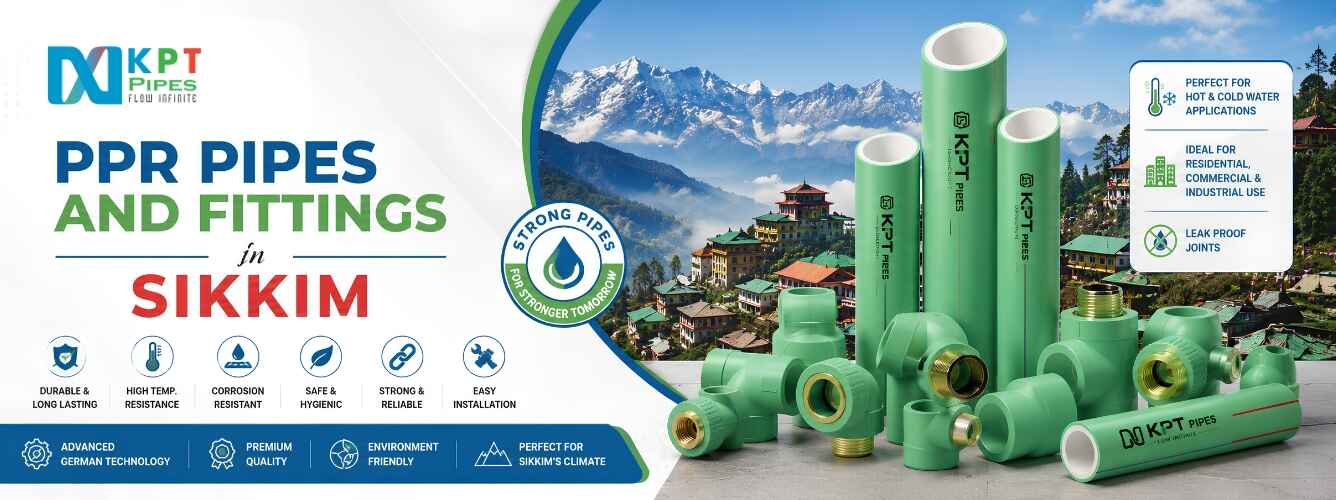
As Sikkim continues to develop its residential, commercial, and infrastructure sectors, the demand for durable and efficient plumbing systems is increasing rapidly. Whether it is a residential building in Gangtok, a hotel in a tourist destination, or an industrial facility, selecting the right piping system is essential for long-term performance. This is where PPR Pipes and Fittings have become a preferred choice.
Known for their strength, leak-proof performance, and resistance to corrosion, PPR pipes are transforming modern plumbing systems across India. Their ability to perform efficiently in varying climatic conditions makes them particularly suitable for Sikkim’s unique geographical environment. PPR pipes are widely used for hot and cold water supply, HVAC systems, industrial fluid transportation, and numerous other applications.
Table of Contents
ToggleWhy PPR Pipes Are Ideal for Sikkim
Sikkim experiences diverse weather conditions, including cold winters, heavy rainfall, and varying temperatures throughout the year. Traditional metal pipes often suffer from rust, scaling, and leakage over time. PPR pipes, on the other hand, offer superior resistance to moisture and temperature fluctuations, making them a dependable choice for local plumbing requirements.
Their lightweight construction also simplifies transportation and installation in hilly regions where logistics can sometimes be challenging. These advantages have made PPR piping systems increasingly popular among builders, contractors, and homeowners throughout the state.
Understanding PPR Pipes and Fittings
PPR stands for Polypropylene Random Copolymer, a high-quality thermoplastic material designed for fluid transportation systems. PPR pipe are manufactured using advanced extrusion technology, while fittings such as elbows, tees, couplers, reducers, and valves are produced through precision molding processes.
One of the biggest advantages of PPR systems is their heat fusion joining method. During installation, the pipe and fitting are fused together to create a single homogeneous connection, significantly reducing the chances of leakage. This results in a highly reliable piping network that can serve for decades with minimal maintenance.
Major Benefits of PPR Pipes and Fittings
1. Excellent Durability
PPR pipes are designed to withstand demanding operating conditions. They maintain their structural integrity even under continuous water pressure and temperature variations, making them suitable for long-term use in residential and commercial projects. Properly installed systems can provide decades of dependable performance.
2. Corrosion-Free Performance
Unlike conventional metal pipes, PPR pipes do not rust, corrode, or accumulate scale deposits. This helps maintain smooth water flow and preserves water quality over time, especially in drinking water applications.
3. High Temperature Resistance
PPR piping systems can efficiently handle both hot and cold water supply networks. Their excellent thermal stability makes them suitable for residential water heating systems, hotels, hospitals, and commercial buildings.
4. Leak-Proof Jointing System
The heat fusion installation process creates seamless joints that become as strong as the pipe itself. This significantly reduces the risk of leakage compared to conventional threaded or adhesive-based piping systems.
5. Hygienic and Safe
PPR pipes are non-toxic and do not affect the taste, odor, or quality of drinking water. Their smooth internal surface also prevents bacterial growth and sediment accumulation.
6. Environmentally Friendly
Since PPR material is recyclable and requires minimal maintenance throughout its lifespan, it contributes to sustainable construction practices while reducing overall environmental impact.
Types of PPR Pipes Available in Sikkim
Different projects require different piping solutions. Some commonly used PPR pipe variants include:
Standard PPR Pipes
Suitable for domestic water supply systems and general plumbing applications.
PPR-C Pipes
Designed for enhanced durability and improved resistance to temperature variations, making them ideal for residential and commercial buildings.
PPR-AL-PPR Composite Pipes
These pipes incorporate an aluminum layer between PPR layers, reducing thermal expansion and improving structural strength.
Glass Fiber Reinforced PPR Pipes
Manufactured for high-performance applications where additional rigidity and durability are required.
Fire Fighting PPR Pipes
Specially developed for fire protection systems and emergency water supply networks.
Pneumatic PPR Pipes
Used in industrial applications involving compressed air transportation and specialized fluid handling systems.
Common PPR Fittings Used in Plumbing Systems
PPR fittings help create a complete and efficient piping network. Some frequently used fittings include:
- Elbows for directional changes
- Tees for branch connections
- Couplers for joining pipe sections
- Reducers for connecting different pipe sizes
- Valves for flow control
- End caps for pipe termination
- Flanges for maintenance access points
These fittings ensure flexibility during installation and allow engineers to design efficient water distribution systems.
Applications of PPR Pipes and Fittings in Sikkim
Residential Buildings
Modern homes require dependable plumbing systems for kitchens, bathrooms, and water storage systems. PPR pipes provide long-lasting and hygienic water transportation.
Hotels and Hospitality Projects
As tourism remains a major contributor to Sikkim’s economy, hotels and resorts require reliable plumbing infrastructure. PPR systems offer consistent performance and reduced maintenance costs.
Commercial Buildings
Office complexes, shopping centres, educational institutions, and healthcare facilities utilize PPR pipes for water distribution and HVAC applications.
Industrial Facilities
Industries benefit from the chemical resistance and pressure-handling capabilities of PPR piping systems for fluid transportation and process applications.
Agriculture and Irrigation
PPR pipes are increasingly being used in irrigation systems due to their durability, lightweight design, and resistance to environmental conditions.
Installation Tips for Better Performance
To maximize the lifespan of a PPR piping system:
- Use certified pipes and fittings.
- Follow proper heat fusion welding procedures.
- Avoid excessive bending during installation.
- Protect exposed pipelines from mechanical damage.
- Conduct pressure testing before system commissioning.
- Ensure trained professionals handle installation work.
Proper installation plays a significant role in ensuring leak-free operation and long-term performance.
Why Choose KPT Pipes for PPR Pipes and Fittings in Sikkim?
KPT Pipes has established itself as a trusted manufacturer and supplier of advanced piping solutions across India. With a strong focus on quality, innovation, and customer satisfaction, KPT offers a comprehensive range of PPR pipes and fittings designed to meet modern infrastructure requirements.
The company provides solutions for residential, commercial, industrial, agricultural, and fire protection applications. Every product undergoes stringent quality checks to ensure durability, safety, and long-lasting performance. Whether you require plumbing solutions for a home, hotel, commercial building, or industrial facility, KPT Pipes delivers dependable products that meet industry standards.
Conclusion
The growing demand for modern plumbing infrastructure in Sikkim calls for reliable and future-ready piping systems. PPR Pipes and Fittings offer an ideal combination of strength, durability, hygiene, and cost-effectiveness. Their ability to withstand temperature variations, resist corrosion, and provide leak-proof performance makes them one of the best choices for residential, commercial, and industrial projects.
By investing in high-quality PPR piping solutions, property owners and developers can ensure long-term efficiency, reduced maintenance costs, and dependable water distribution systems for years to come.
FAQs
Q1. What are PPR Pipes and Fittings?
Ans: PPR Pipes and Fittings are plumbing components made from Polypropylene Random Copolymer, commonly used for hot and cold water distribution systems.
Q2. Why are PPR pipes suitable for Sikkim?
Ans: They resist corrosion, temperature fluctuations, and moisture, making them ideal for Sikkim’s climatic conditions.
Q3. How long do PPR pipes last?
Ans: High-quality PPR piping systems can provide reliable performance for several decades when properly installed and maintained.
Q4. Can PPR pipes be used for hot water applications?
Ans: Yes, PPR pipes are specifically designed to handle both hot and cold water systems efficiently.
Q5. Where are PPR Pipes commonly used?
Ans: They are widely used in homes, hotels, hospitals, schools, commercial buildings, industries, and HVAC systems.b