

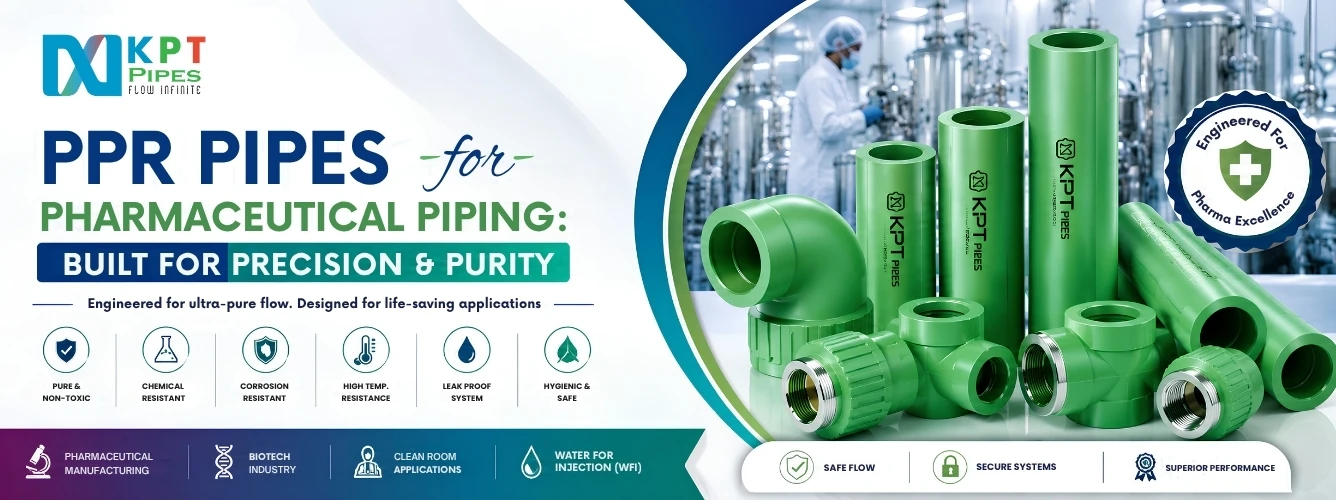
In the high-stakes world of pharmaceutical manufacturing, every detail matters. From sterile production lines to precise fluid transport, contamination risks can derail operations, compromise drug safety, and invite regulatory scrutiny. Enter PPR pipes for pharmaceutical piping—a game-changer engineered for precision & purity. At KPT Pipes, we specialize in premium polypropylene random copolymer (PPR) piping systems that meet the industry’s toughest demands, ensuring seamless compliance with FDA, USP, and GMP standards.
Unlike traditional metal or PVC pipes, PPR pipes excel in pharmaceutical applications. They resist corrosion, prevent leaching of harmful substances, and maintain ultra-pure fluid integrity. This blog dives deep into why PPR pipes are the gold standard for pharma piping, their key advantages, installation best practices, and how KPT Pipes delivers unmatched quality.
Table of Contents
ToggleWhy Pharmaceutical Piping Demands Uncompromising Purity
Pharmaceutical facilities handle everything from active pharmaceutical ingredients (APIs) to ultrapure water systems. A single impurity can lead to batch recalls, costing millions. Traditional piping materials like steel rust over time, while PVC degrades under UV light or chemicals, releasing toxins into sensitive flows.
PPR pipes for pharmaceutical piping solve these issues. Made from random copolymer polypropylene, they form a non-porous, smooth inner surface that inhibits bacterial growth and biofilm formation. Their high purity rating—often USP Class VI certified—ensures no extractables or particulates migrate into fluids, safeguarding drug efficacy.
Regulatory bodies like the FDA emphasize “pharmaceutical-grade piping” that withstands aggressive sanitization with steam, hot water, or chemicals. PPR’s thermal stability (up to 95°C continuously) and pressure resistance make it ideal for clean-in-place (CIP) and sterilize-in-place (SIP) processes. Studies from the International Society for Pharmaceutical Engineering (ISPE) show PPR reduces contamination risks by up to 70% compared to metals.
PPR Pipes and Fittings are tailored for pharma to ensure leak-proof joints via fusion welding. This precision minimizes dead legs—stagnant zones where microbes thrive—promoting flow dynamics critical for high-purity water loops.
Key Advantages of PPR Pipes in Pharmaceutical Applications
1. Exceptional Chemical Resistance
Pharmaceutical processes often involve aggressive chemicals, acids, and alkaline solutions. PPR pipes are highly resistant to most chemical reactions, ensuring that the piping system remains intact and contamination-free. Unlike metal pipes that can corrode over time, PPR maintains structural integrity, safeguarding the purity of fluids.
2. Smooth and Non-Porous Surface
Hygiene is paramount in pharmaceutical manufacturing. PPR pipes feature a smooth, non-porous internal surface, which prevents the accumulation of biofilms, bacteria, and other microbial growth. This surface design also reduces pressure loss and ensures smooth fluid flow, essential for precise dosing and processing.
3. High Temperature and Pressure Tolerance
Pharmaceutical processes often involve high-temperature sterilization and pressurized fluid transport. PPR pipes can withstand temperatures up to 95°C for hot water and pressures of 25 bar, making them suitable for both hot and cold fluid applications. Their durability ensures long-term performance without deformation or leakage.
4. Non-Toxic and Safe for Sensitive Fluids
PPR pipes are made from high-quality polypropylene random copolymer material, which is non-toxic and free from harmful additives. This ensures that water for injection or other sensitive fluids does not interact with the pipe material, maintaining purity throughout the production process.
5. Ease of Installation and Maintenance
Pharmaceutical plants require piping systems that are not only reliable but also easy to install and maintain. PPR pipes are lightweight, easy to handle, and can be fused using heat welding techniques, creating a leak-proof joint without the need for adhesives or chemicals. This reduces the risk of contamination and simplifies maintenance.
6. Corrosion-Free and Long-Lasting
Unlike metal pipes that rust and degrade over time, PPR pipes are immune to corrosion and scaling. This property ensures a longer lifespan, reducing downtime and maintenance costs—a critical factor in pharmaceutical production where any delay can affect operations.
7. Versatility Across Applications
PPR pipes are not limited to water supply. In pharmaceutical plants, they are used in:
- Purified water and WFI pipelines
- Chemical dosing lines
- HVAC systems for cleanrooms
- Sterile water circulation
- Compressed air and inert gas systems
Their versatility makes them a one-stop solution for a wide range of piping needs.
8. Environmentally Friendly and Recyclable
Sustainability is becoming a priority in the pharmaceutical sector. PPR pipes are fully recyclable, lightweight, and environmentally friendly, reducing the carbon footprint of the plant without compromising performance or safety.
9. Cost-Effective Solution
While the initial investment may be higher than traditional piping, the long-term benefits of PPR pipes make them cost-effective. Reduced maintenance, fewer leaks, and longer lifespan translate to significant savings over the pipe system’s lifecycle.
10. Compliance with International Standards
High-quality PPR pipes from reputed manufacturers comply with international pharmaceutical standards such as USP, EP, and ISO. Compliance ensures that the piping system meets stringent regulatory requirements, minimising risks during audits or inspections.
Why Choose KPT Pipes for Pharmaceutical Piping
KPT Pipes has earned its reputation as a trusted PPR pipes supplier in India for pharmaceutical and industrial applications. Our PPR pipes are designed to meet the unique challenges of pharmaceutical processes, providing unmatched precision, safety, and purity. Key features of KPT PPR pipes include:
- Manufactured from premium-grade polypropylene random copolymer
- High thermal and chemical resistance
- Smooth inner surfaces for hygienic fluid transport
- Leak-proof joints using heat fusion technology
- Durable, corrosion-free, and maintenance-friendly
By choosing KPT Pipes, pharmaceutical manufacturers can ensure that their fluid transport systems remain contamination-free, efficient, and compliant with regulatory standards.
Installation Best Practices for Pharmaceutical Piping
Even the best PPR pipes require proper installation to maintain performance and purity. Key considerations include:
- Professional Heat Fusion – Ensure joints are made using proper heat fusion techniques to avoid leaks and contamination.
- Avoid Direct Sunlight Exposure – While PPR pipes are durable, prolonged exposure to UV rays can weaken them. Consider using insulated or shielded piping where necessary.
- Proper Support and Alignment – Use supports and clamps to maintain alignment and prevent stress on joints.
- Regular Cleaning and Sterilization – Implement routine cleaning protocols using recommended sterilizing agents.
- Pressure and Temperature Checks – Conduct regular inspections to ensure the system operates within safe temperature and pressure limits.
Following these practices will maximize the lifespan of your PPR piping system while maintaining the purity standards required in pharmaceutical applications.
Conclusion
Pharmaceutical production demands nothing less than perfection, and every component of the facility must meet the highest standards. PPR pipes and Fittings offer a reliable, hygienic, and durable solution for pharmaceutical piping systems. With chemical resistance, smooth surfaces, high-temperature tolerance, and compliance with international standards, they ensure that every fluid transported remains pure and uncontaminated.
Investing in quality PPR pipes is not just about compliance—it’s about safeguarding product integrity, patient safety, and operational efficiency. For pharmaceutical plants seeking precision, purity, and long-term reliability, KPT Pipes provides PPR solutions that meet and exceed industry expectations.
FAQs
Q1. Are PPR pipes safe for transporting pharmaceutical-grade water?
Ans: Yes, PPR pipes are non-toxic and made from high-quality polypropylene random copolymer, ensuring that purified water, water for injection (WFI), and other sensitive fluids remain uncontaminated.
Q2. Can PPR pipes handle hot water and chemicals used in pharmaceutical processes?
Ans: Absolutely. PPR pipes can withstand temperatures up to 95°C and are resistant to most chemicals, making them ideal for hot water and chemical transport in pharmaceutical facilities.
Q3. How do PPR pipes prevent bacterial growth?
Ans: The smooth, non-porous internal surface of PPR pipes prevents biofilm formation, reducing the risk of bacterial contamination and maintaining hygienic conditions in pharmaceutical piping.
Q4. Are PPR pipes easy to install in complex pharmaceutical piping systems?
Ans: Yes. PPR pipes are lightweight and can be joined using heat fusion techniques, creating leak-proof connections without adhesives. This makes installation quick, safe, and contamination-free.
Q5. Do PPR pipes comply with international pharmaceutical standards?
Ans: High-quality PPR pipes from trusted manufacturers like KPT Pipes comply with standards such as USP, EP, and ISO, ensuring they meet stringent regulatory requirements for pharmaceutical use.