
Piping systems play a crucial role in ensuring safe and efficient transportation of different fluids and gases across residential, commercial, and industrial applications. With advancements in plumbing technology, modern piping solutions like Glass-Fiber Reinforced PPR Pipes have gained popularity due to their improved strength, durability, and performance compared to traditional piping materials.
However, when it comes to highly sensitive applications such as LPG (Liquefied Petroleum Gas) transportation, selecting the right piping material is extremely important. Many people wonder whether Glass-Fiber Reinforced PPR Pipes and Fittings can be used for LPG lines and whether they provide the required level of safety and reliability.
In this article, we will understand the suitability of glass-fiber reinforced PPR pipes for LPG applications, their properties, limitations, and why choosing the correct piping system is essential for gas installations.
Table of Contents
ToggleWhat Are Glass-Fiber Reinforced PPR Pipes?
Glass-Fiber Reinforced PPR Pipes are an advanced type of polypropylene random copolymer (PPR) pipe designed with an additional glass-fiber layer between polypropylene layers. This reinforcement improves the mechanical properties of the pipe and helps overcome some limitations of conventional PPR pipes.
The glass-fiber layer provides enhanced dimensional stability, reduces thermal expansion, and improves the overall strength of the pipe. These pipes are commonly used in hot and cold water supply systems, industrial fluid transportation, heating applications, and other plumbing solutions where durability and long service life are required.
Unlike traditional metal pipes, reinforced PPR pipes are lightweight, corrosion-resistant, and offer excellent resistance against scaling and chemical reactions.
Key Features of Glass-Fiber Reinforced PPR Pipes
Glass-fiber reinforced PPR pipes offer several advantages that make them suitable for demanding plumbing applications.
Reduced Thermal Expansion
One of the major benefits of glass-fiber reinforced PPR pipes is their lower thermal expansion rate. The glass-fiber middle layer helps control expansion and contraction caused by temperature changes, making them more stable in hot water applications.
High Strength and Durability
The reinforcement layer improves the pressure-handling capacity and structural strength of the pipe. This makes these pipes suitable for applications where long-term performance and reliability are required.
Corrosion and Chemical Resistance
PPR pipes do not rust or corrode like metal pipes. They provide excellent resistance against many chemicals, making them a preferred choice for various industrial and plumbing systems.
Lightweight Installation
Glass-fiber reinforced PPR pipes are easier to transport and install compared to heavy metal piping systems. Their lightweight design helps reduce installation time and labour requirements.
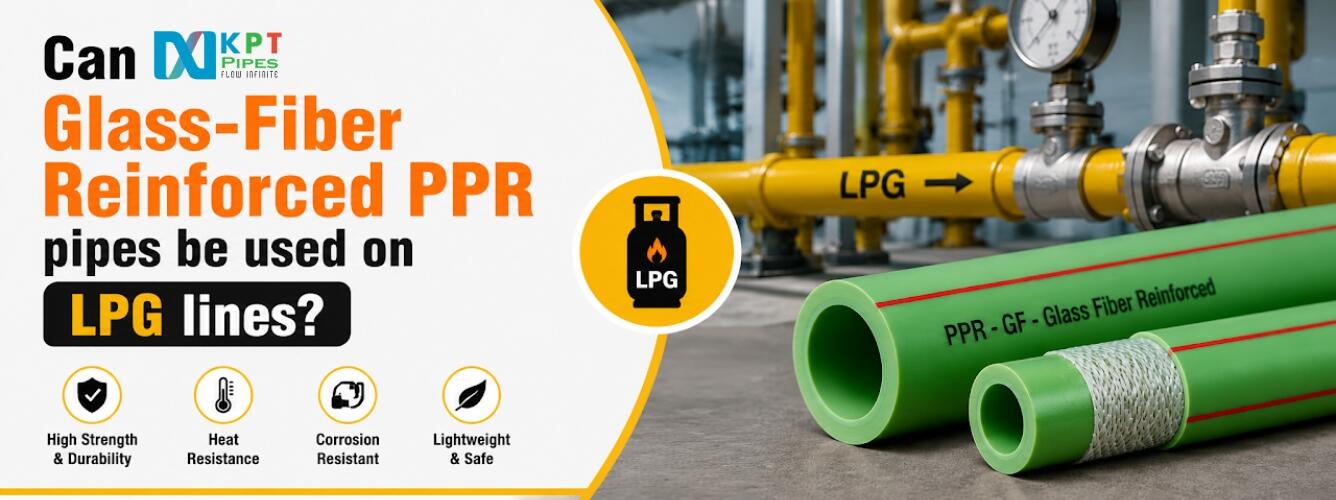
Can Glass-Fiber Reinforced PPR Pipes Be Used for LPG Lines?
The short answer is no, Glass-Fiber Reinforced PPR Pipes are generally not recommended for LPG gas transportation lines.
Although reinforced PPR pipes provide excellent performance for water and fluid applications, LPG systems require piping materials specifically designed, tested, and approved for handling combustible gases.
LPG is a highly flammable gas that requires specialised piping systems capable of handling specific pressure conditions, gas permeability requirements, and safety standards. Standard PPR pipes, including glass-fiber reinforced variants, are primarily manufactured for water supply, heating, and industrial liquid applications rather than LPG distribution.
Using an unsuitable pipe material for LPG lines may create safety risks, including gas leakage, material degradation, and failure under operating conditions.
Why Are PPR Pipes Not Suitable for LPG Applications?
There are several reasons why PPR Pipes and Fittings are not commonly used for LPG installations:
Gas Permeability Concerns
Pipes used for gas transportation must have excellent resistance against gas permeation. Materials designed for water systems may not provide the required protection against LPG molecules escaping through the pipe structure over long periods.
Safety Standards and Certifications
LPG piping systems must comply with strict safety regulations and industry standards. Approved LPG piping materials are selected based on specific testing related to pressure resistance, fire safety, and long-term gas containment.
Application-Specific Design
Every piping material is developed for specific applications. While PPR pipes are highly effective for water distribution and plumbing systems, LPG requires materials specifically engineered for safe gas transportation.
Where Are Glass-Fiber Reinforced PPR Pipes Commonly Used?
Although they are not suitable for LPG lines, glass-fiber reinforced PPR pipes are widely used in many other applications, including:
- Hot and cold water distribution systems
- Residential and commercial plumbing networks
- Industrial water supply systems
- Heating and cooling systems
- Compressed air applications (where approved)
- Chemical and process piping systems
Their durability, smooth inner surface, and resistance to corrosion make them an excellent choice for modern plumbing requirements.
Benefits of Choosing High-Quality PPR Pipes and Fittings
Selecting reliable PPR Pipes and Fittings from a trusted manufacturer ensures better performance, safety, and long-term value.
High-quality PPR systems offer:
- Long service life with minimal maintenance
- Leak-resistant heat fusion joints
- Excellent flow efficiency due to smooth internal surfaces
- Resistance against rust, scaling, and corrosion
- Better performance in temperature variations
- Environment-friendly and recyclable material properties
For water supply and plumbing applications, PPR continues to be one of the most preferred solutions due to its reliability and cost-effectiveness.
Importance of Selecting the Right Pipe for Every Application
Choosing the correct piping material is essential for maintaining system safety and efficiency. A pipe that performs well in one application may not necessarily be suitable for another.
For example, PPR pipes are highly effective for transporting water, but LPG systems require specialised solutions designed specifically for gas handling. Before installing any piping system, it is important to consider factors such as:
- Type of fluid or gas being transported
- Operating pressure and temperature
- Required safety certifications
- Installation environment
- Manufacturer recommendations
Consulting with experienced professionals and selecting application-specific piping products helps ensure better performance and prevents future risks.
Conclusion
Glass-Fiber Reinforced PPR Pipes offer excellent strength, durability, and reliability for various water and industrial applications. Their improved design provides advantages such as reduced thermal expansion, corrosion resistance, and long service life.
However, these pipes are not recommended for LPG lines because LPG applications require specially approved piping materials designed for safe gas transportation. Using the correct piping system according to application requirements is essential for ensuring safety and long-term performance.
For plumbing, water supply, and heating applications, high-quality PPR Pipes and Fittings remain a reliable and efficient choice, offering excellent performance for modern infrastructure needs.
Frequently Asked Questions (FAQs)
Q1. Can Glass-Fiber Reinforced PPR Pipes be used for LPG gas lines?
Ans: No, Glass-Fiber Reinforced PPR Pipes are not recommended for LPG lines. LPG systems require specially approved gas piping materials.
Q2. What are Glass-Fiber Reinforced PPR Pipes used for?
Ans: They are commonly used for hot and cold water supply, industrial applications, heating systems, and plumbing networks.
Q3. Are PPR Pipes and Fittings safe for water supply?
Ans: Yes, high-quality PPR Pipes and Fittings are widely used for safe drinking water and plumbing applications.
Q4. Why are PPR pipes not suitable for LPG?
Ans: PPR pipes are designed mainly for liquid applications and may not meet the safety requirements needed for LPG gas transportation.
Q5. What are the advantages of glass-fiber reinforced PPR pipes?
Ans: They offer better strength, reduced thermal expansion, corrosion resistance, and long-lasting performance compared to standard piping options.