
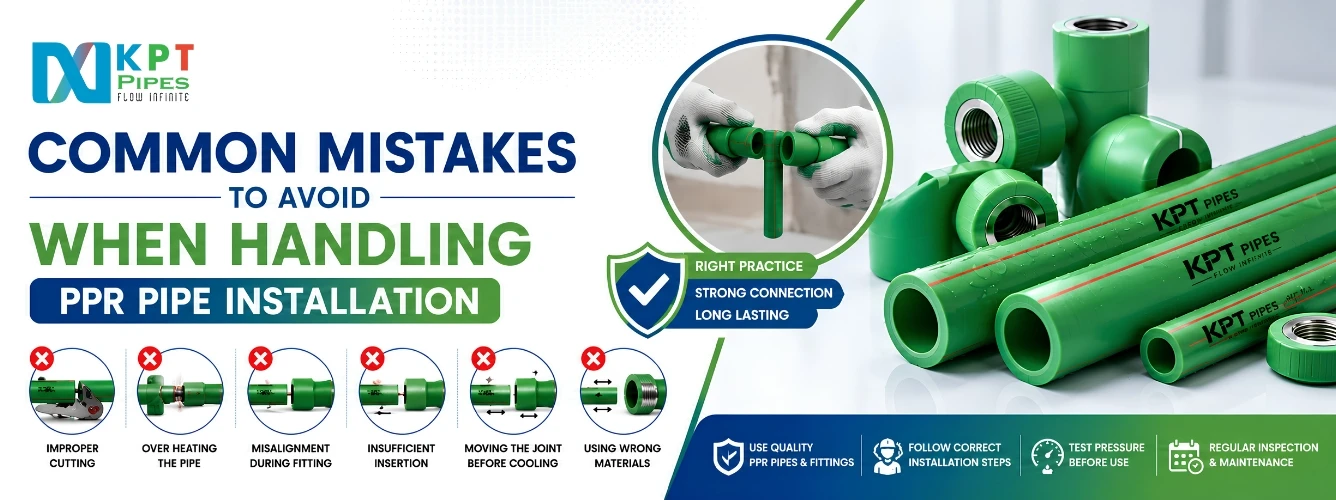
PPR (Polypropylene Random Copolymer) pipes have become one of the most trusted choices for modern plumbing systems. Their durability, corrosion resistance, leak-proof joints, and long service life make them suitable for residential, commercial, and industrial applications. However, even the highest-quality PPR piping system can underperform if it is not installed correctly.
Many plumbing failures are not caused by the pipe itself but by installation mistakes that occur during planning, handling, welding, or testing. These errors can lead to water leakage, reduced pressure, system inefficiencies, and costly repairs. Understanding these common mistakes and knowing how to prevent them can help ensure a reliable and long-lasting plumbing network.
Table of Contents
Toggle1. Starting the Installation Without Proper Planning
One of the biggest mistakes installers make is beginning the project without a clear layout plan. A poorly planned piping network often results in unnecessary bends, excessive fittings, and inefficient water distribution.
Before installation begins, it is important to evaluate the building structure, water demand, pressure requirements, and future expansion needs. A well-designed piping layout reduces material wastage, shortens installation time, and improves overall system performance.
Proper planning should include:
- Mapping pipe routes in advance
- Identifying connection and fixture locations
- Calculating water flow requirements
- Selecting suitable fittings and accessories
- Ensuring compliance with local plumbing standards
Investing time in planning can prevent expensive modifications later.
2. Choosing the Wrong Pipe Size
Selecting an incorrect pipe diameter is another common issue that affects plumbing performance. Some installers use smaller pipes to reduce costs, while others choose oversized pipes without considering flow requirements.
Improper pipe sizing can create several problems:
- Low water pressure at outlets
- Uneven water distribution
- Increased energy consumption
- Excessive noise within the system
- Higher maintenance costs
The correct pipe size should be determined based on expected water consumption, pressure levels, and the number of connected fixtures. Following engineering calculations and manufacturer recommendations ensures optimal water flow throughout the system.
3. Poor Storage and Handling of Pipes
PPR pipes are strong and durable, but improper handling before installation can affect their quality. Pipes that are dragged across rough surfaces, exposed to direct sunlight for extended periods, or stacked incorrectly may suffer damage.
Common handling mistakes include:
- Throwing pipes during transportation
- Storing pipes in uneven stacks
- Leaving materials exposed to harsh weather
- Allowing dirt and debris to enter pipe ends
To maintain product quality, pipes should be stored on flat surfaces in a clean and dry environment. Protective caps should remain in place until installation begins.
4. Inadequate Surface Preparation Before Welding
The strength of a PPR piping system largely depends on the quality of its welded joints. One frequently overlooked mistake is failing to prepare pipe surfaces properly before fusion welding.
Dust, grease, moisture, or rough edges can prevent proper fusion between the pipe and fitting. As a result, joints may become weak and vulnerable to leakage.
For successful welding:
- Clean the pipe and fitting thoroughly
- Ensure the pipe ends are cut straight
- Remove any dirt or contaminants
- Check that the welding surfaces are dry
- Use appropriate cutting and preparation tools
A few extra minutes spent preparing the joint can significantly improve system reliability.
5. Incorrect Fusion Welding Practices
Fusion welding is one of the greatest advantages of PPR pipes because it creates a homogeneous, leak-proof connection. However, improper welding techniques can compromise the entire plumbing system.
Common welding mistakes include:
- Insufficient heating time
- Excessive heating of components
- Misalignment during joining
- Rotating the pipe after insertion
- Using poorly calibrated welding machines
Installers should strictly follow the manufacturer’s welding guidelines. Proper temperature settings, heating durations, and cooling periods are essential for creating strong and permanent joints.
Remember that rushing the welding process often leads to failures that may not become visible until months after installation.
6. Ignoring Thermal Expansion Considerations
Like most piping materials, PPR pipes expand and contract when exposed to temperature changes. Ignoring this natural behaviour can place unnecessary stress on the system.
Without proper allowances for thermal movement, pipes may:
- Bend excessively
- Develop stress at connection points
- Produce unusual noises
- Experience premature joint failure
To avoid these issues, installers should include expansion loops, support brackets, and adequate spacing wherever necessary. Proper design helps the system absorb temperature fluctuations without affecting performance.
7. Improper Pipe Support and Clamping
Many plumbing problems arise because pipes are not adequately supported after installation. Unsupported or poorly supported pipes can sag, vibrate, or shift over time.
Common consequences include:
- Joint stress and leakage
- Pipe deformation
- Reduced system lifespan
- Structural damage to surrounding areas
The spacing of pipe supports should follow manufacturer recommendations based on pipe diameter and operating temperature. Proper support ensures stability and maintains alignment throughout the system’s life.
8. Overlooking Building Codes and Manufacturer Instructions
Every PPR piping system is designed according to specific technical standards. Ignoring installation guidelines or local plumbing regulations can create safety and compliance issues.
Some installers rely solely on experience and skip reading product instructions. This approach increases the likelihood of errors and may even void product warranties.
Following approved installation procedures helps ensure:
- Compliance with building regulations
- Safe operation of the system
- Long-term durability
- Manufacturer warranty protection
- Consistent performance
Always verify that materials, fittings, and installation practices meet the applicable standards for the project.
9. Skipping Pressure Testing
A plumbing system should never be put into operation without proper testing. Unfortunately, some projects skip this critical step to save time.
Pressure testing helps identify:
- Hidden leaks
- Weak joints
- Installation defects
- Faulty fittings
- Pressure losses
Testing should be performed before walls are closed, flooring is installed, or the system is concealed. Detecting problems early can save significant repair costs and prevent future disruptions.
10. Using Untrained Installation Personnel
Even the best materials cannot compensate for poor workmanship. PPR pipe installation requires technical knowledge, specialized tools, and practical experience.
Untrained workers often make mistakes such as:
- Incorrect welding procedures
- Improper pipe alignment
- Inaccurate measurements
- Inadequate support placement
- Failure to conduct proper inspections
Investing in skilled installers and regular training programs helps ensure high-quality workmanship and reduces the risk of future failures.
Why Proper Installation Matters
A correctly installed PPR piping system offers numerous long-term benefits. It delivers reliable water flow, minimizes maintenance requirements, reduces leakage risks, and provides excellent service life.
When installation is performed according to industry best practices, users can expect:
- Leak-free performance
- High resistance to corrosion
- Better water quality
- Lower maintenance costs
- Extended system lifespan
- Improved operational efficiency
These advantages make proper installation just as important as selecting high-quality PPR pipes.
Conclusion
PPR pipes are known for their durability, efficiency, and long service life, but their performance depends heavily on installation quality. Mistakes such as poor planning, incorrect pipe sizing, improper welding, inadequate support, and failure to conduct testing can significantly impact system reliability.
By following manufacturer recommendations, using trained professionals, and paying close attention to every stage of installation, plumbing contractors can build systems that operate efficiently for decades. Taking the time to avoid these common errors not only protects the investment but also ensures a safe and dependable plumbing network for years to come.
FAQs
Q1. What is the most common mistake during PPR pipe installation?
Ans: Improper fusion welding is one of the most common mistakes, often leading to weak joints and future leakage issues.
Q2. Why is pipe sizing important in a PPR plumbing system?
Ans: Correct pipe sizing ensures proper water flow, balanced pressure, and efficient system performance.
Q3. Should PPR pipes be pressure tested after installation?
Ans: Yes. Pressure testing helps identify leaks, weak connections, and installation defects before the system is put into operation.
Q4. Can PPR pipes expand due to temperature changes?
Ans: Yes. PPR pipes experience thermal expansion and contraction, which should be considered during system design and installation.
Q5. How long can a properly installed PPR pipe system last?
Ans: A high-quality PPR piping system installed correctly can often last more than 50 years under normal operating conditions.