

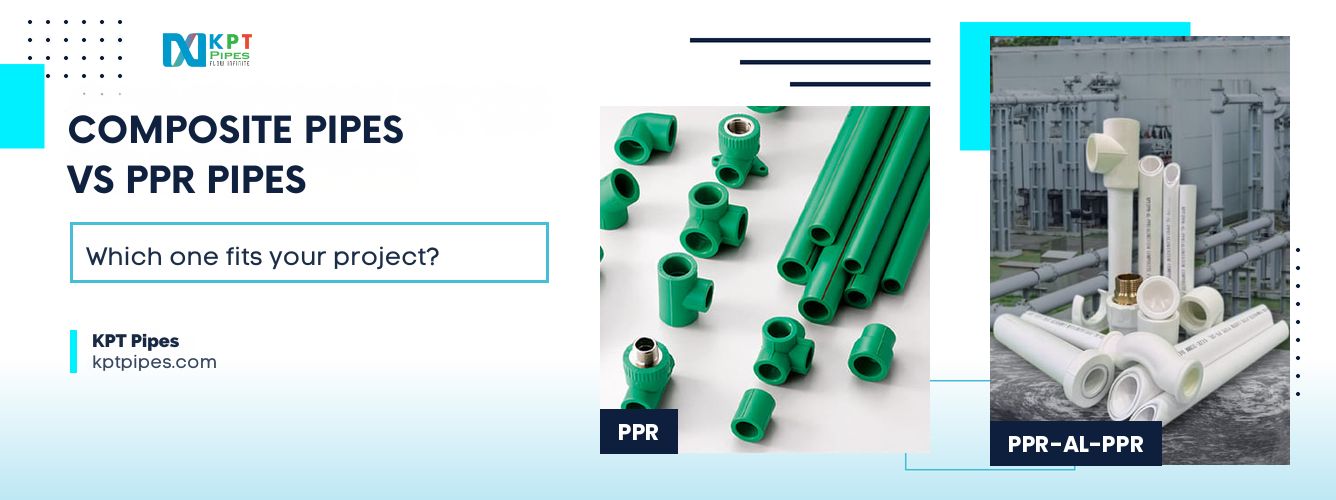
You have a plumbing project in front of you, and both PPR and composite pipes seem like possible options. But which one will actually work better for your system?
It is easy to assume that the composite option is better because it has more layers. But the number of layers is not what should decide your choice. What matters is what those layers add and whether your piping system needs those added properties.
A standard PPR pipe has a single-material construction and is commonly used for hot and cold water plumbing. A PPR-AL-PPR composite pipe adds an aluminium core between layers of PPR. This changes how the pipe handles thermal movement and gives it greater rigidity. The aluminium layer also acts as an oxygen barrier.
For example, standard PPR may be all you need for a hot-water plumbing system with limited thermal movement. But if the system has long pipe runs or involves heating where oxygen permeation needs to be controlled, PPR-AL-PPR may be the better fit.
Are you still confused about which one to choose? This guide compares PPR and composite pipes and fittings to help you understand what each option offers and choose the right one for your project.
What Is a Composite Pipe?
A composite pipe is made by combining two or more materials within a single pipe structure. These pipes bring together the properties of different materials to meet the requirements of a particular application.
PPR-AL-PPR composite pipes are a great example of this. These pipes combine Polypropylene Random Copolymer and aluminium within the same pipe structure. The result is a multilayer pipe that brings together these materials in a single piping system.
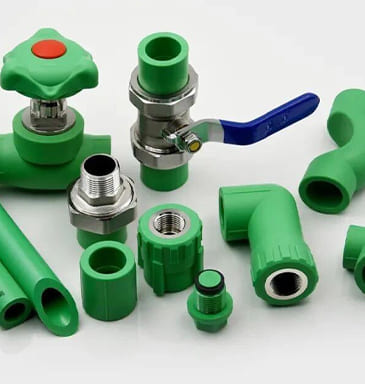 What Are PPR Pipes?
PPR pipes are made from Polypropylene Random Copolymer, a thermoplastic material widely used for hot and cold water plumbing. Unlike a composite pipe, a conventional PPR pipe has a single-material construction, with PPR forming the pipe wall.
This simple construction makes PPR pipes a common choice for plumbing systems where the properties of Polypropylene Random Copolymer meet the requirements of the application.
How Does the 5-Layer Composite Pipe Structure Work?
A PPR-AL-PPR composite pipe uses five layers to form its complete structure. These include two PPR layers, two adhesive layers, and one aluminium core. In KPT’s AL-Therm system, the layers are arranged as follows:
- Inner PPR layer: This is the innermost layer of the pipe and comes into direct contact with the water.
- Adhesive layer: This layer bonds the inner PPR layer to the aluminium core.
- Aluminium core: The aluminium layer forms the centre of the pipe and connects the two PPR layers through the adhesive layers.
- Adhesive layer: This layer bonds the aluminium core to the outer PPR layer.
- Outer PPR layer: This layer forms the outside of the pipe and protects the layers within it.
Why Add Aluminium to PPR?
There is actually a logical reason behind introducing aluminium into PPR pipes. Aluminium adds properties that can make the pipe better suited to certain applications, especially where temperature changes and pipe movement need to be considered.
The aluminium core is introduced into PPR pipes mainly because it:
- Controls thermal movement: Aluminium helps restrict the expansion and contraction that occurs when the pipe is exposed to temperature changes.
- Acts as an oxygen barrier: The aluminium layer limits oxygen permeation through the pipe, which can be useful in closed-loop heating systems with metallic components.
- Adds rigidity: The aluminium core gives the pipe additional stiffness and helps it maintain its shape.
Composite Pipes vs PPR Pipes: What Is the Difference?
The main difference between PPR pipes and PPR-AL-PPR composite pipes is their construction. A PPR pipe uses Polypropylene Random Copolymer as its pipe material, while a PPR-AL-PPR pipe combines PPR with an aluminium core and adhesive layers. This difference affects how the two pipe types behave under different operating conditions.
| Factor | PPR Pipe | PPR-AL-PPR Composite Pipe |
| Construction | Single-material PPR construction | Five-layer construction with PPR, adhesive and aluminium |
| Thermal movement | Higher thermal movement | Aluminium core helps restrict thermal movement |
| Oxygen barrier | Does not contain an aluminium barrier | Aluminium core acts as an oxygen barrier |
| Rigidity | Standard PPR construction | Additional rigidity from the aluminium core |
| Joining | Heat fusion | Heat fusion |
| Pressure rating | Depends on the selected PPR class | AL-Therm is available up to PN-25 |
Neither PPR pipes nor PPR-AL-PPR composite pipes are automatically better for every application. The right choice between the two depends on the system’s temperature, pressure, installation conditions, and performance requirements.
When Is Standard PPR Enough?
Standard PPR is often sufficient for hot and cold water plumbing when the system does not need the additional properties of an aluminium core. The decision comes down to the conditions the pipe will face during service. It can usually be suitable option when:
- The pipe runs are uncomplicated: The installation does not involve conditions where controlling thermal movement is a major concern.
- The pressure and temperature requirements are within the selected pipe class: The pipe should match the actual operating conditions of the system.
- Conventional heat fusion suits the installation: The project can use the standard PPR joining method and compatible fittings.
- An aluminium oxygen barrier is not required: The system does not need the oxygen-barrier properties provided by an aluminium layer.
- Material cost is an important consideration: Standard PPR can be a practical option when its performance meets the project requirements.
When Should You Consider PPR-AL-PPR?
A PPR-AL-PPR pipe can be a suitable option when the piping system needs the added properties provided by its aluminium core. You can consider PPR-AL-PPR when:
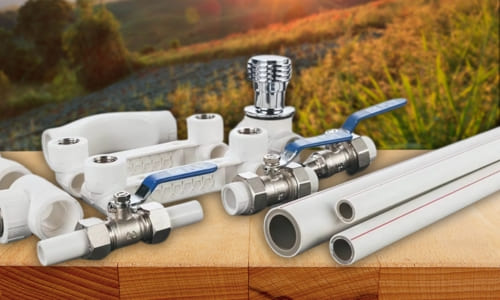
 Thermal movement needs to be controlled: The aluminium core helps restrict expansion and contraction caused by temperature changes.
- The system has long pipe runs: Longer runs can experience greater thermal movement, making expansion control more important during installation.
- The pipe needs greater rigidity: The aluminium core adds stiffness and helps the pipe maintain its shape.
- The heating system needs an oxygen barrier: The aluminium layer limits oxygen permeation and can help protect metallic components in closed-loop heating systems.
- The multilayer construction suits the application: PPR-AL-PPR can be considered when its construction and specified pressure and temperature limits match the system requirements.
Quick Decision Matrix
| Project requirement | Suitable starting point |
| Conventional hot and cold water plumbing | Standard PPR |
| Thermal movement is a major design concern | Consider PPR-AL-PPR |
| Long or exposed pipe runs | Consider PPR-AL-PPR |
| Greater pipe rigidity is required | Consider PPR-AL-PPR |
| Heating system requires an oxygen barrier | Consider a suitable PPR-AL-PPR system |
| Standard PPR installation requirements can be met | Standard PPR |
| Specific pressure and temperature requirements apply | Select the pipe based on the applicable product specification |
There is no universal answer to whether PPR or composite pipe is better. The right choice depends on the requirements of the piping system. So, the question you should instead be asking is….
Which pipe construction matches the project’s operating and installation requirements?
What Should You Check Before Choosing a PPR or Composite Pipe?
Choosing between PPR pipes and composite pipes and fittings starts with understanding the conditions in which the system will operate. Check the following before making a final selection:
- Pipe construction: Check whether the pipe uses a single-material PPR construction or a multilayer construction such as PPR-AL-PPR.
- Pressure and temperature: Make sure the selected pipe class is suitable for the system’s actual operating pressure and temperature.
- Applicable standards: Check whether the pipe meets the standard required for its construction and intended application. Check for compliance with IS 15801:2008 for a PPR pipe used for hot or cold water. For a multilayer pipe such as PPR-AL-PPR used in building hot or cold water installations, check whether the product complies with the relevant requirements of ISO 21003.
- Potable-water suitability: If the system carries drinking water, verify that the specific pipe and fittings are approved for potable-water use.
- Compatible fittings: Make sure the fittings are designed for the selected pipe and joining method.
- Manufacturer documentation: Review the current technical data, installation instructions, pressure-temperature information, and applicable certifications before selection.
Conclusion
Choosing between PPR and PPR-AL-PPR comes down to what your piping system actually needs. Standard PPR can be a good fit for many hot and cold water applications where its single-material construction meets the operating conditions.
PPR-AL-PPR becomes worth considering when the system needs better control over thermal movement, greater rigidity, or an aluminium oxygen barrier. Long pipe runs and heating systems are examples where these added properties can influence the choice. The key is to look beyond the pipe itself and consider the pressure, temperature, pipe layout, joining method, and application before making a decision.
If PPR-AL-PPR is the right fit for your project, KPT Pipes offers AL-Therm composite pipes and fittings with a five-layer PPR-AL-PPR construction designed for applications where these added properties are required. Explore the product specifications to see whether the system matches your project requirements.
Frequently Asked Questions
Can PPR-AL-PPR pipes be used for hot water?
Yes, PPR-AL-PPR pipes can be used in hot-water systems when the pipe’s pressure and temperature specifications match the system requirements.
Does PPR-AL-PPR help prevent pipe expansion?
Yes as the aluminium core helps restrict the expansion and contraction of the pipe as temperatures change. This can be useful in installations with long pipe runs or other conditions where thermal movement needs to be controlled.
What is an oxygen barrier in a heating pipe?
An oxygen barrier is a layer within a pipe that limits the movement of oxygen through the pipe wall. Reducing oxygen permeation In closed-loop heating systems can help limit the exposure of metallic components to oxygen.
Why is oxygen ingress a concern in closed-loop heating systems?
Oxygen entering a closed-loop heating system can contribute to corrosion of metallic components over time. A pipe with an oxygen barrier can reduce the amount of oxygen entering the system through the pipe wall.
Are PPR-AL-PPR pipes suitable for radiator heating systems?
Yes, PPR-AL-PPR pipes can be suitable for radiator heating systems when the pipe is specified for the system’s pressure, temperature, and application requirements. The aluminium layer can provide useful thermal movement control and oxygen-barrier properties in such systems.
Can PPR-AL-PPR pipes be used with underfloor heating?
PPR-AL-PPR systems can be used for underfloor heating where the product specification permits the application. The suitability should be checked against the required operating temperature, pressure, and system design.