
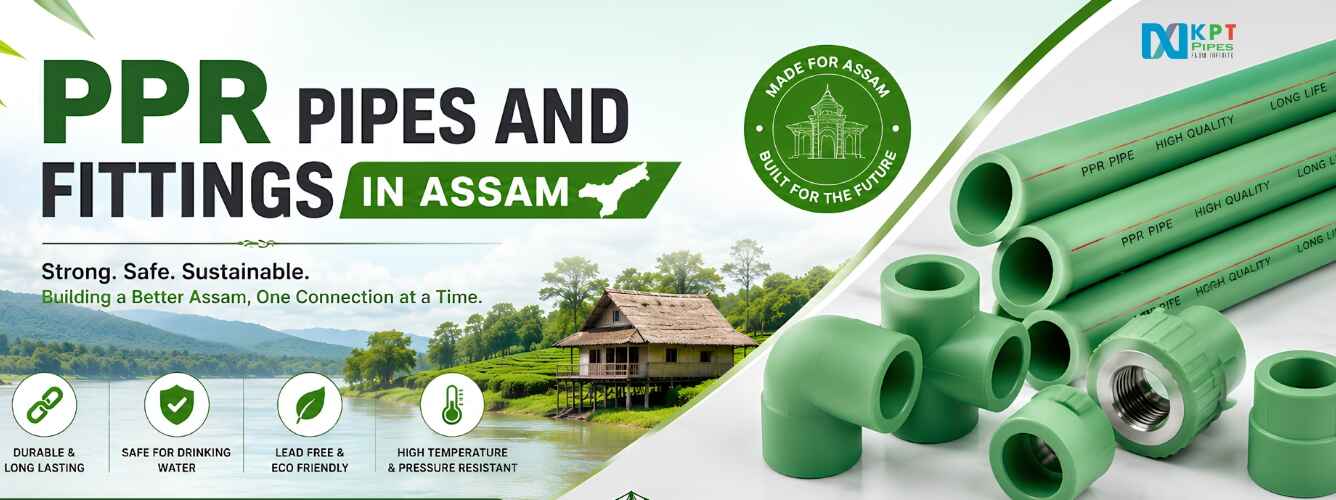
As Assam continues to witness rapid urban development, the demand for reliable plumbing and water distribution systems is increasing across residential, commercial, industrial, and institutional projects. Whether it is a new housing complex in Guwahati, a healthcare facility in Dibrugarh, or an industrial unit in Tinsukia, selecting the right piping solution plays a crucial role in ensuring long-term efficiency and safety.
Among the various piping materials available today, PPR Pipes and Fittings have emerged as one of the most preferred choices. Known for their durability, corrosion resistance, and superior performance, PPR pipes are transforming modern plumbing systems throughout Assam.
Table of Contents
ToggleWhat Are PPR Pipes and Fittings?
PPR (Polypropylene Random Copolymer) pipes are advanced thermoplastic piping solutions designed for hot and cold water transportation. These pipes are manufactured using high-grade polypropylene material and are connected through heat fusion welding, creating leak-proof and highly durable joints.
Unlike conventional metal pipes that are susceptible to rust and corrosion, PPR pipes maintain their strength and performance even after years of continuous use. Their ability to withstand varying temperatures and pressures makes them suitable for a wide range of applications.
Why PPR Pipes Are Becoming Popular in Assam
Assam experiences diverse climatic conditions, including heavy rainfall, humidity, and seasonal temperature fluctuations. Traditional piping materials often face challenges under such environmental conditions.
PPR pipes offer several advantages that make them ideal for Assam’s infrastructure requirements:
Excellent Corrosion Resistance
Metal pipes can corrode over time when exposed to moisture and varying water quality. PPR pipes are completely resistant to rust and chemical corrosion, ensuring clean water delivery and longer service life.
Long Operational Life
One of the major reasons behind the growing demand for PPR pipes is their exceptional durability. When installed correctly, these pipes can perform efficiently for decades with minimal maintenance requirements.
Leak-Proof Joint Technology
PPR pipes are joined using heat fusion technology, creating a homogeneous connection between pipes and fittings. This eliminates weak joints and significantly reduces leakage risks.
High Temperature Tolerance
PPR piping systems can safely handle both hot and cold water applications. This makes them suitable for residential bathrooms, hotels, hospitals, educational institutions, and industrial facilities.
Hygienic Water Supply
The smooth inner surface of PPR pipes prevents scaling and bacterial growth, helping maintain water quality and ensuring a hygienic supply system.
Applications of PPR Pipes and Fittings in Assam
The versatility of PPR pipes allows them to be used across multiple sectors. Their reliable performance makes them suitable for both small and large-scale projects.
Residential Buildings
Modern homes and apartments require efficient plumbing systems capable of handling daily water requirements. PPR pipes provide reliable hot and cold water transportation while minimizing maintenance concerns.
Commercial Establishments
Shopping complexes, hotels, offices, and educational institutions depend on uninterrupted water distribution systems. PPR piping solutions offer long-term performance and reduced operational costs.
Healthcare Facilities
Hospitals and healthcare centers require hygienic water transportation systems. PPR pipes help maintain water purity and support critical infrastructure needs.
Industrial Applications
Many industries in Assam require durable piping systems for water distribution and process applications. PPR pipes offer excellent resistance to pressure, temperature, and chemical exposure.
Agricultural Projects
Water management is crucial for agricultural operations. PPR pipes are increasingly used in irrigation systems due to their durability and efficient water flow characteristics.
Key Features to Consider When Choosing PPR Pipes
Selecting the right PPR pipes and fittings is essential for ensuring long-term performance. Consider the following factors before making a purchase:
- Material quality and certification standards.
- Pressure handling capability.
- Temperature resistance.
- Pipe wall thickness.
- Compatibility of fittings.
- Manufacturer reputation and product warranty.
Choosing high-quality products from a trusted pipes manufacturing company ensures better reliability and lower maintenance costs.
Benefits of Investing in Quality PPR Pipes
Many property owners focus primarily on initial installation costs. However, long-term performance should be a major consideration.
High-quality PPR pipes offer several long-term benefits:
- Reduced maintenance expenses.
- Lower risk of leakage.
- Better water quality preservation.
- Longer service life.
- Energy-efficient hot water transportation.
- Improved system reliability.
These advantages make PPR pipes a cost-effective investment for both residential and commercial projects.
Installation and Maintenance Tips
Although PPR pipes are relatively easy to install, proper installation practices are essential for optimal performance.
Follow Manufacturer Guidelines
Always adhere to recommended installation procedures and specifications.
Use Proper Fusion Equipment
Heat fusion joints should be performed using appropriate tools and trained professionals.
Avoid Excessive Mechanical Stress
Proper pipe support and alignment help maintain system integrity.
Conduct Pressure Testing
Pressure testing after installation helps identify any potential issues before system commissioning.
Schedule Periodic Inspections
Regular inspections ensure continued efficiency and help detect minor issues before they become major problems.
The Future of Plumbing Solutions in Assam
As Assam continues to expand its urban and industrial infrastructure, the demand for durable and sustainable piping systems will continue to grow. Modern construction projects increasingly prioritize long-lasting, maintenance-free solutions that deliver superior performance.
PPR pipes and fittings perfectly align with these requirements by offering reliability, efficiency, and environmental sustainability. Their ability to provide safe water transportation while minimizing maintenance costs makes them one of the most practical plumbing solutions available today.
Conclusion
PPR Pipes and Fittings have become a preferred choice for modern plumbing and water distribution systems across Assam. Their corrosion resistance, durability, leak-proof performance, and hygienic properties make them suitable for residential, commercial, industrial, and agricultural applications.
For builders, contractors, engineers, and homeowners seeking a dependable piping solution, investing in high-quality PPR pipes ensures long-term performance and peace of mind. As infrastructure development continues throughout Assam, PPR piping systems will remain an essential component of efficient and sustainable water management.
Frequently Asked Questions (FAQs)
Q1. What is the lifespan of PPR pipes?
Ans: High-quality PPR pipes can last over 50 years under normal operating conditions.
Q2. Are PPR pipes suitable for hot water systems?
Ans: Yes, PPR pipes are designed to handle both hot and cold water applications efficiently.
Q3. Do PPR pipes rust or corrode?
Ans: No, PPR pipes are completely resistant to rust and corrosion.
Q4. Where are PPR pipes commonly used?
Ans: They are widely used in homes, commercial buildings, hospitals, industries, and agricultural projects.
Q5. Why are PPR pipes better than traditional metal pipes?
Ans: PPR pipes offer leak-proof joints, longer service life, corrosion resistance, and lower maintenance requirements.