

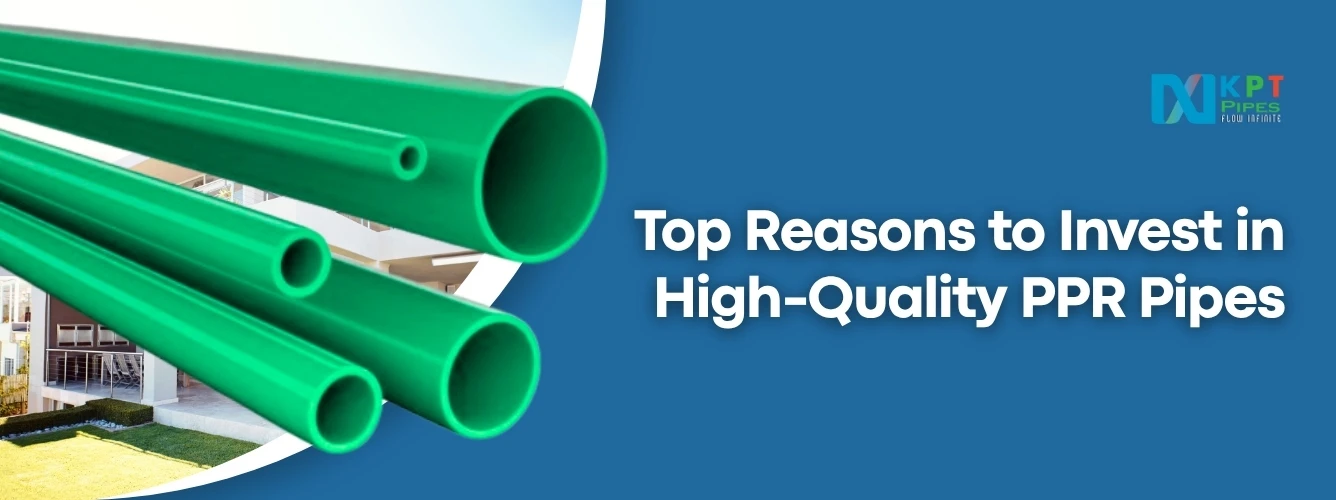
In today’s rapidly evolving construction and plumbing industry, choosing the right piping system is more important than ever. Whether it is a residential building, commercial infrastructure, or industrial setup, the durability and efficiency of pipes play a crucial role in long-term performance. Among the various options available, PPR (Polypropylene Random Copolymer) pipes have emerged as a preferred choice due to their reliability, versatility, and cost-effectiveness.
However, not all PPR pipes are created equal. Investing in high-quality PPR pipes ensures not just smooth water flow but also long-term savings, safety, and sustainability. In this blog, we will explore the top reasons why high-quality PPR pipes are worth the investment and how they outperform conventional piping systems.
Table of Contents
ToggleUnderstanding PPR Pipes: A Modern Plumbing Solution
Before diving into the benefits, it is essential to understand what makes PPR pipes stand out. PPR pipes are manufactured using advanced polymer technology, making them suitable for both hot and cold water applications. They are widely used in residential plumbing, industrial fluid transport, and even fire-fighting systems.
Moreover, these pipes are joined using heat fusion technology, creating leak-proof connections that significantly reduce maintenance issues over time. As a result, they have become a reliable solution for modern infrastructure projects.
1. Exceptional Durability and Long Lifespan
One of the most compelling reasons to invest in high-quality PPR pipes is their exceptional durability. Unlike traditional metal pipes that corrode over time, PPR pipes are resistant to rust, scaling, and chemical reactions.
Furthermore, premium-grade PPR pipes are designed to withstand high pressure and temperature variations without compromising their structural integrity. As a result, their lifespan can extend beyond 50 years when installed correctly.
Key Advantages:
- Resistance to corrosion and chemical damage
- Ability to handle high pressure and temperature
- Long operational life with minimal wear and tear
- Reduced the need for frequent replacements
2. Superior Heat and Temperature Resistance
Another major advantage of high-quality PPR pipes is their excellent thermal resistance. These pipes can efficiently handle both hot and cold water systems, making them ideal for diverse applications.
In addition, PPR pipes have low thermal conductivity, which helps maintain water temperature for longer periods. This feature not only enhances efficiency but also reduces energy consumption.
Why It Matters:
- Suitable for hot water systems and industrial use
- Prevents heat loss, improving energy efficiency
- Maintains consistent water temperature
- Performs well in extreme climate conditions
3. Leak-Proof and Hygienic System
When it comes to plumbing systems, leakage is one of the most common and costly issues. Fortunately, high-quality PPR pipes eliminate this concern through heat fusion jointing technology.
Unlike threaded or glued joints, PPR connections are fused to form a single, seamless unit. Consequently, the chances of leakage are significantly minimised.
Additionally, PPR pipes are non-toxic and do not react with water, ensuring a safe and hygienic water supply. This makes them ideal for drinking water systems.
Key Benefits:
- 100% leak-proof joints
- Safe for potable water applications
- No contamination or chemical leaching
- Smooth inner surface prevents bacterial growth
4. High Resistance to Scaling and Corrosion
Traditional pipes, especially metal ones, often suffer from scaling and corrosion, which can restrict water flow and reduce efficiency over time. However, high-quality PPR pipes are designed to resist such issues effectively.
The inner surface of PPR pipes is extremely smooth, preventing the accumulation of deposits. As a result, water flow remains consistent even after years of usage.
Key Highlights:
- No scaling or rust formation
- Maintains high flow efficiency
- Reduces maintenance requirements
- Ensures consistent water pressure
5. Cost-Effective in the Long Run
While the initial cost of high-quality PPR pipes may seem slightly higher compared to conventional options, they prove to be more economical in the long run.
Because of their durability, low maintenance needs, and long lifespan, frequent repairs and replacements are avoided. Additionally, their energy-efficient properties contribute to reduced operational costs.
Cost Benefits:
- Lower maintenance and repair costs
- Reduced energy consumption
- Long-term savings on replacements
- High return on investment
6. Eco-Friendly and Sustainable Choice
In today’s environmentally conscious world, sustainability is a key consideration. High-quality PPR pipes are an eco-friendly alternative to traditional piping materials.
They are fully recyclable and require less energy during manufacturing. Moreover, their long lifespan reduces waste generation, making them a sustainable choice for modern construction.
Environmental Advantages:
- Recyclable material
- Low environmental impact
- Energy-efficient production
- Reduces overall carbon footprint
7. Easy Installation and Lightweight Design
Another reason why PPR pipes are widely preferred is their ease of installation. These pipes are lightweight, making them easier to transport and handle on-site.
Additionally, the heat fusion process ensures quick and secure installation without the need for complex tools or materials. This not only saves time but also reduces labour costs.
Installation Benefits:
- Lightweight and easy to handle
- Quick and efficient installation
- Reduced labor requirements
- Strong and reliable joints
8. Versatile Applications Across Industries
High-quality PPR pipes are not limited to residential use. Their versatility makes them suitable for a wide range of applications across different industries.
From plumbing systems and HVAC installations to chemical transport and fire-fighting systems, PPR pipes deliver reliable performance in various environments.
Common Applications:
- Residential and commercial plumbing
- Industrial fluid transportation
- HVAC systems
- Fire-fighting pipelines
- Agricultural irrigation
9. Excellent Chemical Resistance
In industrial settings, pipes are often exposed to harsh chemicals. High-quality PPR pipes offer excellent resistance to a wide range of chemicals, ensuring safe and efficient operation.
This property makes them ideal for transporting aggressive fluids without the risk of damage or degradation.
Key Points:
- Resistant to acids and alkalis
- Suitable for industrial applications
- Maintains structural integrity
- Ensures safe fluid transport
Trusted Performance with KPT Pipes
When it comes to investing in high-quality PPR pipes, choosing a reliable manufacturer is equally important. KPT Pipes has established itself as a trusted name in the industry by delivering premium-quality piping solutions.
With advanced manufacturing processes, strict quality control, and innovative product lines, KPT ensures that its PPR pipes meet the highest standards of performance and durability.
From residential projects to large-scale industrial applications, KPT Pipes offers solutions that are designed to last and perform efficiently under all conditions.
Conclusion
In conclusion, investing in high-quality PPR pipes is not just a smart decision—it is a long-term investment in reliability, safety, and efficiency. From durability and thermal resistance to eco-friendliness and cost-effectiveness, PPR pipes offer unmatched advantages over traditional piping systems.
Moreover, when sourced from a trusted manufacturer like KPT Pipes, these benefits are further enhanced, ensuring optimal performance and peace of mind. Therefore, whether you are planning a new construction project or upgrading an existing system, choosing high-quality PPR pipes is a decision that will pay off for years to come.
FAQs
Q1. What are PPR pipes used for?
Ans: PPR pipes are widely used for hot and cold water supply systems, industrial fluid transport, HVAC systems, and fire-fighting applications due to their durability and versatility.
Q2. How long do PPR pipes last?
Ans: High-quality PPR pipes can last more than 50 years under normal operating conditions, making them a long-term and cost-effective solution.
Q3. Are PPR pipes safe for drinking water?
Ans: Yes, PPR pipes are non-toxic and chemically stable, ensuring safe and hygienic water supply for drinking purposes.
Q4. Do PPR pipes require maintenance?
Ans: PPR pipes require minimal maintenance due to their resistance to corrosion, scaling, and leakage, which significantly reduces repair needs.
Q5. Why should I choose high-quality PPR pipes over cheaper options?
Ans: High-quality PPR pipes offer better durability, leak-proof performance, and long-term cost savings, whereas cheaper alternatives may lead to frequent repairs and reduced lifespan.