
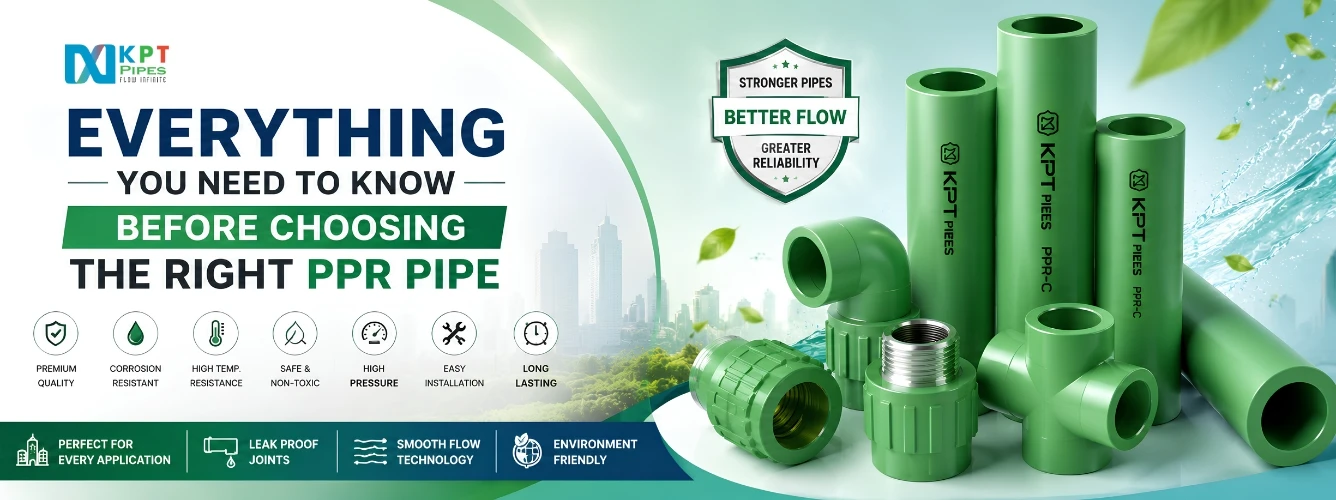
Choosing the right piping system is one of the most important decisions for any plumbing project. Whether you are constructing a new home, upgrading a commercial building, or working on an industrial installation, the quality of your pipes directly affects the efficiency and lifespan of the entire system.
Among the many piping materials available today, PPR Pipes and Fittings have become one of the most trusted choices because of their durability, excellent temperature resistance, leak-proof joints, and low maintenance requirements. However, not every PPR pipe is manufactured with the same standards, which is why understanding the key features before making a purchase is essential.
This guide explains everything you should consider before selecting the right PPR pipe, helping you make a confident investment for long-term performance.
Table of Contents
ToggleWhat Are PPR Pipes and Fittings?
PPR (Polypropylene Random Copolymer) pipes are advanced plastic piping systems designed for transporting hot and cold water efficiently. They are manufactured using high-grade polypropylene material, making them suitable for residential, commercial, and industrial applications.
The complete system includes pipes, elbows, tees, couplers, reducers, valves, and other fittings that are joined using heat fusion technology. Unlike conventional threaded or glued joints, heat fusion creates a permanent, leak-proof connection that becomes as strong as the pipe itself.
Because of their strength, hygiene, and long service life, PPR Pipes and Fittings are widely used in modern plumbing projects across homes, hospitals, hotels, educational institutions, manufacturing units, and commercial complexes.
Factors to Consider Before Choosing the Right PPR Pipe
1. Check the Material Quality
The first factor to evaluate is the quality of the raw material. Premium-quality polypropylene ensures better strength, durability, and resistance to environmental stress.
High-quality PPR pipes maintain their structural integrity even under continuous water pressure and varying temperatures. Choosing certified products from a trusted manufacturer helps ensure long-term reliability while reducing maintenance costs.
Avoid low-quality alternatives that may crack, deform, or lose performance over time.
2. Understand the Pressure Rating
Every plumbing project has different pressure requirements. PPR pipes are available in multiple pressure classes, allowing them to perform efficiently under different operating conditions.
Selecting the correct pressure rating ensures:
- Better system safety
- Longer service life
- Consistent water flow
- Reduced chances of leakage
Always choose a pressure class suitable for your specific application instead of selecting pipes based only on price.
3. Consider Temperature Performance
One of the biggest advantages of PPR Pipes and Fittings is their ability to handle both hot and cold water systems.
Unlike traditional metal pipes that may corrode or lose efficiency over time, quality PPR pipes can perform reliably in high-temperature environments without affecting water quality.
This makes them an excellent choice for:
- Residential hot water supply
- Solar water heating systems
- Commercial plumbing
- Industrial process water
Their excellent thermal insulation also helps reduce heat loss during water transportation.
4. Look for Leak-Proof Joint Technology
A piping system is only as strong as its joints.
Modern PPR systems use heat fusion welding, where the pipe and fitting are heated and permanently fused together. This process creates a seamless connection that significantly reduces the possibility of leakage.
Unlike threaded joints or adhesive-based systems, fused joints become a permanent part of the pipeline, improving both safety and durability.
Proper installation by trained professionals ensures maximum performance throughout the system’s lifespan.
5. Select the Right Pipe Size
Choosing the correct pipe diameter is essential for maintaining proper water pressure and flow.
Using an undersized pipe can reduce water flow, while oversized pipes may increase project costs unnecessarily.
The appropriate pipe size depends on factors such as:
- Building size
- Water demand
- Number of outlets
- Flow rate requirements
- Future expansion plans
A professional plumbing consultant can help determine the ideal pipe dimensions for your project.
6. Check Chemical and Corrosion Resistance
Unlike metal piping systems, PPR pipes do not rust, corrode, or react with most chemicals commonly found in water supply systems.
This makes them particularly suitable for:
- Drinking water systems
- Chemical transportation
- Industrial processing
- Laboratories
- Food and beverage facilities
Their corrosion-free construction also helps maintain water purity without affecting taste or quality.
7. Evaluate the Expected Service Life
A good piping system should last for decades without requiring frequent repairs.
Premium-quality PPR Pipes and Fittings are designed for long-term performance when installed correctly and operated within recommended pressure and temperature limits.
Their durability reduces replacement costs while minimizing maintenance interruptions, making them a cost-effective investment for both residential and commercial projects.
Advantages of PPR Pipes and Fittings
Choosing quality PPR piping systems offers several long-term benefits.
Excellent Durability
PPR pipes are designed to withstand continuous pressure, daily usage, and changing environmental conditions without cracking or weakening.
Corrosion-Free Performance
Unlike metal pipes, they do not rust, scale, or corrode, ensuring clean water flow for years.
Leak-Free Connections
Heat fusion welding creates permanent joints that significantly reduce leakage risks.
Lightweight Design
Their lightweight construction makes transportation, handling, and installation faster and more economical.
Low Maintenance
Because they resist corrosion, scaling, and chemical damage, maintenance requirements remain minimal throughout their lifespan.
Safe for Drinking Water
High-quality PPR materials are hygienic and suitable for potable water applications without contaminating the water supply.
Energy Efficient
Their low thermal conductivity helps maintain water temperature while reducing energy loss in hot water systems.
Common Applications of PPR Pipes and Fittings
Today, PPR Pipes and Fittings are widely used across multiple industries because of their versatility and reliable performance.
Some common applications include:
- Residential plumbing systems
- Commercial office buildings
- Hotels and resorts
- Hospitals and healthcare facilities
- Educational institutions
- Industrial water supply
- HVAC systems
- Compressed air systems
- Solar water heating installations
- Process water pipelines
Their adaptability makes them suitable for projects of almost every scale.
Why Choose KPT PPR Pipes and Fittings?
When selecting a piping system, choosing a trusted manufacturer is just as important as selecting the right material.
KPT Pipes manufactures premium-quality PPR Pipes and Fittings using advanced production technology and strict quality control processes. Designed for superior performance, KPT products offer excellent strength, long service life, reliable pressure handling, and secure fusion joints.
Available in multiple sizes and configurations, KPT’s piping solutions are suitable for residential, commercial, and industrial plumbing projects where reliability and long-term performance are essential.
By investing in quality products from a trusted brand, you reduce maintenance costs while ensuring dependable water distribution for years to come.
Conclusion
Selecting the right PPR piping system involves more than simply choosing a pipe size. Material quality, pressure rating, temperature resistance, installation method, corrosion protection, and manufacturer reliability all play an important role in the overall performance of the system.
High-quality PPR Pipes and Fittings provide long-lasting durability, leak-proof performance, excellent water quality, and low maintenance, making them one of the smartest choices for modern plumbing projects.
Whether you’re building a new property or upgrading an existing water supply system, investing in a trusted PPR solution today will provide dependable performance for decades to come.
FAQs
Q1. What are PPR Pipes and Fittings used for?
Ans: They are primarily used for hot and cold water supply systems, commercial plumbing, industrial pipelines, HVAC installations, and potable water distribution.
Q2. How long do PPR pipes typically last?
Ans: High-quality PPR pipes can provide reliable performance for several decades when installed correctly and operated under recommended conditions.
Q3. Are PPR pipes suitable for hot water applications?
Ans: Yes. They are specifically designed to handle both hot and cold water systems while maintaining strength and efficiency.
Q4. Do PPR pipes rust or corrode?
Ans: No. PPR pipes are corrosion-resistant and do not rust, scale, or react with most chemicals found in water systems.
Q5. Why are heat-fused joints better than threaded connections?
Ans: Heat fusion creates a permanent, seamless joint that minimizes leakage and provides greater strength than conventional threaded or glued connections.