
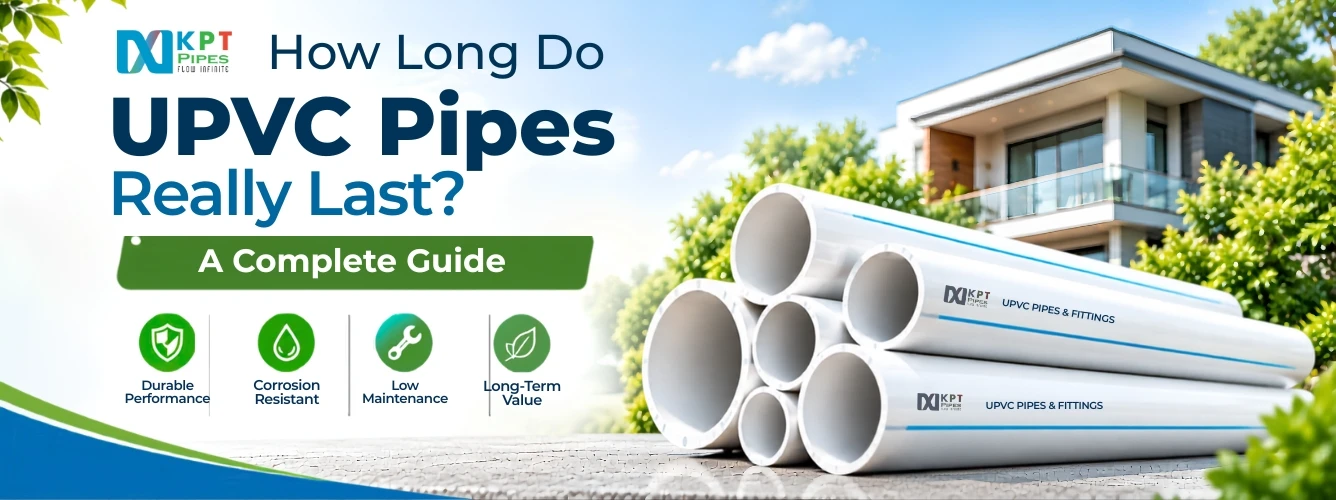
Are you wondering how long your UPVC pipes and fittings will actually last? Or are you planning a new plumbing or water supply project and want to invest in pipes that deliver reliable long-term performance?
Knowing the answer can help you make a better buying decision. It can also help you avoid unnecessary maintenance and replacement costs in the future.
This guide explains the average lifespan of uPVC pipes and what really determines it. We also talk about how you can maximise their performance for years to come.
Table of Contents
ToggleHow Long Do UPVC Pipes Really Last?
Quality UPVC pipes and fittings are generally designed to provide a service life of around 50 years under normal operating conditions. They continue performing efficiently for much longer in many cases. This is especially true when they are manufactured to high standards and installed correctly.
However, it is important to understand that 50 years is not a guaranteed lifespan or an expiry date. Instead, it represents the expected service life of a properly designed piping system operating under recommended conditions.
What Factors Determine the Lifespan of UPVC Pipes?
The lifespan of uPVC pipes is primarily determined by manufacturing quality, operating pressure, installation quality, and the conditions in which the pipes are used. Each of these factors affects how much stress the piping system experiences throughout its service life. When they are managed correctly, uPVC pipes can continue performing reliably for decades.
Let’s understand how each of these factors influences long-term performance.
Manufacturing Quality
Not all uPVC pipes available in the market are manufactured to the same standards. Different manufacturers use different raw materials, production processes, and quality control measures. As a result, two pipes may look almost identical but perform very differently over time.
The manufacturing quality of a uPVC pipe is largely determined by factors such as:
- The quality of the raw material used.
- Consistent wall thickness throughout the pipe.
- Precision during the manufacturing process.
- Strict quality testing before the product reaches the market.
Each of these factors directly affects how well the pipe withstands pressure, everyday wear, and long-term operating stress.
Poor manufacturing quality often creates weaknesses that are difficult to identify during installation. For instance, inconsistent wall thickness can reduce pressure resistance, while low-quality raw materials may affect the pipe’s overall strength and durability. Over time, these weaknesses increase the risk of leakage, cracking, or premature failure.
This is why choosing a trusted manufacturer is just as important as selecting the right UPVC pipes and fittings. Pipes manufactured to consistent quality standards provide a stronger foundation for reliable performance and a longer service life.
Operating Pressure
Every uPVC pipe is designed to withstand a specific amount of internal water pressure. This is known as its pressure rating, and it is one of the biggest factors that determines how long the pipe will last.
The reason is simple! Water flowing through the pipe continuously pushes against its inner walls. When the operating pressure remains within the recommended limit, the pipe experiences normal working stress and continues performing as intended.
Problems begin when the pipe is exposed to pressure beyond its rated capacity for long periods. The additional stress gradually weakens the pipe walls and joints. Over time, this can increase the risk of leakage, deformation, or premature failure.
Choosing a pressure-rated pipe that matches the application’s operating conditions helps minimise unnecessary stress from the very beginning. As a result, the piping system remains stronger, performs more reliably, and delivers a longer service life.
Installation Quality
The lifespan of a uPVC pipe does not depend on manufacturing quality alone. How the pipe is installed also plays an equally important role. Even a well-manufactured pipe can experience premature failure if it is installed incorrectly. Poor installation can in fact shorten the pipe’s service life in several ways. For example:
- Poor jointing may allow water to leak through the connections.
- Incorrect pipe alignment can place continuous stress on the joints.
- Inadequate pipe support may cause the pipeline to sag over time.
- Using incompatible fittings can weaken the entire connection.
Fortunately, these problems are easy to prevent. Proper jointing, correct alignment, adequate pipe support, and compatible fittings all help reduce unnecessary stress on the piping system. As a result, the pipes remain stronger, perform more reliably, and last longer.
Operating Environment
Pipes perform best when they are used under the conditions they are designed for. Continuous exposure to unsuitable operating conditions, however, can gradually reduce their service life. Some of the biggest environmental factors include:
- Direct sunlight (UV exposure): Pipes experiencing continuous exposure to UV rays can gradually develop surface degradation if they are not designed for prolonged outdoor use.
- Operating temperature: Temperatures beyond the recommended range can reduce the pipe’s long-term strength and pressure-handling capacity.
- Chemical exposure: Contact with incompatible chemicals may affect the pipe material and reduce its durability over time.
- Application environment: Residential plumbing, water supply, agriculture, and industrial systems all place different demands on the piping system.
The good news is that these factors are easy to manage during the selection stage. Choosing UPVC pipes and fittings that match their operating environment helps protect their structural integrity, improve long-term performance, and maximise their service life.
Can You Increase the Lifespan of UPVC Pipes?
Yes! While no piping system lasts forever, the right decisions before and during installation can significantly extend its service life.
In fact, increasing the lifespan of UPVC pipes and fittings often starts long before the pipes begin carrying water. It begins with selecting the right products for the application and ensuring they are installed correctly from day one. Here’s what you can do:
- Choose pipes with the appropriate pressure rating for the intended application.
- Purchase products from a trusted manufacturer that follows strict quality standards.
- Use compatible pipe fittings and recommended jointing methods.
- Ensure the pipes are properly supported and aligned during installation.
- Also check the recommended pressure or temperature limits.
- Inspect the piping system periodically to identify minor issues before they become major repairs.
Together, they help reduce unnecessary stress on the piping system, minimise maintenance requirements, and support reliable long-term performance.
Why Does Choosing the Right UPVC Pipes and Fittings Matter?
A piping system is only as reliable as the products used to build it. Even the best installation practices cannot compensate for poor-quality pipes or incompatible fittings. That is why choosing the right UPVC pipes and fittings should always be viewed as a long-term investment rather than a one-time purchase.
Here’s why choosing the right UPVC pipes and fittings matters:
- Improves long-term reliability: High-quality pipes are manufactured to consistent standards. This allows them to perform reliably for decades under recommended operating conditions.
- Reduces the risk of premature failure: Better raw materials, consistent wall thickness, and dependable pressure resistance help minimise leakage, cracking, and unexpected pipe failures.
- Lowers maintenance and replacement costs: Durable piping systems require fewer repairs and unnecessary replacements.
- Supports efficient system performance: Compatible pipes and fittings create secure joints and maintain reliable water flow. They are also known to improve the overall performance of the piping system.
- Delivers better long-term value: Investing in quality products from the beginning helps avoid costly installation issues. It also extends the overall service life of the piping system.
Conclusion
So, how long do UPVC pipes really last? The answer is simple. Quality pipes are built to serve reliably for decades. However, getting the maximum life out of them depends on making the right choices from the very beginning.
Choosing the right products, using them for the right application, and installing them correctly all contribute to long-term performance. Together, these decisions help build a piping system that performs efficiently for years with minimal maintenance.
That is why selecting the right manufacturer matters just as much as selecting the right pipe. At KPT Pipes, we manufacture high-quality UPVC pipes and fittings that are engineered for durability, consistent performance, and long-term reliability across a wide range of applications.
Explore our range of UPVC pipes and fittings today and invest in a piping system that’s built to last.
FAQs
Q1. Which pipe is better, PVC or uPVC?
Ans: Both PVC and uPVC have different uses, but uPVC is generally preferred for pressure applications such as water supply and plumbing. It offers greater strength, durability, and pressure resistance because it is manufactured without plasticisers.
Q2. What are the different types of uPVC pipes?
Ans: Common types of uPVC pipes include pressure pipes, plumbing pipes, casing pipes, SWR pipes, agricultural pipes, and conduit pipes. Each of these pipes is designed for a specific application and operating condition.
Q3. What is the price of a 1/2 inch uPVC pipe (10 ft) in India?
Ans: The price of uPVC varies depending on the manufacturer, pressure rating, pipe quality, and applicable standards. It is best to contact an authorised dealer or manufacturer for the latest pricing.
Q4. What reduces the lifespan of uPVC pipes?
Ans: Poor manufacturing quality, incorrect installation, excessive operating pressure, prolonged UV exposure, and unsuitable operating conditions can all shorten the lifespan of uPVC pipes.
Q5. Do uPVC pipes require regular maintenance?
Ans: uPVC pipes require very little maintenance when they are installed correctly and used within their recommended operating conditions. Periodic inspections can help identify minor issues before they become costly repairs.