
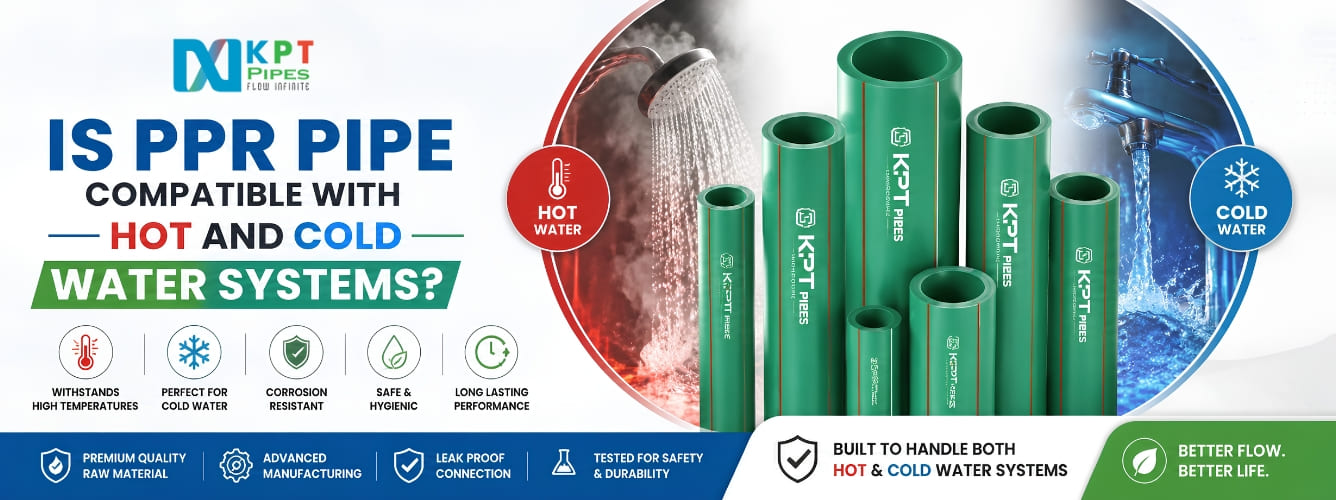
When selecting a plumbing system for residential, commercial, or industrial applications, one of the most important considerations is whether the pipe material can efficiently handle both hot and cold water. Among the many piping solutions available today, PPR (Polypropylene Random Copolymer) pipes have become a preferred choice due to their durability, safety, and long service life.
PPR pipes are widely used across modern plumbing systems because they provide excellent resistance to temperature fluctuations, pressure variations, and corrosion. Whether you’re installing a new water supply system or upgrading an existing one, understanding the compatibility of PPR pipes with hot and cold water can help you make an informed decision.
Table of Contents
ToggleWhy PPR Pipes Are Suitable for Both Hot and Cold Water
PPR pipes are specifically engineered to transport water at varying temperatures without compromising performance. Unlike traditional metal pipes that may corrode or PVC pipes that can become brittle under certain conditions, PPR pipes maintain their structural integrity for decades.
The material’s unique molecular structure allows it to withstand both low and high temperatures while ensuring a consistent water flow. This versatility makes PPR pipes ideal for domestic plumbing, commercial buildings, hospitals, hotels, educational institutions, and industrial facilities.
Performance in Hot Water Systems
One of the biggest advantages of PPR pipes is their ability to handle hot water efficiently. They are commonly used in:
- Residential hot water supply systems
- Water heater connections
- Centralized heating networks
- Solar water heating systems
- Industrial hot water distribution
High-quality PPR pipes can continuously operate at temperatures up to approximately 70°C and can tolerate higher temperatures for shorter periods. This capability makes them an excellent choice for applications where hot water transportation is required regularly.
Additionally, PPR pipes have low thermal conductivity, which helps reduce heat loss during water transportation. As a result, the water remains warmer for longer periods, improving energy efficiency and reducing heating costs.
Performance in Cold Water Systems
PPR pipes perform equally well in cold water applications. Their smooth internal surface allows water to flow freely while minimizing pressure loss. Since they are resistant to scaling and sediment buildup, they maintain consistent performance over time.
Cold water systems benefit from PPR pipes because they:
- Resist cracking in low-temperature environments
- Prevent corrosion-related issues
- Maintain water quality
- Require minimal maintenance
- Offer excellent hydraulic performance
These characteristics make PPR pipes suitable for municipal water supply networks, drinking water systems, irrigation projects, and underground installations.
Understanding PP-R and PP-RCT Technology
Modern PPR piping systems are manufactured using advanced polypropylene materials such as PP-R and PP-RCT.
PP-R (Polypropylene Random Copolymer)
PP-R is a thermoplastic material developed specifically for pressure piping applications. It offers outstanding flexibility, impact resistance, and chemical stability. Its ability to withstand varying temperatures makes it one of the most commonly used materials in plumbing systems worldwide.
PP-RCT (Polypropylene Random Crystalline Temperature Resistant)
PP-RCT is an advanced version of conventional PP-R material. It provides improved temperature resistance and higher pressure-bearing capacity. Compared to standard PP-R pipes, PP-RCT systems can handle increased stress levels while maintaining long-term reliability.
These enhanced properties make PP-RCT particularly suitable for demanding applications involving continuous hot water circulation.
Durability That Lasts for Decades
Durability is one of the strongest reasons behind the growing popularity of PPR pipes and fittings.
Unlike metal pipes that may rust over time, PPR pipes are completely corrosion-resistant. They are unaffected by minerals present in water and remain free from scale deposits that commonly reduce pipe efficiency.
When installed correctly and operated under recommended conditions, PPR piping systems can last for more than 50 years. Their resistance to wear, chemical exposure, and temperature changes ensures reliable performance throughout their lifespan.
Key durability benefits include:
- Excellent corrosion resistance
- Resistance to chemical reactions
- Long operational life
- Leak-proof jointing system
- High impact strength
- Resistance to scaling and deposits
This long lifespan significantly reduces replacement and maintenance costs, making PPR pipes a cost-effective investment.
Energy Efficiency and Thermal Insulation
Modern plumbing systems prioritize energy efficiency, and PPR pipes contribute significantly in this area.
The material naturally possesses insulating properties that reduce heat transfer. In hot water applications, this means less heat loss between the source and destination. As a result, heating systems operate more efficiently, leading to lower energy consumption.
For cold water systems, insulation properties help prevent condensation on the pipe surface, protecting surrounding structures from moisture-related damage.
This combination of thermal efficiency and durability makes PPR pipes a practical solution for sustainable construction projects.
Cost Benefits of PPR Pipes
Cost is always a major factor when choosing a piping system. While initial material prices may vary depending on specifications and sizes, PPR pipes often provide greater long-term value compared to traditional alternatives.
Several factors contribute to their cost-effectiveness:
Lower Installation Costs
PPR pipes are lightweight and easy to transport. Their fusion welding process creates secure joints quickly, reducing labour requirements during installation.
Minimal Maintenance
Because they do not rust, corrode, or develop scale deposits, PPR systems require very little maintenance throughout their service life.
Reduced Energy Consumption
The excellent thermal insulation properties help lower heating costs in hot water systems.
Longer Service Life
A lifespan exceeding 50 years means fewer replacements and lower lifecycle costs.
These benefits make PPR pipes an economical choice for homeowners, contractors, and facility managers.
Choosing the Right Pipe Thickness
Pipe thickness plays an important role in determining system performance and longevity.
The appropriate thickness depends on factors such as:
- Operating pressure
- Water temperature
- Installation environment
- Flow requirements
- Building specifications
Higher-temperature applications generally require pipes with greater pressure ratings and suitable wall thicknesses. Selecting the correct pipe class ensures safe operation and extends the life of the plumbing system.
Professional consultation is always recommended when designing large-scale plumbing or industrial installations.
Additional Advantages of PPR Pipes
Beyond hot and cold water compatibility, PPR pipes offer several additional benefits:
Hygienic and Safe
PPR pipes are non-toxic and suitable for drinking water transportation. They do not release harmful substances into the water supply.
Leak-Free Connections
Heat fusion welding creates a homogeneous joint that becomes as strong as the pipe itself, significantly reducing leakage risks.
Eco-Friendly Material
PPR is recyclable and contributes to environmentally responsible construction practices.
Noise Reduction
The material helps minimise water flow noise compared to some traditional piping systems.
Chemical Resistance
PPR pipes can safely transport water and many industrial fluids without degradation.
Conclusion
PPR pipes are highly compatible with both hot and cold water systems, making them one of the most versatile plumbing solutions available today. Their ability to withstand temperature fluctuations, resist corrosion, maintain water quality, and provide decades of reliable service makes them a preferred choice for modern plumbing applications.
Whether you’re building a residential property, commercial facility, or industrial project, PPR pipes offer an excellent balance of durability, efficiency, and cost-effectiveness. By selecting the appropriate pipe class and thickness, you can ensure a dependable plumbing system that performs efficiently for many years.
FAQs
Q1. Can PPR pipes carry hot water?
Ans: Yes. PPR pipes are specifically designed to handle hot water and are commonly used in residential and commercial hot water systems.
Q2. Are PPR pipes suitable for drinking water?
Ans: Absolutely. PPR pipes are non-toxic, hygienic, and safe for potable water applications.
Q3. How long do PPR pipes last?
Ans: Under normal operating conditions, high-quality PPR pipes can last more than 50 years.
Q4. Do PPR pipes corrode like metal pipes?
Ans: No. PPR pipes are completely resistant to rust and corrosion, making them highly durable.
Q5. Are PPR pipes better than traditional plumbing materials?
Ans: For many applications, PPR pipes offer advantages such as corrosion resistance, thermal insulation, long lifespan, and lower maintenance requirements.