
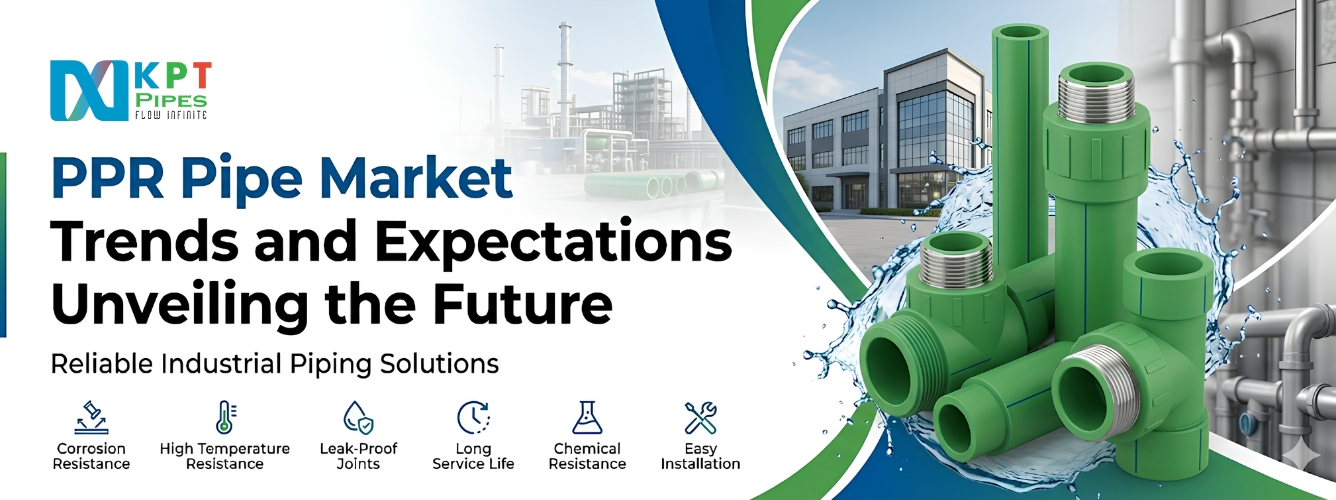
The piping industry has undergone a remarkable transformation over the past decade, and Polypropylene Random Copolymer (PPR) pipes have emerged as one of the most trusted solutions for modern plumbing and fluid transportation systems. Known for their strength, corrosion resistance, long service life, and environmental benefits, PPR pipes are now widely used in residential, commercial, industrial, and agricultural applications.
As infrastructure projects continue to expand globally and sustainability becomes a priority, the demand for advanced piping solutions is growing rapidly. The future of the PPR pipe market looks promising, driven by innovation, smart technologies, and increasing investments in construction and water management systems.
Table of Contents
ToggleOverview of the Growing PPR Pipe Market
PPR pipes have gained widespread acceptance because they offer a reliable alternative to traditional metal and conventional plastic piping systems. Their ability to withstand high temperatures and pressures while maintaining excellent water quality makes them a preferred choice for modern installations.
The market is witnessing steady growth due to:
- Rising urban development projects
- Increasing demand for efficient plumbing systems
- Expansion of industrial facilities
- Growing focus on sustainable construction
- Government investments in water infrastructure
These factors are expected to strengthen the position of PPR pipes in the global piping industry over the coming years.
Key Trends Shaping the Future of PPR Pipes
1. Sustainable Construction Driving Demand
Green building practices have become a major focus for developers and governments worldwide. Construction companies are actively seeking materials that reduce environmental impact while maintaining long-term performance.
PPR pipes support sustainability goals because they:
- Are recyclable
- Require less energy during production
- Have a long operational lifespan
- Reduce maintenance and replacement needs
- Minimize water loss through leak-resistant joints
As environmentally responsible construction continues to grow, PPR pipes are expected to become an even more important component of sustainable building projects.
2. Smart Manufacturing and Advanced Production Techniques
Manufacturing technologies are evolving rapidly, enabling pipe manufacturers to produce stronger and more consistent products.
Modern production facilities now utilize:
- Automated extrusion systems
- Precision quality-control equipment
- Advanced testing technologies
- Digital production monitoring
- Data-driven manufacturing processes
These innovations help improve product reliability while reducing production waste and operational costs.
3. Expansion of Urban Infrastructure
Urban populations continue to rise, creating significant demand for housing, commercial spaces, hospitals, schools, and transportation facilities.
Every new development requires efficient plumbing and water distribution systems. PPR pipes are increasingly being selected for:
- Residential buildings
- Hotels and resorts
- Commercial complexes
- Educational institutions
- Healthcare facilities
As cities continue to expand, the requirement for durable piping solutions will drive substantial market growth.
Market Trends and Their Impact
| Market Trend | Impact on PPR Pipe Industry |
|---|---|
| Sustainable Construction | Increased demand for eco-friendly pipes |
| Urbanization | Growth in residential and commercial projects |
| Water Conservation Initiatives | Higher adoption in plumbing systems |
| Smart Manufacturing | Improved quality and production efficiency |
| Industrial Expansion | Greater use in fluid transportation systems |
| Product Innovation | Development of specialized piping solutions |
| Emerging Markets Growth | Expansion of customer base globally |
4. Increasing Focus on Water Conservation
Water conservation is becoming a critical concern across the globe. Governments, businesses, and homeowners are investing in systems that reduce water wastage and improve distribution efficiency.
PPR pipes contribute significantly to these objectives through:
- Leak-proof fusion welding joints
- Smooth internal surfaces for efficient water flow
- Resistance to scaling and corrosion
- Long-term performance with minimal maintenance
As water management becomes more important, PPR pipes are likely to play a major role in future infrastructure planning.
5. Rising Demand from Industrial Applications
Industrial facilities require piping systems capable of handling challenging operating conditions. PPR pipes have proven effective in many industrial sectors because of their resistance to chemicals and temperature variations.
Industries increasingly using PPR pipes include:
- Food processing
- Chemical manufacturing
- Pharmaceuticals
- Textile production
- Water treatment plants
The continued expansion of industrial infrastructure is expected to create new opportunities for PPR pipe manufacturers.
6. Stronger Emphasis on Quality Standards
Today’s customers are more informed than ever before. Builders, contractors, and project consultants demand certified products that meet international quality requirements.
As a result, manufacturers are focusing on:
- Stringent testing procedures
- Compliance with global standards
- Product certifications
- Enhanced quality control systems
- Long-term performance guarantees
Companies that prioritize quality and consistency are expected to gain a stronger competitive advantage in the market.
7. Growth Opportunities in Emerging Economies
Developing countries are experiencing rapid industrialization and urban expansion. New housing projects, smart city initiatives, and infrastructure upgrades are creating substantial demand for modern piping systems.
Regions expected to contribute significantly to market growth include:
- South Asia
- Southeast Asia
- Middle East
- Africa
- Latin America
The increasing need for reliable water supply networks and modern plumbing systems makes these regions attractive growth markets for PPR pipe manufacturers.
8. Product Innovation and Customization
The future of the PPR pipe industry will be heavily influenced by innovation. Customers increasingly require solutions tailored to specific project needs.
Manufacturers are investing in products with features such as:
- Enhanced heat resistance
- Improved pressure tolerance
- UV protection
- Antibacterial properties
- Multi-layer pipe technology
Customized solutions help address the unique requirements of residential, industrial, and commercial applications.
9. Preference for Lightweight and Easy-to-Install Systems
One of the biggest advantages of PPR pipes is their lightweight nature. Compared to traditional metal pipes, they are easier to transport, handle, and install.
Benefits include:
- Reduced labor costs
- Faster installation times
- Lower transportation expenses
- Improved workplace safety
- Simplified maintenance
As construction projects continue to seek efficiency and cost savings, lightweight piping systems are expected to gain even greater popularity.
10. Digital Monitoring and Smart Plumbing Systems
The emergence of smart buildings is opening new possibilities for piping infrastructure. Building management systems increasingly rely on sensors and monitoring technologies to improve efficiency.
Future PPR piping systems may integrate:
- Leak detection sensors
- Pressure monitoring devices
- Temperature tracking systems
- Predictive maintenance tools
- Remote monitoring capabilities
Such innovations can help reduce operational costs and improve system reliability over time.
What Can We Expect in the Next Few Years?
Industry experts anticipate continued growth for the PPR pipe market due to increasing infrastructure investments, environmental awareness, and technological advancements.
Future developments are likely to include:
- Wider adoption in green building projects
- Greater use in industrial applications
- More advanced manufacturing technologies
- Expansion into emerging economies
- Introduction of innovative multi-functional piping systems
Manufacturers that focus on quality, sustainability, and innovation will be best positioned to capitalize on these opportunities.
Conclusion
The future of the PPR pipe market appears highly promising. As the construction and infrastructure sectors evolve, the demand for durable, efficient, and environmentally responsible piping solutions will continue to rise. PPR pipes offer an ideal combination of performance, longevity, and sustainability, making them a preferred choice across residential, commercial, and industrial applications.
With ongoing advancements in manufacturing technology, smart infrastructure, and water conservation initiatives, PPR pipes are expected to play a vital role in shaping modern plumbing and fluid transportation systems. Businesses, contractors, and consumers who invest in high-quality PPR piping solutions today are likely to benefit from their reliability and long-term value for years to come.
Frequently Asked Questions (FAQs)
Q1. Why are PPR pipes becoming more popular?
Ans: PPR pipes offer durability, corrosion resistance, leak-proof joints, and a long service life, making them suitable for modern plumbing systems.
Q2. Are PPR pipes environmentally friendly?
Ans: Yes. PPR pipes are recyclable, energy-efficient during production, and help reduce water wastage through secure connections.
Q3. Which industries commonly use PPR pipes?
Ans: They are widely used in residential construction, commercial buildings, water treatment facilities, food processing plants, and industrial manufacturing units.
Q4. How long can PPR pipes last?
Ans: Under normal operating conditions, high-quality PPR pipes can last for more than 50 years.
Q5. What is the future outlook for the PPR pipe market?
Ans: The market is expected to grow steadily due to urbanization, infrastructure development, sustainability initiatives, and technological innovations.