
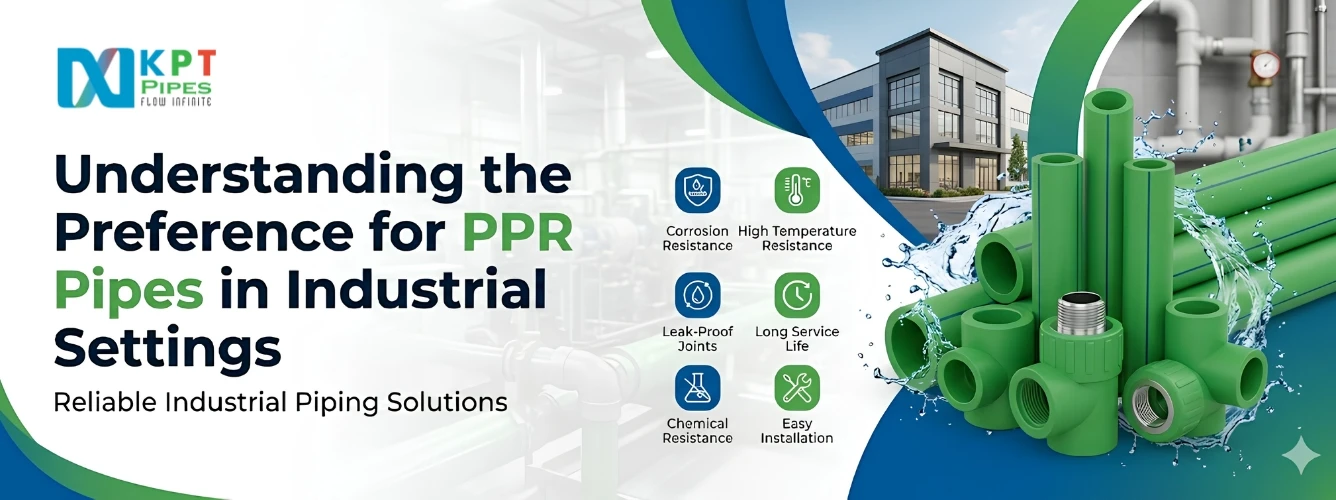
Industrial infrastructure relies heavily on piping systems for the safe and efficient transportation of water, chemicals, compressed air, and other fluids. Choosing the right piping material is essential because it directly affects operational efficiency, maintenance costs, and system longevity. Over the years, Polypropylene Random Copolymer (PPR) pipes have emerged as one of the most trusted solutions for industrial pipe fittings.
Industries today require piping systems that can withstand challenging conditions while maintaining consistent performance. This is where PPR pipes prove their value. Their strength, durability, and resistance to various environmental factors make them suitable for a wide range of industrial applications. From manufacturing facilities and chemical plants to food processing units and commercial buildings, PPR pipes have become a preferred choice for modern piping networks.
Table of Contents
ToggleWhat Are PPR Pipes?
PPR pipes are manufactured using Polypropylene Random Copolymer, a high-performance thermoplastic material known for its excellent mechanical and thermal properties. These pipes are designed to transport hot and cold fluids efficiently while resisting corrosion and chemical damage.
Unlike traditional metal pipes that may rust or deteriorate over time, PPR pipes maintain their structural integrity for decades. Their lightweight design, combined with superior strength, makes them a practical solution for industrial installations where reliability is a top priority.
Why Industries Prefer PPR Pipes for Pipe Fittings
Exceptional Durability for Long-Term Performance
One of the biggest reasons industries prefer PPR pipes is their outstanding durability. Industrial environments often expose piping systems to continuous pressure, varying temperatures, and demanding operating conditions. PPR pipes are engineered to handle these challenges effectively.
Their robust construction prevents cracking, scaling, and deterioration even after years of use. Unlike conventional metal pipes that may weaken due to corrosion, PPR pipes maintain their performance and structural strength throughout their lifespan. This durability significantly reduces replacement costs and ensures uninterrupted operations.
Excellent Resistance to Chemicals
Many industrial processes involve the transportation of chemicals, acids, alkalis, and other aggressive substances. A piping system that cannot resist chemical exposure can lead to contamination, leakage, and costly repairs.
PPR pipes offer remarkable chemical resistance, making them suitable for handling a wide variety of industrial fluids. They do not react easily with most chemicals, which helps preserve both the quality of the transported substances and the integrity of the piping network. This characteristic makes PPR pipes highly valuable in chemical processing plants, pharmaceutical facilities, and industrial manufacturing units.
Superior Thermal Performance
Temperature fluctuations are common in industrial environments. Some applications involve hot water systems, while others require transportation of fluids at lower temperatures. A reliable pipe material must perform efficiently under both conditions.
PPR pipes are known for their excellent thermal stability. They can handle high-temperature fluids without losing their structural strength or shape. Their low thermal conductivity also helps reduce heat loss during fluid transportation, improving overall energy efficiency.
This thermal resistance makes PPR pipes an ideal solution for heating systems, industrial hot water networks, and process piping applications where temperature control is critical.
Corrosion-Free Operation
Corrosion is one of the most common causes of pipe failure in industrial systems. Metal pipes often rust when exposed to moisture, chemicals, or environmental conditions, leading to reduced efficiency and increased maintenance requirements.
PPR pipes eliminate this concern because they are naturally resistant to corrosion. They do not rust, scale, or degrade when exposed to water and most industrial chemicals. As a result, the internal diameter of the pipe remains consistent, ensuring efficient fluid flow throughout its service life.
The corrosion-free nature of PPR pipes and fittings also contributes to cleaner and safer fluid transportation, making them suitable for industries where hygiene and product quality are important.
Smooth Inner Surface for Better Flow
The internal surface of a pipe plays a significant role in determining system efficiency. Rough surfaces can create friction, reduce flow rates, and increase energy consumption.
PPR pipes feature a smooth inner wall that allows fluids to move freely with minimal resistance. This improves flow efficiency and reduces pressure loss across the system. The smooth surface also minimizes the accumulation of deposits, sediment, and scaling, which helps maintain optimal performance over time.
By supporting efficient fluid movement, PPR pipes contribute to lower pumping costs and enhanced operational productivity.
Easy and Quick Installation
Industrial projects often operate within strict timelines. Delays in piping installation can impact overall project completion and increase costs. PPR pipes offer a practical advantage through their lightweight and user-friendly design.
Compared to traditional metal pipes, PPR pipes are easier to transport, handle, and install. They can be joined using heat fusion technology, creating strong and leak-proof connections. These fusion joints become as strong as the pipe itself, reducing the risk of future leaks.
The simplified installation process helps save labour costs and shortens project timelines, making PPR pipes a preferred choice for contractors and industrial engineers.
Minimal Maintenance Requirements
Maintenance can be a major operational expense for industrial facilities. Frequent inspections, repairs, and replacements not only increase costs but can also lead to production downtime.
PPR pipes require very little maintenance due to their resistance to corrosion, scaling, and chemical damage. Their long-lasting performance reduces the likelihood of unexpected failures, helping industries maintain smooth operations.
The reduced maintenance requirement translates into lower operational expenses and greater peace of mind for facility managers.
Long Service Life
When investing in industrial infrastructure, longevity is a key consideration. PPR pipes are designed to provide reliable performance for several decades under normal operating conditions.
Their resistance to wear, pressure, temperature variations, and chemical exposure allows them to remain functional for an extended period. This long service life offers excellent value for money and minimizes the need for costly system upgrades or replacements.
For industries seeking a dependable piping solution with long-term benefits, PPR pipes represent a smart investment.
Environmentally Responsible Choice
Sustainability has become an important focus for industries worldwide. Organizations are increasingly adopting materials that support environmental responsibility and resource conservation.
PPR pipes are recyclable and have a lower environmental impact compared to many traditional piping materials. Their long lifespan also reduces waste generation by minimizing the frequency of replacements.
In addition, their energy-efficient performance contributes to reduced energy consumption in fluid transportation systems. These qualities make PPR pipes an environmentally conscious choice for modern industrial projects.
Common Industrial Applications of PPR Pipes
Due to their versatility and reliability, PPR pipes are widely used across various industrial sectors, including:
- Chemical processing plants
- Manufacturing industries
- Pharmaceutical facilities
- Food and beverage processing units
- Commercial buildings
- Water treatment plants
- Heating and cooling systems
- Compressed air networks
Their ability to perform consistently under diverse operating conditions makes them suitable for both small-scale and large-scale industrial installations.
Conclusion
The growing popularity of PPR pipes in industrial pipe fittings is no coincidence. Their exceptional durability, chemical resistance, thermal stability, corrosion-free performance, and ease of installation make them one of the most reliable piping solutions available today.
Industries require systems that can deliver long-term performance while minimizing maintenance costs and operational disruptions. PPR pipes meet these expectations by offering a strong, efficient, and sustainable alternative to traditional piping materials.
As industrial infrastructure continues to evolve, PPR pipes remain a trusted choice for businesses seeking dependable piping systems that support productivity, safety, and long-term value.
FAQs
Q1. What makes PPR pipes suitable for industrial applications?
Ans: PPR pipes offer high durability, chemical resistance, thermal stability, and corrosion-free performance, making them ideal for industrial environments.
Q2. Can PPR pipes handle hot water systems?
Ans: Yes, PPR pipes are designed to withstand high temperatures and are commonly used in industrial hot water and heating systems.
Q3. Are PPR pipes resistant to chemicals?
Ans: Yes, they provide excellent resistance to a wide range of chemicals, acids, and industrial fluids.
Q4. How long do PPR pipes typically last?
Ans: Under proper operating conditions, PPR pipes can provide reliable service for over 50 years.
Q5. Do PPR pipes require frequent maintenance?
Ans: No, their corrosion-resistant and non-scaling properties significantly reduce maintenance requirements compared to traditional metal pipes.