

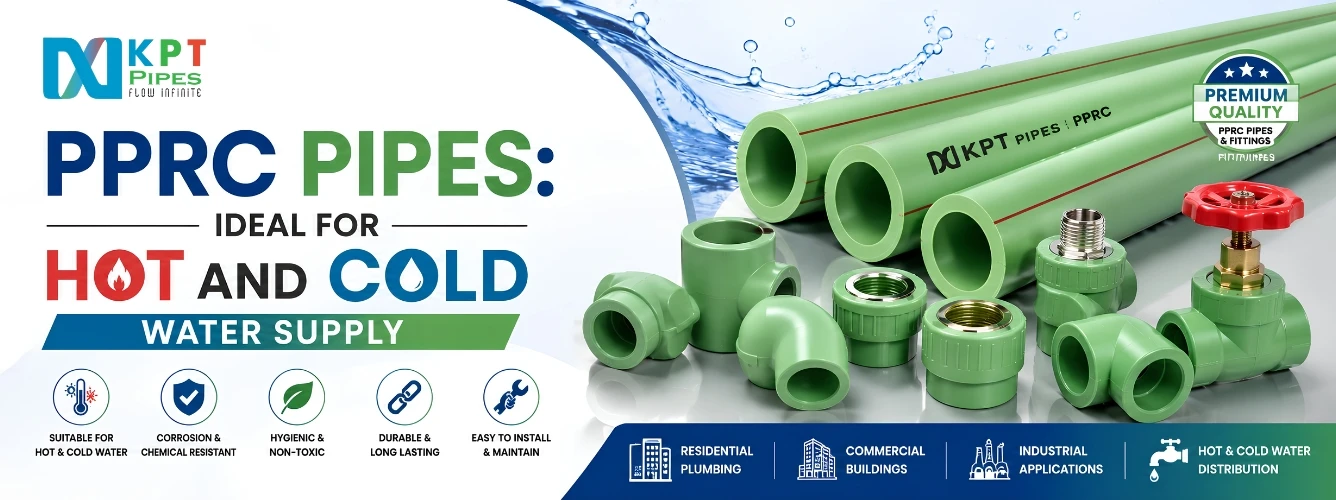
In modern plumbing, selecting the right type of pipe for the water supply is crucial. Whether for residential, commercial, or industrial projects, the choice of pipes can significantly affect durability, safety, and efficiency. Among the various options available in the market, PPRC pipes (Polypropylene Random Copolymer Pipes) have emerged as a preferred solution for hot and cold water systems. Known for their exceptional strength, chemical resistance, and long service life, these pipes have revolutionised water distribution in homes, offices, and industries.
Table of Contents
ToggleUnderstanding PPRC Pipes
PPRC pipes are made from high-quality Polypropylene Random Copolymer (PPR-C) material, which provides superior resistance to heat, pressure, and chemical corrosion. Unlike conventional PVC or CPVC pipes, PPRC pipes can efficiently carry both hot and cold water without compromising on safety or performance. Their smooth inner surface prevents scaling and sediment accumulation, ensuring a consistent water flow over time.
Key Features of PPRC Pipes
- High Temperature Resistance: PPRC pipes can withstand temperatures up to 95°C, making them ideal for hot water supply in kitchens, bathrooms, and industrial processes.
- Pressure Durability: These pipes are designed to handle high pressure, reducing the risk of leaks and bursts.
- Corrosion Resistance: PPRC pipes do not corrode or rust over time, unlike metal pipes, ensuring the longevity and safety of water quality.
- Eco-Friendly Material: Made from recyclable material, PPRC pipes are environmentally sustainable.
- Low Thermal Conductivity: Minimal heat loss occurs during water transport, maintaining temperature efficiency for both hot and cold water.
These features make PPRC pipes a reliable choice for both domestic and industrial water supply systems.
Advantages of PPRC Pipes for Hot Water Supply
When it comes to hot water supply, not all pipes can handle high temperatures without deformation or leakage. PPRC pipes are specifically engineered to address this challenge.
- Heat Resistance:
PPRC pipes maintain structural integrity at temperatures up to 95°C, making them suitable for hot water systems in homes, hotels, hospitals, and industrial plants. They are less prone to bursting or cracking compared to traditional pipes under thermal stress. - Pressure Endurance:
Hot water systems often operate under high pressure. PPRC pipes can handle high-pressure conditions without any compromise in performance, ensuring a steady and reliable flow of water. - Energy Efficiency:
The thermal insulation properties of PPRC pipes reduce heat loss during hot water transport. This means water stays hotter for longer periods, leading to energy savings and reduced heating costs. - Corrosion-Free Performance:
Unlike metal pipes, PPRC pipes do not corrode or rust, which ensures a longer lifespan and prevents contamination in hot water systems. - Maintenance-Free:
PPRC pipes require minimal maintenance over time, reducing long-term costs for homeowners and facility managers.
Advantages of PPRC Pipes for Cold Water Supply
Cold water systems, though not subjected to high temperatures, have their own challenges, such as condensation, microbial growth, and pressure variations. PPRC pipes effectively address these concerns.
- Anti-Scaling Surface:
The smooth inner walls of PPRC pipes prevent scaling and sediment buildup, which is common in cold water pipelines. This ensures consistent water flow and reduces maintenance needs. - Resistance to Freezing:
PPRC pipes have better flexibility compared to rigid PVC or metal pipes, allowing them to tolerate minor freezing conditions without cracking or bursting. - Hygienic Water Supply:
Being non-toxic and resistant to bacteria and fungi, PPRC pipes ensure clean and safe drinking water. This is particularly important in households, hospitals, and schools. - Durability:
Cold water pipelines made from PPRC pipes can last decades without any major issues. Their resistance to pressure and environmental factors ensures longevity. - Cost-Effective Installation:
The lightweight nature of PPRC pipes makes them easier to install, reducing labour costs and time during plumbing projects.
Applications of PPRC Pipes
PPRC pipes are highly versatile and are used across multiple sectors. Their ability to handle hot and cold water efficiently makes them ideal for:
- Residential Buildings: Perfect for both hot water systems and cold water pipelines in homes and apartments, ensuring a safe, leak-free water supply. They maintain water quality and provide long-lasting durability in daily household use.
- Commercial Buildings: Essential for hotels, restaurants, and office complexes where a consistent and reliable hot and cold water supply is crucial for operations and comfort. PPRC pipes prevent corrosion and reduce maintenance costs in high-traffic water systems.
- Industrial Applications: Ideal for factories, chemical plants, and processing units that require transportation of hot and cold water without risk of corrosion, contamination, or chemical reactions, ensuring operational efficiency and safety.
- Healthcare Facilities: Hospitals, clinics, and laboratories need hygienic and non-toxic piping for safe drinking and utility water. PPRC pipes prevent bacterial growth and maintain water purity, which is critical in medical environments.
- Agricultural Systems: Used in irrigation systems, PPRC pipes are perfect for temperature-sensitive crops, providing a durable and corrosion-resistant water supply that ensures optimal growth and efficiency in farming operations.
- HVAC Systems: PPRC pipes are highly suitable for heating, ventilation, and air conditioning systems, transporting hot or chilled water efficiently. Their thermal resistance and low heat loss make them ideal for maintaining a consistent indoor climate and energy efficiency.
Why PPRC Pipes Are Preferred Over Other Pipes
Compared to PVC, CPVC, and metal pipes, PPRC pipes offer several advantages:
| Feature | PPRC Pipes | PVC Pipes | CPVC Pipes | Metal Pipes |
| Temperature Resistance | Up to 95°C | Up to 60°C | Up to 90°C | High, but rusts |
| Chemical Resistance | Excellent | Moderate | Good | Poor, corrodes |
| Durability | 50+ years | 20–30 years | 30–40 years | 20–30 years |
| Hygienic | Yes | No | Yes | No |
| Maintenance | Minimal | Moderate | Moderate | High |
| Installation Ease | Easy and lightweight | Easy | Moderate | Heavy and complex |
The table clearly shows why PPRC pipes are gaining popularity in modern construction and plumbing projects. Their combination of heat resistance, chemical stability, and hygienic safety makes them ideal for diverse applications.
Tips for Installing PPRC Pipes
Proper installation ensures that PPRC pipes deliver maximum performance and longevity. Here are a few tips:
- Use Compatible Fittings: Always use PPRC-compatible fittings for joints and connections to maintain pressure resistance and prevent leaks.
- Avoid Sharp Bends: Use gradual bends instead of sharp angles to prevent stress on the pipes and maintain smooth water flow.
- Temperature Precautions: Avoid exposing pipes to direct sunlight or extreme heat sources during installation to maintain material integrity.
- Pressure Testing: After installation, conduct a pressure test to ensure there are no leaks and the system can handle operating pressures.
- Insulation for Hot Water Pipes: Adding insulation reduces heat loss and improves energy efficiency.
Maintenance of PPRC Pipes
Maintaining PPRC pipes is simple and requires minimal effort:
- Regular Inspection: Check for any visible cracks or leaks periodically.
- Avoid Harsh Chemicals: While PPRC is chemically resistant, avoid pouring aggressive chemicals directly into pipelines.
- Insulate Exposed Pipes: Especially in extreme weather conditions, insulation can prevent freezing or heat damage.
- Flush Water Lines Occasionally: This prevents sediment buildup, ensuring smooth water flow and hygiene.
By following these basic maintenance steps, PPRC pipes can easily last more than 50 years, outperforming most alternative piping systems.
Environmental and Cost Benefits
PPRC pipes are environmentally friendly because they are 100% recyclable and do not leach harmful chemicals into water. Moreover, their long lifespan and low maintenance reduce replacement costs and environmental waste.
From a financial perspective, PPRC pipes are cost-effective in the long term. While initial installation might be slightly higher than PVC pipes, the reduced maintenance, energy savings, and durability provide excellent ROI.
Conclusion
In today’s plumbing industry, PPRC pipes have proven to be the ideal solution for both hot and cold water supply systems. Their superior heat and pressure resistance, chemical stability, durability, and hygienic properties make them the first choice for residential, commercial, and industrial applications. Additionally, their eco-friendly nature and long-term cost savings further strengthen their appeal.
Investing in PPRC pipes ensures not only a reliable water supply but also safety, efficiency, and peace of mind for decades to come. Whether you are building a new home, upgrading your water system, or managing a large-scale industrial project, PPRC pipes provide a versatile and long-lasting solution.
FAQs About PPRC Pipes
Q1. What is the temperature range PPRC pipes can handle?
Ans: PPRC pipes can handle temperatures up to 95°C for hot water and are equally efficient for cold water applications. This makes them ideal for both residential and industrial plumbing systems.
Q2. Are PPRC pipes safe for drinking water?
Ans: Yes, PPRC pipes are non-toxic, resistant to bacteria, and maintain water hygiene, making them completely safe for potable water supply.
Q3. Can PPRC pipes be used in extreme weather conditions?
Ans: Absolutely. PPRC pipes are resistant to freezing, heat, and UV exposure (when protected), making them suitable for a wide range of environmental conditions.
Q4. How long do PPRC pipes last?
Ans: With proper installation and maintenance, PPRC pipes can last more than 50 years, outlasting many alternative piping materials.
Q5. Are PPRC pipes cost-effective compared to metal or PVC pipes?
Ans: While the initial cost may be slightly higher than PVC, the long-term durability, minimal maintenance, energy efficiency, and hygienic benefits make PPRC pipes more cost-effective over time.