
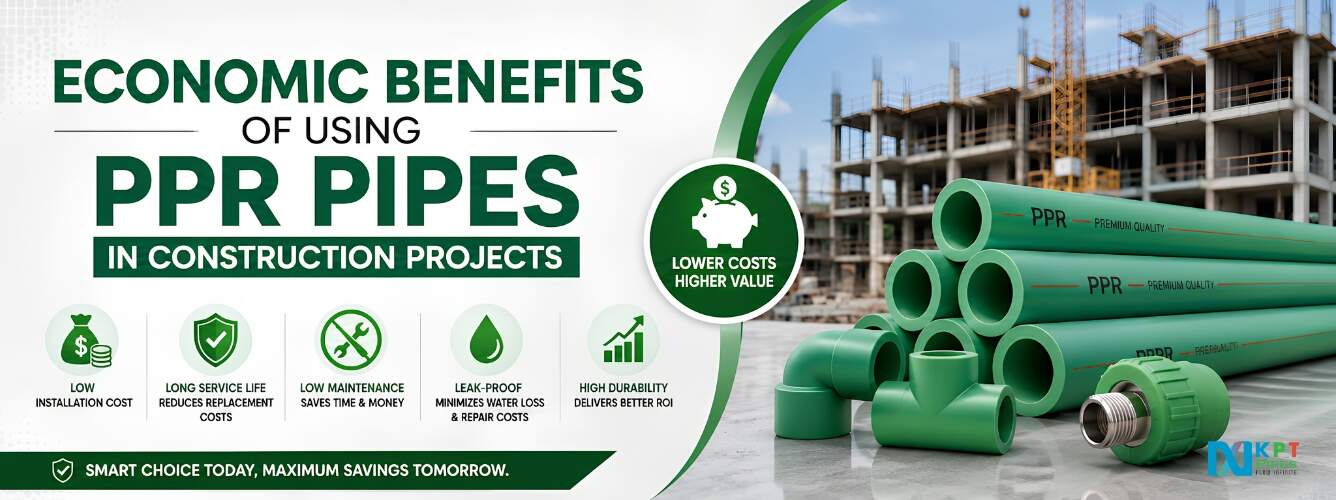
Modern construction projects require piping solutions that offer long-term performance, cost efficiency, and reliability. With increasing demand for sustainable and durable plumbing systems, PPR Pipes and Fittings have become a preferred choice for residential, commercial, industrial, and infrastructure projects.
Polypropylene Random Copolymer (PPR) pipes are known for their excellent durability, corrosion resistance, smooth water flow, and low maintenance requirements. Beyond their technical advantages, these pipes provide significant economic benefits by reducing installation costs, lowering maintenance expenses, and increasing the overall lifespan of plumbing systems.
Choosing the right piping material can directly impact the project budget and operational efficiency. PPR Pipes and Fittings help builders, contractors, and property owners achieve cost savings while ensuring a reliable water distribution system.
Table of Contents
Toggle1. Lower Installation and Labour Costs
One of the major economic advantages of using PPR Pipes and Fittings is their simple and efficient installation process. Compared to traditional metal piping systems, PPR pipes are lightweight, making transportation, handling, and installation easier.
The heat fusion welding technique used for joining PPR pipes creates strong, leak-proof connections without requiring additional sealing materials or complex tools. This reduces installation time and helps contractors complete plumbing work faster.
Faster installation means lower labour requirements and reduced project timelines, allowing construction companies to save money and improve overall project efficiency.
2. Reduced Maintenance Expenses
Maintenance costs can significantly increase the overall expense of a building over its lifetime. Traditional metal pipes may experience problems such as rusting, corrosion, scaling, and frequent repairs. These issues often lead to additional maintenance expenses and system downtime.
PPR Pipes and Fittings are highly resistant to corrosion and chemical reactions, which helps maintain their performance for many years. Their smooth inner surface prevents mineral deposits and scaling, ensuring consistent water flow and reducing the need for frequent cleaning or replacement.
By minimizing repair and maintenance requirements, PPR piping systems help property owners achieve long-term financial savings.
3. Long Service Life Provides Better Return on Investment
Investing in durable plumbing materials is essential for reducing future replacement costs. PPR pipes are designed to provide a long operational life when installed correctly and used under recommended conditions.
Their resistance to temperature changes, pressure variations, and chemical exposure makes them suitable for various applications, including residential buildings, hotels, hospitals, factories, and commercial complexes.
A longer service life means fewer replacements, lower maintenance spending, and better value from the initial investment. This makes PPR Pipes and Fittings a financially practical solution for long-term construction projects.
4. Energy Savings Through Better Thermal Efficiency
Energy efficiency is becoming an important consideration in modern construction. PPR pipes have low thermal conductivity compared to metal piping materials, which helps reduce heat loss in hot water applications.
For buildings with hot water supply systems, this thermal insulation property helps maintain water temperature for longer periods, reducing energy consumption required for reheating.
Lower energy usage contributes to reduced operational costs, making PPR piping systems an economical choice for projects focused on sustainability and efficiency.
5. Lower Transportation and Handling Costs
The lightweight structure of PPR pipes provides economic benefits even before installation begins. Compared to heavier metal pipes, PPR pipes require less effort and fewer resources for transportation and storage.
Their lightweight nature reduces fuel costs during transportation and minimizes the need for heavy equipment during handling at construction sites.
For large-scale projects involving extensive piping networks, these savings can significantly contribute to reducing overall construction expenses.
6. Minimal Leakage Reduces Water Loss and Repair Costs
Pipe leakage can result in water wastage, structural damage, and expensive repairs. Poor-quality joints and corrosion are common causes of leakage in traditional piping systems.
PPR Pipes and Fittings use advanced fusion joining technology, which creates a single continuous piping system with strong and secure joints. This reduces the possibility of leaks and improves system reliability.
By preventing water loss and avoiding frequent repair work, PPR piping helps reduce unnecessary expenses throughout the building’s lifecycle.
7. Supports Sustainable and Cost-Effective Construction
Sustainable construction practices focus on reducing resource consumption and improving the efficiency of building systems. PPR pipes support these goals due to their long lifespan, recyclability, and low environmental impact during their usage period.
Their durability reduces the need for frequent replacements, helping decrease material waste generated from damaged or outdated piping systems.
For builders aiming to achieve green building standards, PPR Pipes and Fittings offer an economical and environmentally responsible plumbing solution.
8. Suitable for Multiple Construction Applications
The versatility of PPR piping makes it suitable for different types of construction projects. From small residential buildings to large commercial developments, PPR Pipes and Fittings can be used for hot and cold water supply systems.
They are commonly used in:
- Residential apartments
- Commercial buildings
- Hospitals and healthcare facilities
- Hotels and hospitality projects
- Industrial facilities
- Educational institutions
This wide range of applications allows contractors to use a single reliable piping solution across multiple projects, simplifying procurement and reducing inventory costs.
9. Improved Property Value and Reliability
A high-quality plumbing system contributes to the overall value and performance of a building. Buildings equipped with durable and efficient piping systems require fewer repairs and offer better reliability to occupants.
Using PPR Pipes and Fittings during construction can enhance buyer confidence, reduce future maintenance concerns, and improve the overall quality of the property.
For developers and builders, investing in reliable piping solutions can create long-term benefits beyond initial construction savings.
Conclusion
The economic benefits of using PPR Pipes in construction projects extend far beyond initial installation savings. Their durability, low maintenance requirements, energy efficiency, and easy installation make them a cost-effective choice for modern plumbing systems.
By choosing high-quality PPR Pipe and Fittings, builders and property owners can reduce overall project costs, improve system performance, and ensure long-term reliability. As construction industries continue to focus on efficiency and sustainability, PPR piping solutions are becoming an increasingly valuable investment for future-ready buildings.
Frequently Asked Questions (FAQs)
Q1. Why are PPR Pipes considered economical for construction projects?
Ans: PPR Pipes are economical because they reduce installation costs, require minimal maintenance, have a long lifespan, and help prevent leakage-related expenses.
Q2. How do PPR Pipes and Fittings reduce maintenance costs?
Ans: PPR Pipes and Fittings resist corrosion, scaling, and chemical damage, reducing the need for frequent repairs and replacements.
Q3. Are PPR Pipes suitable for both residential and commercial buildings?
Ans: Yes, PPR Pipes are widely used in residential, commercial, industrial, healthcare, and hospitality construction projects.
Q4. Do PPR Pipes help save energy costs?
Ans: Yes, PPR Pipes have low thermal conductivity, which helps maintain water temperature and reduces energy consumption in hot water systems.
Q5. What makes PPR Pipes better than traditional metal pipes?\
Ans: PPR Pipes offer advantages such as corrosion resistance, lightweight construction, leak-proof joints, lower maintenance, and longer service life compared to many traditional piping materials.